
Listen to this Post
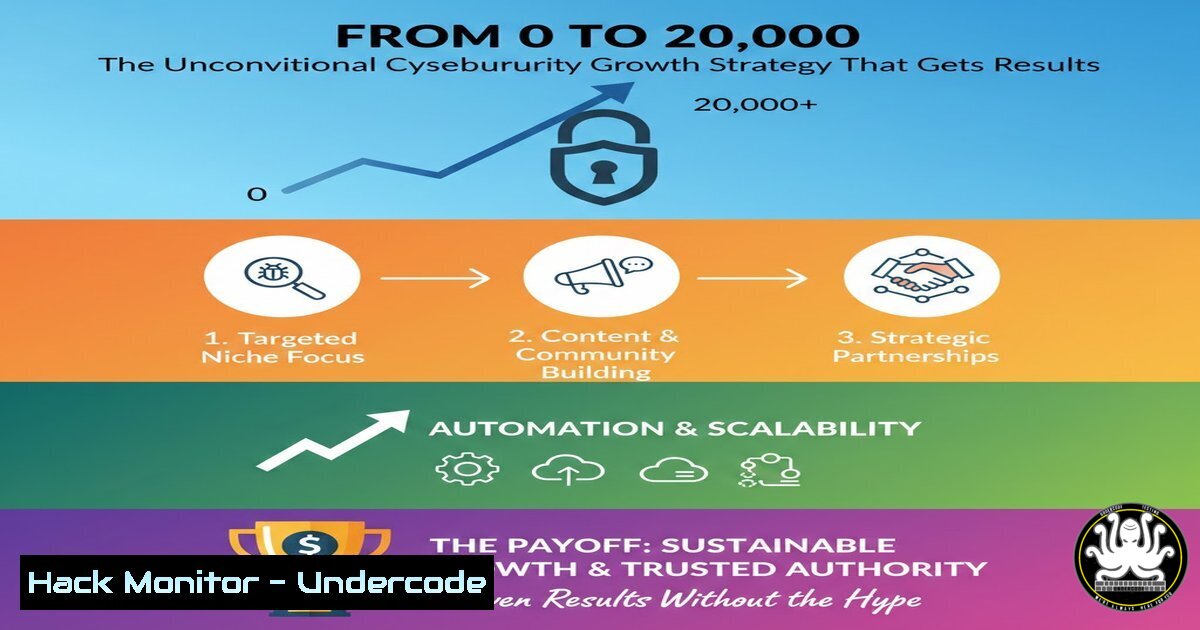
Introduction:
In an industry saturated with buzzwords, fear-mongering, and promises of quick certification fixes, authentic growth is a rare commodity. The journey to building a respected, influential voice in cybersecurity mirrors the fundamentals of a robust security program: it’s built on consistency, trust, and actionable depth, not on flashy exploits or reactive patches. This article deconstructs the proven methodology behind organic, authority-building growth, translating it into actionable steps for cybersecurity professionals.
Learning Objectives:
- Understand the core principles of building authority through documented, real-world experience.
- Learn to systematically create and share technical content that demonstrates depth over trends.
- Develop a sustainable engagement framework that fosters professional trust and community.
You Should Know:
- Principle One: Architect Your Content Like a Security Policy
Authority stems from documented experience, not speculation. Your content strategy should be as deliberate and well-structured as a critical security control framework.
Step-by-step guide explaining what this does and how to use it.
Step 1: Audit Your Real-World Engagements. For one week, document every significant task, challenge, or solution you encounter. This is your raw data. Use a simple command to log your terminal history if relevant: `history | grep -E “(nmap|ssh|aws|sql|docker)” > work_log_[bash].txt` (Linux/macOS). In Windows PowerShell, use: Get-History | Select-String -Pattern "Test-NetConnection|Get-Service".
Step 2: Classify and De-identify. Categorize these notes (e.g., “Cloud Hardening,” “Incident Response,” “Board Reporting”). Scrub them of any sensitive data (IPs, hostnames, PII). Use tools like `sed` for quick anonymization: sed -i 's/192\.168\.1\.[0-9]/[bash]/g' your_notes.md.
Step 3: Build a Knowledge Base. Create a private repository or OneNote section. Structure it with folders aligned to your expertise (e.g., /cloud/aws/s3_logging_enforcement.md, /scripts/automated_vuln_scan.py). This becomes your content reservoir.
2. Principle Two: Demonstrate Depth with Technical Tutorials
Moving beyond generic advice, share specific, reproducible tutorials that solve tangible problems. This builds immense credibility.
Step-by-step guide explaining what this does and how to use it.
Step 1: Select a Narrow Problem. Instead of “Cloud Security,” choose “Enforcing S3 Bucket Encryption via AWS Config Auto-Remediation.”
Step 2: Provide the Code and Commands. Write a clear, commented AWS CloudFormation template or Terraform script that deploys the rule. Include the AWS CLI command to check compliance: aws configservice describe-compliance-by-config-rule --config-rule-name s3-bucket-encryption-enabled.
Step 3: Explain the “Why” and the “How to Test.” Don’t just post code. Explain the risk it mitigates (e.g., data breach, compliance failure) and provide a safe command to test a bucket’s encryption status: aws s3api get-bucket-encryption --bucket YOUR_BUCKET_NAME.
- Principle Three: Engage Like an Incident Responder – Be Calm, Clear, and Constructive
Engagement is your network’s intrusion detection system (IDS). It must be tuned to signal valuable discourse, not noise.
Step-by-step guide explaining what this does and how to use it.
Step 1: Prioritize Quality over Quantity. Spend 30 minutes daily engaging with 3-5 substantive posts. Ask clarifying technical questions or share a related, nuanced experience.
Step 2: Use the “S.T.A.R.” Method for Comments. When sharing an experience, structure it: Situation (The context), Task (The security goal), Action (The technical steps you took), Result (The outcome and a key lesson).
Step 3: Script Your Research. Before engaging with an influencer’s content, quickly research their background. A simple CLI tool like `sherlock` (for OSINT on social media usernames) or even a disciplined LinkedIn profile review informs more relevant interaction.
- Principle Four: Harden Your Profile Like a System
Your profile is your public-facing endpoint. It must be secure against misrepresentation and optimized for delivering the right “service” – your expertise.
Step-by-step guide explaining what this does and how to use it.
Step 1: Conduct a “Vulnerability Scan” on Your Bio. Review your headline and summary. Remove all fluff (“guru,” “ninja,” “passionate about”). Replace with specific titles, technologies, and frameworks (e.g., “IAM Specialist | Zero-Trust Architecture | MITRE ATT&CK”).
Step 2: Implement “Logging.” Use the “Featured” section to directly link to your tangible work: a GitHub repo with a useful script, a detailed blog post on API security testing with `curl` and jq, or a slide deck from a conference talk.
Step 3: Apply “Least Privilege” to Your Messaging. Your direct messages should not be sales pitches. Offer genuine help or a specific piece of feedback on someone’s shared work first.
- Principle Five: Consistency is Your Security Patch Management Schedule
Growth, like security, is not a one-time project. It requires a recurring, scheduled cadence of maintenance and improvement.
Step-by-step guide explaining what this does and how to use it.
Step 1: Create a Content Calendar as a Cron Job. Schedule dedicated time blocks. Treat them as immutable. Use calendar invites or task schedulers: `crontab -e` to add `0 9 2 /home/user/scripts/generate_content_idea.sh` (Linux) or use Task Scheduler on Windows.
Step 2: Batch-Create Content. Dedicate one afternoon every two weeks to draft 4-5 technical snippets or short articles from your knowledge base. This is more efficient and consistent than daily improvisation.
Step 3: Automate Where Possible. Use IFTTT or Zapier to auto-share new blog posts to LinkedIn. But crucially, always add a unique, manual comment when posting to provide context.
What Undercode Say:
- Trust is the Ultimate Security Control: In cybersecurity and professional growth, trust is the non-negotiable currency earned through verifiable, transparent actions and shared knowledge. It cannot be faked or shortcut.
- Depth Defeats Noise: The algorithm, like an advanced attacker, eventually bypasses superficial tricks. Sustainable influence is built on a foundation of deep, practical expertise that solves actual problems for your audience.
The post highlights a critical divergence from the “growth hacking” playbook. It advocates for a strategy mirroring core infosec principles: a defense-in-depth approach to personal branding. Each piece of shared experience, each technical tutorial, and each thoughtful comment acts as a layer of security for your professional reputation, making it resilient to the volatility of trends. This method is slower but inherently more secure and authoritative, as it’s rooted in a reality that peers and decision-makers in the high-stakes world of cybersecurity are trained to respect and verify.
Prediction:
The future of professional influence in technical fields, especially cybersecurity, will bifurcate. A growing divide will emerge between “trend commentators” who leverage algorithmic noise and true “practitioner-influencers” who build trusted, community-validated platforms based on open-source knowledge sharing, detailed case studies, and collaborative problem-solving. This latter group will increasingly become the de facto standard for hiring, product validation, and industry consensus, as their authority is audit-ready and backed by a public ledger of contributions. Platforms may even begin to develop “verified contribution” badges tied to real code repositories, conference talks, or CVE disclosures, further cementing this shift towards substantiated expertise.
▶️ Related Video (84% Match):
🎯Let’s Practice For Free:
IT/Security Reporter URL:
Reported By: Inga Stirbytecybersecurityleader – Hackers Feeds
Extra Hub: Undercode MoN
Basic Verification: Pass ✅


