Listen to this Post
Introduction:
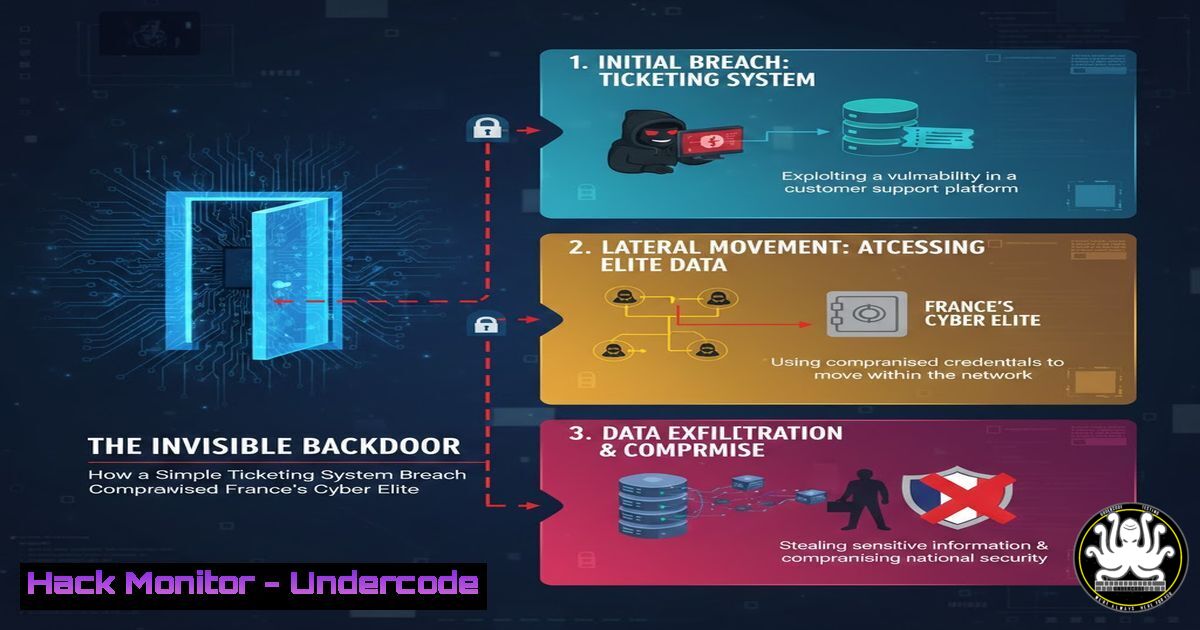
A major European VPN provider, serving critical clients like Thales, the French Ministry of the Interior, and Airbus, was recently compromised not through a sophisticated zero-day exploit, but via a vulnerable customer ticketing portal. This incident, claimed by the threat actor “ByteToBreach,” underscores a critical lesson in cybersecurity: the most devastating attacks often exploit the most mundane and overlooked components of an organization’s digital footprint. The breach led to the theft of sensitive data, including VPN configurations, passwords, and certificates, highlighting that security is only as strong as its weakest link—which is frequently a peripheral business tool.
Learning Objectives:
- Understand how unsecured ancillary systems like ticketing portals create critical supply chain vulnerabilities.
- Learn to identify and harden common attack vectors in support and collaboration platforms.
- Implement proactive measures for monitoring and securing third-party and internal business applications.
You Should Know:
- The Anatomy of a Supply Chain Attack via a Ticketing System
A customer support ticketing system (e.g., Zendesk, ServiceNow, or a custom solution) is often externally facing and connected to internal networks for efficient support. If this system is poorly secured, it becomes a goldmine for attackers.
Step-by-Step Guide:
Step 1: Reconnaissance. The attacker identifies the target organization’s public-facing services using tools like Shodan or builtwith.com. They search for org:"Target Corp" product:"zendesk".
Step 2: Vulnerability Assessment. The attacker probes the ticketing portal for common vulnerabilities:
Unpatched Software: Checking for known CVEs in the platform’s version.
Weak Authentication: Testing for default credentials or brute-force attacks.
Injection Flaws: Attempting SQLi or XSS to extract data or gain control.
Step 3: Initial Foothold. Upon finding a vulnerability (e.g., an unauthenticated API endpoint), the attacker gains access to the ticketing database, which may contain customer inquiries, internal troubleshooting notes, and even embedded credentials.
Step 4: Lateral Movement. Using harvested credentials or system access, the attacker pivots from the ticketing server to more critical internal systems, such as the VPN configuration management servers.
2. Hardening Your External Support and Collaboration Platforms
Peripheral systems must be treated with the same security rigor as core infrastructure.
Step-by-Step Guide:
Step 1: Principle of Least Privilege. Ensure the service account running the ticketing application has minimal permissions on the host and network. On a Linux server, this means not running it as root.
Create a dedicated user for the service

<h2 style="color: yellow;">sudo useradd -r -s /bin/false ticketing_app</h2>

<h2 style="color: yellow;">sudo chown -R ticketing_app:ticketing_app /opt/ticketing_app
Step 2: Network Segmentation. Place ticketing and similar systems in a Demilitarized Zone (DMZ). Restrict inbound and outbound traffic using strict firewall rules.
Example iptables rule to restrict database access: `sudo iptables -A OUTPUT -p tcp –dport 5432 -d
Step 3: Robust Patching. Implement a formal patch management cycle for all business software, not just operating systems. Automate where possible.
Step 4: Multi-Factor Authentication (MFA). Enforce MFA for all administrative and user access to these platforms.
3. Securing VPN Infrastructure Post-Compromise
When VPN configs and certificates are stolen, the entire remote access framework is at risk.
Step-by-Step Guide:
Step 1: Certificate and Key Rotation. Immediately revoke and reissue all SSL/TLS certificates, private keys, and pre-shared keys that may have been exposed.
OpenSSL command to generate a new private key and CSR: `openssl req -new -newkey rsa:2048 -nodes -keyout server_new.key -out server_new.csr`
Step 2: Client Configuration Revocation. For IPsec VPNs, change the pre-shared keys. For SSL VPNs, invalidate all user certificates and force re-enrollment.
Step 3: Enhanced Logging and Monitoring. Look for anomalous login attempts using potentially stolen data.
On a FortiGate firewall, monitor logs: ` diagnose debug application fnbamd -1`
On a Linux server using OpenVPN, grep the logs for failed attempts: `grep “AUTH_FAILED” /var/log/openvpn/status.log`
4. Proactive Threat Hunting for Stolen Assets
Assume stolen data will be used in future attacks. Proactive hunting is essential.
Step-by-Step Guide:
Step 1: Deploy Canary Tokens. Place fake VPN configuration files, API keys, and credentials within your network and on file shares. Services like Canarytokens.org will alert you if they are accessed.
Step 2: Monitor Underground Forums. Use automated scripts to scrape threat intelligence feeds and dark web marketplaces for your company’s name, domain, and keywords related to the breach.
Step 3: Hunt for IOCs. Use Indicators of Compromise (IOCs) like hashes of stolen files or specific IP addresses from the breach report. Search your logs using SIEM tools.
Example YARA rule to scan for a specific stolen document pattern: <h2 style="color: yellow;">rule Stolen_VPN_Config {</h2>
<h2 style="color: yellow;">strings:</h2>
<h2 style="color: yellow;">$a = "client.ovpn"</h2>
<h2 style="color: yellow;">$b = "remote " nocase</h2>
<h2 style="color: yellow;">$c = "dev tun"</h2>
<h2 style="color: yellow;">condition:</h2>
<h2 style="color: yellow;">all of them</h2>
<h2 style="color: yellow;">}
5. Implementing a Comprehensive Third-Party Risk Management Program
This attack is a classic third-party or supply chain failure.
Step-by-Step Guide:
Step 1: Inventory and Categorize. Create a complete inventory of all third-party software, SaaS platforms, and vendors with access to your data or systems. Categorize them by risk level.
Step 2: Security Assessments. Require vendors to complete security questionnaires (e.g., based on SIG or CAIQ). For critical vendors, conduct independent penetration tests.
Step 3: Contractual Security Controls. Ensure contracts mandate immediate breach notification, right-to-audit clauses, and adherence to your security standards.
What Undercode Say:
- The “Unsexy” Systems Are the New Crown Jewels. Organizations spend millions on firewalls and endpoint protection but leave customer portals, HR systems, and IoT device management consoles exposed. These systems are often less hardened, making them the primary target for modern attackers.
- Supply Chain Attacks Are the Norm, Not the Exception. You are only as secure as your least secure vendor or internal department. A holistic security strategy must encompass every digital touchpoint, regardless of how peripheral it seems.
This breach is a stark reminder that the attack surface has expanded far beyond the traditional network perimeter. The focus must shift from merely defending the castle walls to securing every single outpost, especially the ones that look harmless. The sophistication of an attack is no longer measured by the complexity of the exploit, but by the attacker’s ability to identify and weaponize the organizational blind spots.
Prediction:
In the next 12-24 months, we will see a significant rise in automated attacks specifically targeting the SaaS and business support platforms of major corporations. Threat actors will use AI-driven tools to continuously scan for and exploit vulnerabilities in ticketing, CRM, and collaboration tools. This will lead to a new wave of supply chain attacks, where a breach at a single software vendor will have cascading effects across its entire client base, forcing a fundamental re-architecting of third-party trust and identity and access management models. The concept of a “perimeter” will become entirely virtual, defined by identity and behavior rather than network topology.
🎯Let’s Practice For Free:
IT/Security Reporter URL:
Reported By: Activity 7398276626754617344 – Hackers Feeds
Extra Hub: Undercode MoN
Basic Verification: Pass ✅


