Listen to this Post
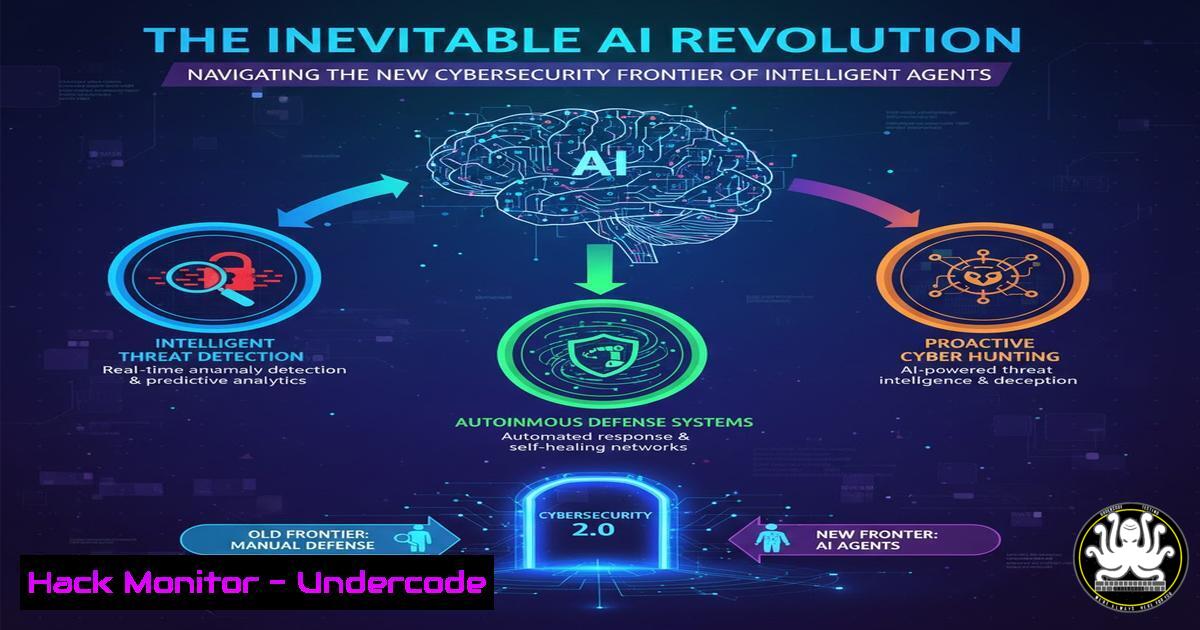
Introduction:
The corporate world is witnessing a technological transformation as significant as the cloud revolution of the past decade, with Artificial Intelligence (AI) and intelligent agents taking center stage. This paradigm shift, prominently featured at events like Microsoft Ignite, brings unprecedented opportunities alongside a radically expanded attack surface that security professionals must immediately address. As organizations rush to integrate AI capabilities, the security framework surrounding these systems becomes the critical differentiator between innovation and catastrophic vulnerability.
Learning Objectives:
- Understand the core security models and shared responsibility framework for enterprise AI implementations.
- Learn practical hardening techniques for AI endpoints and intelligent agents across major platforms.
- Develop mitigation strategies for API-based attacks targeting AI service infrastructure.
- Implement monitoring and detection specifically designed for AI-powered threat vectors.
- Master ethical hacking methodologies to proactively test AI system security.
You Should Know:
1. The AI Security Shared Responsibility Model
The cloud transformation taught us that security is never purely the vendor’s responsibility, and this lesson applies doubly to AI systems. Microsoft’s commitment to “strengthening security” means they secure the underlying platform, but customers bear responsibility for configuring AI services securely, managing access controls, and protecting data processed through intelligent agents.
Step-by-step guide explaining what this does and how to use it:
– Step 1: Identify all AI services in your environment using Azure resource graph queries:
az graph query -q "resources | where type contains 'machinelearning' or type contains 'cognitiveservices'"
– Step 2: Map data flows between AI services and your data sources using service principals audit:
Get-AzADServicePrincipal | Where-Object {$<em>.DisplayName -like "AI" -or $</em>.DisplayName -like "ML"}
– Step 3: Implement Azure Policy to enforce encryption and network restrictions on new AI resources:
{
"if": {
"allOf": [
{ "field": "type", "equals": "Microsoft.CognitiveServices/accounts" },
{ "not": { "field": "Microsoft.CognitiveServices/accounts/encryption.keySource", "equals": "Microsoft.KeyVault" } }
]
},
"then": { "effect": "deny" }
}
2. Hardening Intelligent Agent Endpoints
Intelligent agents represent the most exposed component of AI infrastructure, often processing sensitive data and making autonomous decisions. These endpoints require specialized security configurations beyond traditional web application hardening.
Step-by-step guide explaining what this does and how to use it:
– Step 1: Implement input validation and sanitization for prompts to prevent prompt injection attacks:
import re
def sanitize_prompt(user_input):
 Remove potential command injection patterns
malicious_patterns = [r"system(|exec(|subprocess|import os", r"../", r"--[\w-]+"]
sanitized = user_input
for pattern in malicious_patterns:
sanitized = re.sub(pattern, "", sanitized, flags=re.IGNORECASE)
return sanitized[:1000]  Limit input length
– Step 2: Configure network security groups to restrict AI agent endpoints to specific source IP ranges:
az network nsg rule create \
--nsg-name "AI-Agents-NSG" \
--name "Allow-AI-Agent-Inbound" \
--priority 100 \
--source-address-prefixes "10.0.1.0/24" "192.168.1.100" \
--source-port-ranges "" \
--destination-address-prefixes "" \
--destination-port-ranges 443 8080 \
--access Allow \
--protocol Tcp
– Step 3: Enable Azure Application Gateway WAF with custom rules for AI-specific attacks:
az network application-gateway waf-policy create \
--name "AI-WAF-Policy" \
--resource-group "RG-AI-Security" \
--type Microsoft.Network/ApplicationGatewayWebApplicationFirewallPolicies
3. API Security for AI Service Integration
AI services primarily expose REST APIs that become attractive targets for attackers seeking to manipulate AI behavior, exfiltrate training data, or disrupt business processes. Traditional API security measures often miss AI-specific attack vectors.
Step-by-step guide explaining what this does and how to use it:
– Step 1: Implement robust authentication using Azure Managed Identities instead of API keys:
// Using Azure.Identity for secure token acquisition
var credential = new DefaultAzureCredential();
var client = new OpenAIClient(new Uri("https://your-ai-resource.openai.azure.com/"), credential);
– Step 2: Configure rate limiting and quota management to prevent API abuse and resource exhaustion:
 Azure API Management policy for AI endpoints
<rate-limit-by-key calls="100" renewal-period="60" counter-key="@(context.Subscription.Id)" />
<quota-by-key calls="10000" bandwidth="100000" renewal-period="3600" counter-key="@(context.Subscription.Id)" />
– Step 3: Deploy Azure API Management with custom policies to detect anomalous AI API usage patterns:
<validate-content unspecified-content-type-action="prevent" max-size="102400" size-exceeded-action="prevent">
<content-type>application/json</content-type>
</validate-content>
4. AI-Specific Vulnerability Management
Traditional vulnerability scanners lack signatures for AI model vulnerabilities, prompt injection flaws, training data poisoning, and model inversion attacks. Organizations need specialized tooling and methodologies.
Step-by-step guide explaining what this does and how to use it:
– Step 1: Conduct regular security reviews of AI model training pipelines and data sources:
 Scan training datasets for potential poisoning
python -m pip install aisafety
aisafety scan-dataset --path /datasets/training/ --checks data_poisoning,backdoor
– Step 2: Implement continuous monitoring for model drift and performance degradation that might indicate security issues:
from azure.ai.ml import MLClient
from azure.identity import DefaultAzureCredential

credential = DefaultAzureCredential()
ml_client = MLClient(credential, subscription_id, resource_group, workspace_name)

Set up data drift monitoring
from azure.ai.ml.datadrift import DataDriftDetector
detector = DataDriftDetector.create(...)
– Step 3: Perform adversarial testing against production AI models using frameworks like Microsoft Counterfit:
git clone https://github.com/Azure/counterfit
cd counterfit
pip install -e .
counterfit init
counterfit scan --target my-ai-model --output scan-results.json
5. Identity and Access Management for AI Services
The principle of least privilege becomes critically important with AI systems, as over-permissioned intelligent agents can cause widespread damage if compromised through prompt injection or other attacks.
Step-by-step guide explaining what this does and how to use it:
– Step 1: Implement Azure Conditional Access policies requiring MFA and device compliance for AI service access:
New-AzADConditionalAccessPolicy -DisplayName "Require MFA for AI Services" `
-State "enabled" `
-Conditions @{...} `
-GrantControls @{
"Operator" = "OR"
"BuiltInControls" = @("mfa", "compliantDevice")
}
– Step 2: Create custom Azure RBAC roles with minimal permissions for AI service principals:
{
"Name": "AI Data Reader",
"IsCustom": true,
"Description": "Can read data for AI processing but not modify models",
"Actions": [
"Microsoft.CognitiveServices/accounts/read",
"Microsoft.MachineLearningServices/workspaces/data/read"
],
"NotActions": [],
"DataActions": [],
"NotDataActions": []
}
– Step 3: Regularly audit service principal permissions and sign-in activity using Azure AD logs:
az monitor activity-log list \
--resource-provider "Microsoft.CognitiveServices" \
--start-time 2023-01-01T00:00:00Z \
--end-time 2023-12-31T23:59:59Z
6. Secure Development Practices for AI Integration
Development teams building applications with AI components require specialized security training and must implement secure coding practices specifically designed for AI interactions.
Step-by-step guide explaining what this does and how to use it:
– Step 1: Integrate AI security testing into CI/CD pipelines using tools like OWASP ML Top 10 checklist:
 Azure DevOps pipeline example
- task: Bash@3
displayName: 'AI Security Scan'
inputs:
targetType: 'inline'
script: |
pip install bandit safety
bandit -r ./ai_components/ -f json -o bandit-results.json
safety check --json -o safety-report.json
– Step 2: Implement comprehensive logging for all AI interactions to detect anomalies and attacks:
import logging
from openai import AzureOpenAI

client = AzureOpenAI(
api_key=os.getenv("AZURE_OPENAI_KEY"),
api_version="2023-12-01-preview",
azure_endpoint=os.getenv("AZURE_OPENAI_ENDPOINT")
)

Log all prompts and responses for security monitoring
logging.info(f"AI Request: {prompt}")
response = client.chat.completions.create(model="gpt-4", messages=[{"role": "user", "content": prompt}])
logging.info(f"AI Response: {response.choices[bash].message.content}")
– Step 3: Conduct threat modeling sessions specifically focused on AI components using the STRIDE methodology adapted for AI systems.
7. Incident Response Planning for AI Compromises
Traditional incident response plans often fail to address AI-specific attack scenarios like model poisoning, prompt injection chains, or training data exfiltration. Organizations need specialized playbooks.
Step-by-step guide explaining what this does and how to use it:
– Step 1: Develop and document AI-specific incident response playbooks covering scenarios like:
– Prompt injection leading to data exfiltration
– Model poisoning causing biased outputs
– Adversarial attacks manipulating AI decisions
– Step 2: Implement automated detection for AI security incidents using Azure Sentinel:
// Detect potential prompt injection attempts
AWSession
| where RequestBody has "ignore previous" or RequestBody has "system prompt"
| where TimeGenerated > ago(1h)
| project TimeGenerated, IPAddress, UserAgent, RequestBody
– Step 3: Conduct tabletop exercises simulating AI security incidents to test response capabilities and refine playbooks quarterly.
What Undercode Say:
- The AI security paradigm requires fundamentally rethinking traditional cybersecurity approaches, treating the AI model itself as a critical asset requiring protection.
- Organizations that delay implementing AI-specific security controls will face exponentially increasing risks as intelligent agents become more autonomous and interconnected.
The rapid enterprise adoption of AI mirrors the cloud transformation era, but with significantly higher stakes due to AI’s autonomous decision-making capabilities. Microsoft’s security investments provide a foundation, but ultimately organizations bear responsibility for securing their AI implementations. The most successful organizations will be those that integrate AI security into their DevOps processes from the beginning, rather than attempting to bolt it on afterward. Security teams must evolve beyond traditional perimeter defense and develop expertise in protecting statistical systems that behave differently than conventional software.
Prediction:
Within two years, we will witness the first major enterprise breach originating from a compromised intelligent agent, leading to regulatory actions that will formalize AI security frameworks. This will mirror the evolution of cloud security standards post-2010, but with greater urgency due to AI’s potential for autonomous action. Organizations that proactively implement the security measures outlined above will not only prevent breaches but will gain competitive advantage through trusted AI implementations that customers and partners can rely on with confidence.
🎯Let’s Practice For Free:
IT/Security Reporter URL:
Reported By: Jussi Pekka – Hackers Feeds
Extra Hub: Undercode MoN
Basic Verification: Pass ✅


