Listen to this Post
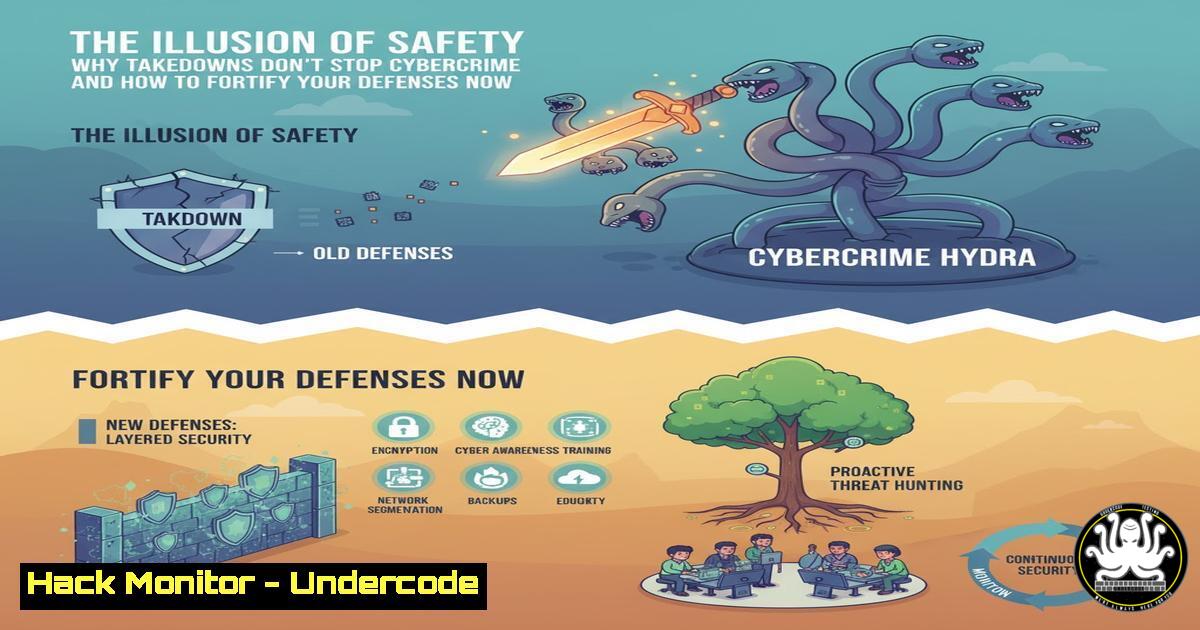
Introduction:
High-profile law enforcement takedowns, like the recent Europol operation, create a false sense of security. While they disrupt specific cybercrime-as-a-service (CaaS) networks, the underlying threat ecosystem remains, rapidly adapting and shifting to new infrastructure. This article provides a technical blueprint for moving beyond a reactive posture and building defensible, resilient systems that can withstand the persistent onslaught of modern cyber threats.
Learning Objectives:
- Understand the technical mechanisms of common CaaS offerings and how to defend against them.
- Implement proactive hardening measures for endpoints, networks, and cloud environments.
- Develop and document forensic-ready procedures to enable effective incident response and investigation.
You Should Know:
1. Endpoint Visibility and Hardening
The first line of defense is a properly configured and monitored endpoint. Adversaries rely on poorly maintained systems.
Verified Commands & Snippets:
Linux: Check for Unauthorized User Accounts
`awk -F: ‘($3 >= 1000) {print $1}’ /etc/passwd`
This command lists all users with a UID of 1000 or greater, which typically represents local human users. Regularly audit this list for unknown accounts.
Windows: Audit PowerShell Script Block Logging (Admin PowerShell)
`Get-ItemProperty -Path “HKLM:\SOFTWARE\Policies\Microsoft\Windows\PowerShell\ScriptBlockLogging” -Name “EnableScriptBlockLogging”`
This checks if detailed PowerShell logging is enabled. A return value of ‘1’ is critical for detecting malicious scripts.
Linux: Harden SSH Configuration (`/etc/ssh/sshd_config`)
Protocol 2
PermitRootLogin no
PasswordAuthentication no
MaxAuthTries 3
This configuration disables old protocols, prevents direct root login, and enforces key-based authentication, drastically reducing brute-force attack surfaces.
Windows: Enable and Audit Windows Defender Application Control (Code Integrity)
`Get-CIPolicy -ProviderID “{0cc5d8b1-60e7-4e18-8746-6b0c3b10382f}”`
This PowerShell command retrieves the applied Code Integrity policy, which can restrict executable files to only those that are authorized.
2. Network Security and Traffic Analysis
CaaS operations depend on command-and-control (C2) communication. Detecting anomalous traffic is key.
Verified Commands & Snippets:
Cross-Platform: Capture Suspicious DNS Requests with tcpdump
`sudo tcpdump -i any -n ‘port 53 and (udp
 & 0x80 != 0)'`
This captures DNS query packets, which can reveal beaconing to malicious domains. Analyze the output for strange, non-corporate domain names.

<h2 style="color: yellow;"> Windows: Analyze Network Connections with PowerShell</h2>


`Get-NetTCPConnection | Where-Object {$_.State -eq "Established"} | Select-Object LocalAddress, LocalPort, RemoteAddress, RemotePort, OwningProcess | Format-Table`
This provides a real-time list of all established network connections and the process ID (PID) responsible, helping to identify unauthorized outbound communication.

<h2 style="color: yellow;"> Cross-Platform: Craft a Custom Snort/Suricata Rule</h2>


`alert tcp $HOME_NET any -> $EXTERNAL_NET $HTTP_PORTS (msg:"SUSPICIOUS - Potential C2 Beacon"; flow:established,to_server; content:"/api/v1/checkin"; http_uri; fast_pattern; classtype:bad-unknown; sid:1000001; rev:1;)`
This is a basic example of an Intrusion Detection System (IDS) rule to alert on HTTP traffic containing a specific URI pattern indicative of C2 beaconing.

<h2 style="color: yellow;">3. Cloud Infrastructure Hardening</h2>

Misconfigurations in cloud environments are a primary attack vector for CaaS users.

<h2 style="color: yellow;">Verified Commands & Snippets:</h2>

<h2 style="color: yellow;"> AWS CLI: Check for Public S3 Buckets</h2>

<h2 style="color: yellow;">`aws s3api get-bucket-policy-status --bucket YOUR_BUCKET_NAME --query PolicyStatus.IsPublic`</h2>

This command checks if an S3 bucket is publicly accessible. A result of `true` indicates a critical misconfiguration that could lead to data exfiltration.

Azure CLI: Audit for Storage Account Blob Public Access
`az storage account show --name <storage-account-name> --resource-group <resource-group> --query allowBlobPublicAccess`
Similar to the AWS command, this checks an Azure Storage Account for improper public read access.

<h2 style="color: yellow;"> Terraform: Enforce Secure IAM Policy</h2>

[bash]
resource "aws_iam_policy" "deny_s3_public" {
name = "deny-s3-public-access"
path = "/"
description = "Explicitly denies making S3 buckets public"

policy = jsonencode({
Version = "2012-10-17"
Statement = [
{
Action = [
"s3:PutBucketPublicAccessBlock",
"s3:PutBucketPolicy"
]
Effect = "Deny"
Resource = ""
},
]
})
}
This Terraform code creates an IAM policy that explicitly denies the ability to make S3 buckets public, enforcing security at the infrastructure-as-code level.
4. API Security Fundamentals
APIs are the new perimeter and are heavily targeted by automated attacks from CaaS platforms.
Verified Commands & Snippets:
Bash: Fuzz for API Endpoints with ffuf
`ffuf -w /usr/share/wordlists/dirb/common.txt -u https://api.target.com/v1/FUZZ -mc 200,403`
This uses a fuzzing tool to discover hidden or undocumented API endpoints by iterating through a wordlist.
Python: Script to Test for Mass Assignment Vulnerability
import requests
target_url = "https://api.target.com/v1/user/profile"
headers = {'Authorization': 'Bearer YOUR_TOKEN', 'Content-Type': 'application/json'}
data = '{"username":"testuser","isAdmin":true}'
response = requests.patch(target_url, headers=headers, data=data)
print(response.status_code, response.text)
This Python script tests if an API endpoint is vulnerable to mass assignment by attempting to update a privileged field (isAdmin) that should not be user-controllable.
5. Proactive Threat Hunting
Instead of waiting for alerts, assume a breach and hunt for indicators of compromise (IOCs).
Verified Commands & Snippets:
Linux: Hunt for Anomalous Processes
`ps aux –sort=-%mem | head -10`
This lists the top 10 processes by memory usage, helping to identify potential malware or resource-intensive exploits.
Windows: Hunt for Persistence via Scheduled Tasks
`Get-ScheduledTask | Where-Object {$_.State -eq “Ready”} | Select-Object TaskName, TaskPath, Actions`
This PowerShell command lists all scheduled tasks that are ready to run, a common persistence mechanism for malware.
YARA: Create a Custom Rule for CaaS Malware
rule CaaS_Generic_Loader {
meta:
description = "Detects generic loader patterns"
author = "YourDFIRTeam"
date = "2024-01-01"
strings:
$a = { 48 8B 05 ?? ?? ?? ?? 48 89 44 24 ?? }
$b = "http" nocase wide ascii
$c = "/bin/bash -c" nocase
condition:
all of them and filesize < 2MB
}
This is a simple YARA rule to scan files for a combination of shell command execution and network communication, common in loaders.
6. Digital Forensics and Evidence Collection
When an incident occurs, having a defensible record is paramount.
Verified Commands & Snippets:
Linux: Preserve File Timestamps with `stat`
`stat important_file.txt`
The `stat` command displays detailed timestamps (access, modify, change) which are crucial for building a timeline of attacker activity.
Cross-Platform: Create a Cryptographic Hash of a File
`sha256sum suspicious_file.exe`
This generates a SHA-256 hash of a file, which can be used to uniquely identify it and check against threat intelligence databases.
Windows: Dump Memory of a Suspect Process (Requires Admin)
`.\WinPMEM.exe -o memory.raw`
Using a tool like WinPMEM, you can acquire a full physical memory dump for later analysis with tools like Volatility, preserving evidence of runtime activity.
What Undercode Say:
- Takedowns are a Speed Bump, Not a Roadblock. The core business model of cybercrime—providing tools and services for a fee—is too profitable to be dismantled by arrests alone. The infrastructure and knowledge are commoditized and easily replicated.
- Your Defensible Posture is Your Greatest Asset. The original post’s core question—”could you prove the steps you took were reasonable?”—is the north star. Technical controls are meaningless without the logging, documentation, and processes to demonstrate their effective operation during a crisis. The technical commands and configurations provided are not just best practices; they are the building blocks of a defensible security program that can withstand scrutiny from regulators, boards, and law enforcement after an incident. Investing in this proactive hardening and visibility is what truly mitigates the “sideways” threat highlighted by the Europol operation.
Prediction:
The CaaS market will continue to mature, offering more specialized, AI-powered offensive tools that are easier to use and harder to detect. We will see a rise in “AI-as-a-Service” for hacking, where AI models are rented to perform sophisticated social engineering, vulnerability discovery, and even automated code exploitation. This will lower the barrier to entry for high-impact attacks, forcing defenders to increasingly rely on AI-driven security orchestration and automated response (SOAR) platforms to keep pace. The future battleground will be defined by the speed and intelligence of automated systems on both sides of the fence.
🎯Let’s Practice For Free:
IT/Security Reporter URL:
Reported By: Blair Joynson – Hackers Feeds
Extra Hub: Undercode MoN
Basic Verification: Pass ✅


