
Listen to this Post
Introduction:
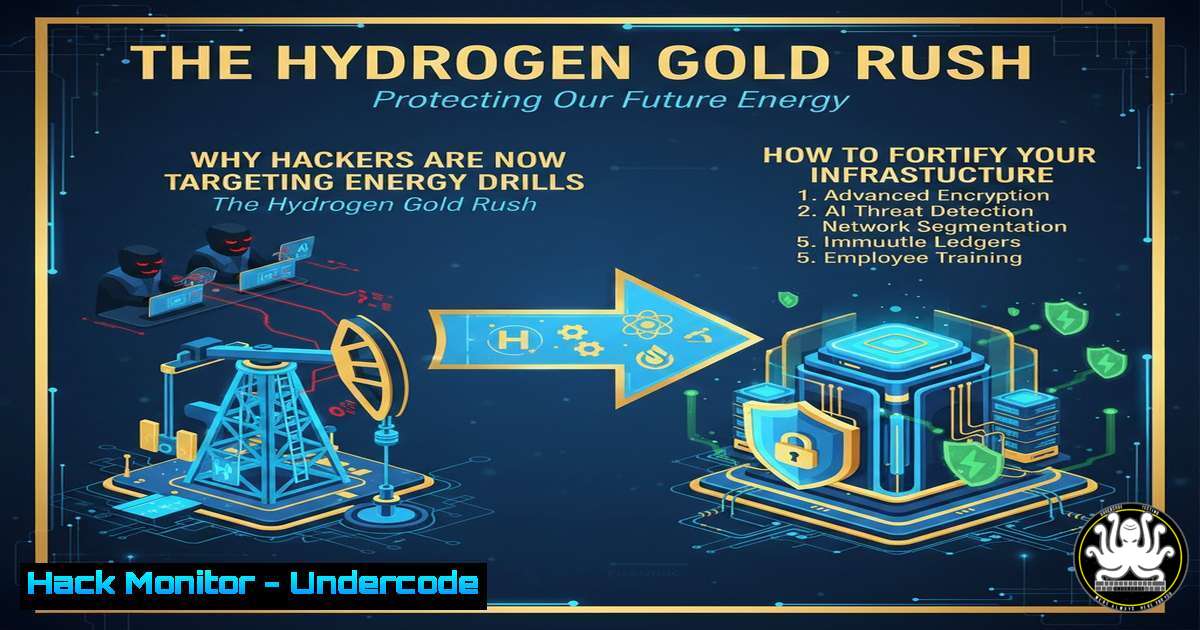
The emergence of hydrogen as a viable clean energy source marks not just an industrial revolution, but a seismic shift in the cyber threat landscape. As pilot projects, like Vema Hydrogen’s operations in Quebec, transition to full-scale production, the underlying Operational Technology (OT) and Internet of Things (IoT) infrastructure becomes a high-value target for nation-states and ransomware groups. This convergence of IT, cloud, and industrial control systems (ICS) in remote energy fields creates a vast, often poorly secured, attack surface that demands immediate and expert attention from cybersecurity professionals.
Learning Objectives:
- Understand the unique cybersecurity risks inherent in next-generation energy infrastructure combining IoT, OT, and cloud.
- Learn practical steps to map, segment, and harden network architecture for industrial environments.
- Implement monitoring and incident response protocols tailored for critical infrastructure systems.
You Should Know:
1. Mapping the Hybrid IT-OT-IoT Attack Surface
The modern hydrogen drill site is a data hub. Sensors monitor pressure and purity, programmable logic controllers (PLCs) manage valves, and all data is aggregated for cloud analytics. Each node is a potential entry point.
Step‑by‑step guide:
- Asset Discovery: Use passive and active discovery tools to inventory all devices. On the IT network, use `nmap` for initial scanning, but with extreme caution on OT networks.
Example: Gentle ping scan to identify live hosts on a management VLAN
nmap -sn 10.10.100.0/24
- Protocol Identification: Identify industrial protocols (e.g., Modbus TCP, OPC UA, DNP3) in use. Use a network analyzer like Wireshark with appropriate filters.
In Wireshark, use display filters:
tcp.port == 502 || udp.port == 1911 || tcp.port == 44818
- Risk Profiling: Categorize assets based on function (e.g., “Safety Instrumented System,” “Historical Data Server”) and criticality. A compromised pressure sensor could feed false data leading to catastrophic decisions.
2. Implementing Zero-Trust Network Segmentation
Flat networks are a legacy danger. A breach in the corporate WiFi must not traverse to drill control systems. Zero-Trust mandates “never trust, always verify.”
Step‑by‑step guide:
- Design Zones: Define zones (Corporate, Demilitarized Zone (DMZ), OT Supervisory, OT Cell/Area) following the ISA/IEC 62443 standard. Physically or logically separate them with firewalls.
- Configure Firewall Rules: Implement granular, deny-by-default rules. For a firewall like `pfSense` or a next-gen firewall, create rules that only allow specific, necessary traffic between zones.
Example conceptual rule for a firewall protecting the OT zone:
ALLOW SRC: Historian Server (DMZ) DST: PLC_01 (OT Cell) PORT: TCP/502
DENY ALL OTHER
- Micro-Segmentation: Within the OT zone, use VLANs and host-based firewalls on Windows-based HMIs.
Windows Command: Create a rule to block all but necessary ports on an HMI
New-NetFirewallRule -DisplayName "Allow OPC UA" -Direction Inbound -LocalPort 4840 -Protocol TCP -Action Allow
3. Hardening Industrial Control System (ICS) Endpoints
OT devices often run legacy, unpatched operating systems. Hardening is critical.
Step‑by‑step guide:
- OS Hardening: Apply CIS Benchmarks for Windows or Linux. Disable unnecessary services (e.g.,
Telnet,FTP), enforce strong passwords, and implement application whitelisting.Linux: Disable avahi-daemon if not needed sudo systemctl stop avahi-daemon sudo systemctl disable avahi-daemon
- PLC/Hardware Hardening: Change all default passwords on HMIs, PLCs, and engineering workstations. Disable unused ports and protocols on the devices themselves via the engineering software.
- Patch Management: Establish a risk-based patching schedule. Test patches in an identical offline environment before deployment. For systems that cannot be patched, implement compensatory controls like network intrusion detection.
4. Securing Cloud Data Pipelines & API Endpoints
Field data sent to cloud platforms (like AWS or Azure) for analysis introduces API and cloud security risks.
Step‑by‑step guide:
- Encrypt Data in Transit & At Rest: Ensure all sensor-to-cloud communication uses TLS 1.3. Use cloud provider tools to enable encryption for data storage.
- Secure APIs: If using a REST API to transmit drill data, implement strict authentication (OAuth 2.0), rate limiting, and input validation to prevent injection attacks.
Python Flask example: Basic input validation for an API receiving sensor data
from flask import request, abort
import re</li>
</ol>

@app.route('/api/sensor-data', methods=['POST'])
def post_sensor_data():
data = request.get_json()
sensor_id = data.get('sensor_id')
 Validate sensor_id format to prevent injection
if not re.match(r'^SR[0-9]{4}$', sensor_id):
abort(400, description="Invalid sensor ID format")
 ... process data ...
3. Harden Cloud Configurations: Use infrastructure-as-code (IaC) scanning tools (like `Checkov` for Terraform) to prevent misconfigurations of cloud storage buckets (which could expose sensitive geophysical data) or compute instances.
5. Deploying Anomaly Detection & Continuous Monitoring
You can’t protect what you can’t see. Continuous monitoring for anomalous behavior is non-negotiable.
Step‑by‑step guide:
- Deploy a SIEM: Ingest logs from firewalls, Windows Event logs, and OT-aware devices. Use a Security Information and Event Management (SIEM) system like Wazuh (open-source) or Splunk.
- Create OT-Specific Alerts: Build alerts for unusual protocol commands (e.g., a “write” command to a critical valve controller from an unfamiliar IP), or communication outside normal operational hours.
- Network Traffic Analysis (NTA): Deploy a tool like Zeek (
formerly Bro) on a SPAN port in the OT network to create granular network logs and detect deviations from baseline traffic patterns.
What Undercode Say:
- The New Frontier is Hybrid: The most critical attack surface is no longer just corporate servers; it’s the fusion layer where IT networks meet OT and IoT systems in remote industrial settings. Security strategies must be designed for this hybrid reality.
- Security Precedes Scale: As hydrogen energy scales from pilot wells to widespread production, cybersecurity must be baked into the architectural blueprint from day one. Retrofitting security is costly and vulnerable.
Analysis: The push for hydrogen energy is not just an environmental story; it’s a massive cybersecurity project. Each drill site, pipeline, and electrolyzer is a potential cyber-physical target. The technical content extracted—though not explicitly in the post—relates directly to securing the foundational technologies (IoT, cloud, remote operations) that enable this new industry. The industry’s success hinges on its ability to operate safely and resiliently. Failure to implement robust cybersecurity from the outset will result in catastrophic physical, financial, and reputational damage, potentially derailing the entire clean energy transition. The conversation must evolve from “can we produce hydrogen?” to “can we produce and protect it?”
Prediction:
Within the next 18-24 months, as hydrogen infrastructure moves beyond pilots, we will witness the first major, publicly disclosed cyberattack on a hydrogen production or storage facility. This will likely involve ransomware targeting SCADA systems or a supply-chain attack compromising sensor firmware, leading to operational shutdowns. The incident will serve as a brutal catalyst, forcing rapid regulatory action (similar to TSA directives for pipelines) and a surge in demand for cybersecurity professionals skilled in OT/IoT security, dramatically accelerating investment and innovation in the industrial cybersecurity space.
▶️ Related Video (74% Match):
🎯Let’s Practice For Free:
IT/Security Reporter URL:
Reported By: Marknvena Hydrogen – Hackers Feeds
Extra Hub: Undercode MoN
Basic Verification: Pass ✅🔐JOIN OUR CYBER WORLD [ CVE News • HackMonitor • UndercodeNews ]
📢 Follow UndercodeTesting & Stay Tuned:


