
Listen to this Post
Introduction:
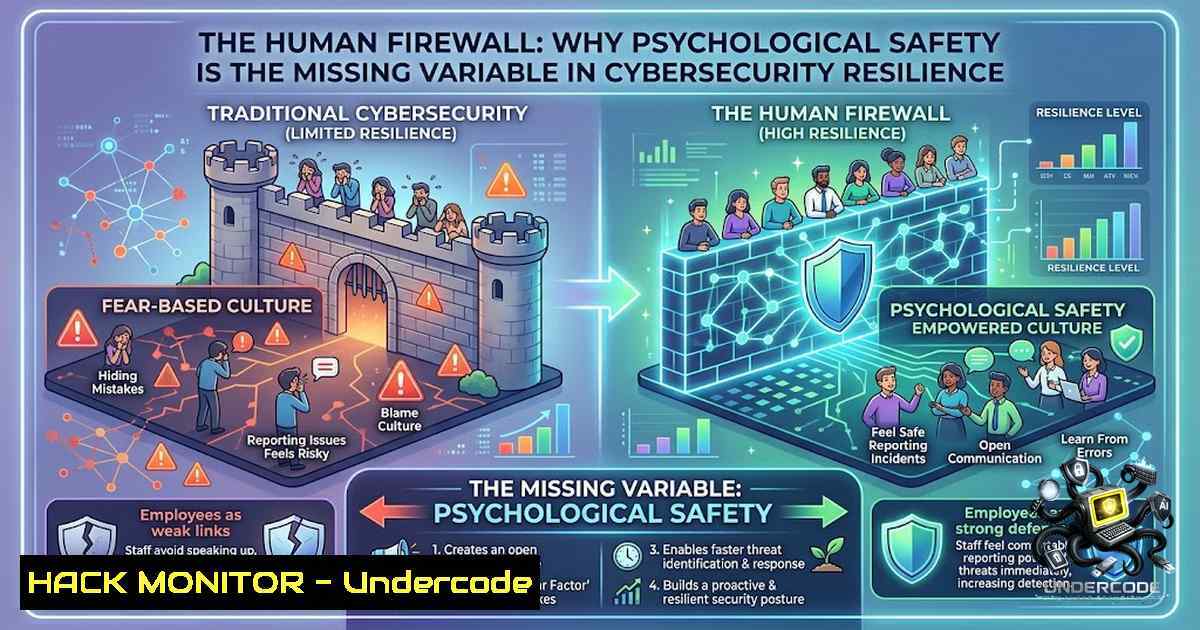
The modern cybersecurity paradigm has long been dominated by technical controls—firewalls, intrusion detection systems, and advanced endpoint protection. However, recent discussions emerging from leadership forums such as the “Hack Ur Mindset” event in Chile highlight a critical, often overlooked vulnerability: the human element. As artificial intelligence automates threat detection and data analysis, the efficacy of security infrastructure is increasingly dependent on interpersonal dynamics and psychological safety. This article explores the intersection of human behavior, workplace culture, and technical security frameworks, providing actionable insights into how organizations can foster resilience by treating relationships as a core component of their security architecture.
Learning Objectives & Secrets:
- Objective 1: Map Human Behavior to Security Posture – Understand how the quality of interpersonal relationships directly impacts the speed and accuracy of incident response and vulnerability reporting.
- Objective 2: Leverage Emotional Intelligence for Incident Response – Learn to utilize empathy and communication to de-escalate security crises and improve team cohesion during high-stress breaches.
- Objective 3: Integrate Psychological Safety into Technical Workflows – Discover how to embed psychological safety principles into DevOps, SecOps, and IT training to encourage proactive risk mitigation and honest error reporting.
You Should Know:
- The Psychology of Security Culture and Threat Reporting
Traditional security training focuses on recognizing phishing emails and following password policies. However, the greatest barrier to threat mitigation is often the fear of blame. In organizations where leaders fail to foster trust, employees are less likely to report suspicious activity or near-misses, leading to delayed incident response. Building a security culture requires shifting from a “blame and punish” model to a “learn and improve” model. This is analogous to how Inner Development Goals (IDG) emphasize internal awareness to improve external outcomes. The following commands are used to audit user behavior on Windows and Linux systems to identify potential insider threats or insecure practices, but their effectiveness relies on a culture that encourages reporting rather than hiding mistakes.
Windows Command for User Activity Auditing:
 Enable advanced audit policies to track user logon and file access events.
auditpol /set /subcategory:"Logon" /success:enable /failure:enable
auditpol /set /subcategory:"File System" /success:enable /failure:enable
 Generate a report of recent security events (Event ID 4624 for successful logons).
Get-EventLog -LogName Security -InstanceId 4624 -1ewest 10
Linux Command for Monitoring Authentication Logs:
 Monitor secure logs for failed login attempts (potential brute force).
sudo tail -f /var/log/secure | grep "Failed password"
 Check for unusual sudo access attempts.
grep "sudo" /var/log/auth.log
Step‑by‑step guide explaining what this does and how to use it:
1. Windows: Open PowerShell as Administrator. Run `auditpol` commands to ensure your system logs user authentications and file accesses. Use `Get-EventLog` to filter for specific events like user logons (4624) to establish a baseline of normal activity.
2. Linux: Access the terminal. Use `tail -f` to monitor the secure log in real-time for failed password attempts, which can indicate a password spray attack. Combine with `grep` commands to parse historical logs for anomalies in privilege escalation (sudo).
3. Actionable Insight: Explain to the team that these logs are not for punishment but for pattern recognition. Encourage team members to report anomalies without fear to catch threats early.
2. Implementing “Safety Check-Ins” in Technical Meetings
Just as psychological safety is built through consistent, intentional dialogue in leadership, it can be integrated into the DevOps lifecycle through structured check-ins. This ensures that team members feel comfortable raising concerns about deployment risks or security flaws without fear of reprisal. A simple 5-minute “Risk Radar” session during daily stand-ups can significantly reduce the rate of preventable misconfigurations. Below is a script for a custom Slack bot or Microsoft Teams webhook that can facilitate anonymous feedback regarding security concerns.
Linux Shell Script to Send Anonymous Feedback via API:
!/bin/bash
 Function to send a message to a webhook (e.g., Slack) for anonymous reporting.
send_webhook() {
local webhook_url="YOUR_WEBHOOK_URL"
local message="$1"
curl -X POST -H 'Content-type: application/json' --data "{\"text\":\"Anonymous Security Note: $message\"}" $webhook_url
}
 Example usage: ./send_feedback.sh "I noticed a port open on 22 that shouldn't be."
send_webhook "$1"
Step‑by‑step guide explaining what this does and how to use it:
1. Create the script (nano send_feedback.sh) and make it executable (chmod +x send_feedback.sh).
2. Configure the `webhook_url` variable with your team’s messaging platform integration URL.
3. Instruct the team that this script is an open channel to report any “gut feeling” about a security flaw without identifying themselves. By reducing the friction to reporting, you foster a sense of collective responsibility for system integrity.
3. The Human Element in Cloud Security Hardening
As organizations migrate to cloud environments, the complexity of IAM (Identity and Access Management) policies increases. Mistakes in these policies are rarely due to technical incompetence but often due to cognitive overload and poor communication between distributed teams. To combat this, incorporate “peer review” into your IaC (Infrastructure as Code) processes. The following is an example of a policy denial error handling in AWS CloudFormation that encourages a “no-blame” review process.
AWS CLI Command to Validate IAM Policies:
 Validate an IAM policy JSON file locally before deployment.
aws iam validate-policy --policy-document file://policy.json
AWS CloudFormation Error Handling Template Snippet:
Resources:
MySecurityGroup:
Type: AWS::EC2::SecurityGroup
Properties:
GroupDescription: Allow traffic
SecurityGroupIngress:
- IpProtocol: tcp
FromPort: 22
ToPort: 22
CidrIp: 0.0.0.0/0  This is a high-risk vulnerability!
 NOTE: This is a dangerous configuration. It should be blocked by policy.
Step‑by‑step guide explaining what this does and how to use it:
1. AWS: Before deploying, run `aws iam validate-policy` to catch syntax errors. However, to catch semantic errors like overly permissive rules (0.0.0.0/0), implement a pre-commit hook that runs `cfn-1ag` or checkov.
2. Procedure: Establish a “buddy check” system where each policy change is reviewed by a peer who is not the author. Use the code comments (like the one above) to flag high-risk areas for scrutiny. This reduces the chances of a misconfiguration leading to a data breach.
3. Culture: Frame these reviews as “safety moments” rather than “quality control” to build the psychological safety needed to catch errors early.
- Training for Incident Response: Simulating Stress to Build Resilience
Human performance degrades under stress. Standard incident response (IR) drills often fall short because they don’t simulate the emotional pressure of a real breach. Effective training must pair technical simulations with stress management techniques. This involves running “red team” exercises where the scenario is ambiguous, forcing the team to communicate with incomplete information. The following commands are useful for simulating a Denial of Service (DoS) attack or network congestion in a test environment to train team resilience.
Linux Command to Simulate Network Stress (Hping3):
 Simulate a SYN flood attack on a test server (use only in isolated environments).
sudo hping3 -S -p 80 --flood --rand-source <TARGET_IP>
Step‑by‑step guide explaining what this does and how to use it:
1. Preparation: Ensure you have permission to run this on your isolated test network. Install hping3 (sudo apt-get install hping3).
2. Execution: Run the command to simulate a high-traffic event. This forces the IR team to collaborate quickly to identify the source and implement mitigation strategies (e.g., rate limiting) while managing stress.
3. Debrief: After the drill, hold a “psychological debrief” where team members can openly discuss what “made them panic” and what “kept them grounded.” This links technical reaction directly to emotional regulation.
- API Security and the Importance of Clear Communication
API keys are a common point of failure, often exposed in code repositories. While tools like GitGuardian can detect these leaks, preventing them starts with communication. Developers need to feel safe enough to ask “dumb questions” about secret management. The following demonstrates how to use a pre-commit hook to automatically scan for secrets and how to create a secure environment variable.
Git Pre-commit Hook (Bash) to Prevent Secret Leaks:
!/bin/bash
 pre-commit hook to detect high-entropy strings (potential API keys).
if grep -E "AIza[0-9A-Za-z_-]{35}" "$@"; then
echo "Warning: Potential Google API Key detected. Please remove before committing."
exit 1
fi
Windows Command to Set Environment Variables Securely:
 Set environment variable for the current session (not persistent).
$env:API_KEY = "SecureKey123"
 Run the application that needs the key.
python app.py
Step‑by‑step guide explaining what this does and how to use it:
1. Git: Save the pre-commit hook in .git/hooks/pre-commit. Make it executable (chmod +x .git/hooks/pre-commit). It will run automatically to block commits that contain patterns matching common API key formats.
2. Windows: Avoid storing secrets in plaintext. Use environment variables ($env:) for runtime access to decouple sensitive data from source code.
3. Communication: Pair this technical control with a zero-tolerance policy for embarrassment. If a key is exposed, the team should celebrate the catch (via the hook) rather than berate the developer.
What Undercode Say:
- Key Takeaway 1: The foundation of a secure system is not the technology stack but the trust stack. Employees who feel psychologically safe are more likely to report threats and innovate solutions.
- Key Takeaway 2: Security training must evolve to include emotional resilience and interpersonal communication. The “Hack Your Mindset” philosophy is directly applicable to defending against social engineering and insider threats.
Analysis:
The disconnect between technical teams and leadership often leads to security fatigue—where protocols are bypassed for speed. By applying principles from the Inner Development Goals (IDG), we can build “soft skill” bridges across departments. The human brain is the most complex security sensor; it can detect anomalies that logs cannot. Investing in leadership development to foster empathy is as critical as investing in next-generation firewalls. Organizations that excel in the future will be those that view their employees as sensors of risk, not vectors of risk. This requires dismantling hierarchical barriers and creating an environment where frontline IT staff can challenge security assumptions without fear.
Prediction:
- +1: Organizations that actively integrate psychological safety metrics into their security KPIs will see a measurable 30-40% reduction in incident response times within the next five years, as reporting becomes instantaneous and non-punitive.
- +1: The rise of AI will democratize technical hacking tools, making the “human firewall” the only variable that cannot be easily automated, leading to a surge in demand for CISOs with backgrounds in organizational psychology.
- -1: Companies that continue to prioritize technical solutions over leadership development will experience a surge in data breaches driven not by sophisticated malware, but by simple human errors that went unreported due to fear of retaliation.
- -1: The security talent shortage will worsen as burnout increases in toxic environments, forcing organizations to pay exorbitant premiums to retain skilled workers who do not feel valued as individuals.
▶️ Related Video (82% Match):
🎯Let’s Practice For Free:
🎓 Live Courses & Certifications:
Join Undercode Academy for Verified Certifications
🚀 Request a Custom Project:
Secure, high-velocity infrastructure and disruptive technological engineering. Contact our engineering team for high-tier development and proprietary systems:
[email protected]
💎 Smart Architecture | 🛡️ Secure by Design | ⭐ Trusted by Thousands
IT/Security Reporter URL:
Reported By: https://lnkd.in/p/eKXZKgx2 – Hackers Feeds
Extra Hub: Undercode MoN
Basic Verification: Pass ✅


