Listen to this Post
Introduction:
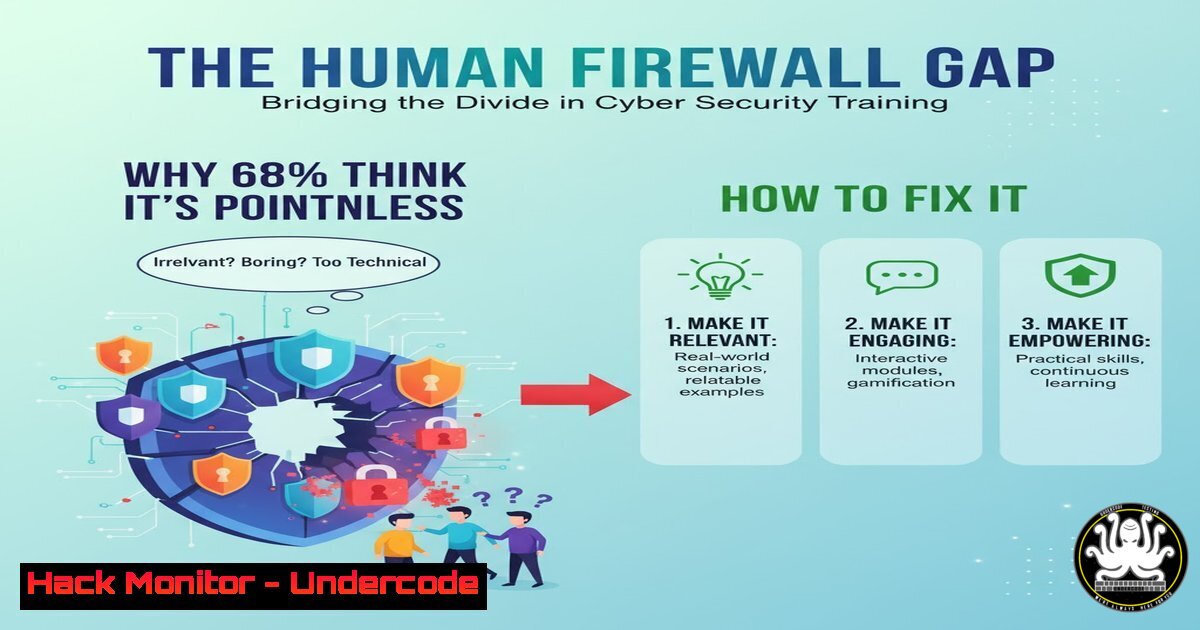
A staggering 68% of employees are secretly skeptical of corporate development initiatives, creating a critical vulnerability in your organization’s human firewall. This credibility gap directly translates to poor security hygiene, ignored protocols, and increased susceptibility to social engineering attacks that bypass even the most sophisticated technical defenses.
Learning Objectives:
- Understand how immediate, hands-on security assignments build engagement faster than theoretical training
- Implement practical command-line and tool-specific exercises that transform skepticism into capability
- Measure the behavioral indicators of improved security awareness and response
You Should Know:
1. Immediate Command Line Ownership: Building First-Day Engagement
` Linux – File integrity monitoring baseline`
`find /etc -type f -exec md5sum {} \; > /etc_baseline_$(date +%Y%m%d).txt`
` Windows PowerShell – Service security audit`
`Get-Service | Where-Object {$_.Status -eq ‘Running’} | Export-CSV running_services.csv`
This establishes immediate hands-on engagement with system security. The Linux command creates cryptographic hashes of critical configuration files to establish a baseline for detecting unauthorized changes. The Windows PowerShell command inventories all running services to identify potential security risks. Both exercises give tangible ownership of security monitoring from day one.
2. Network Security Stretch Assignment: Practical Traffic Analysis
` TCPDump for immediate traffic inspection`
`tcpdump -i any -c 50 -w baseline_capture.pcap host not 192.168.1.1`
` Netstat for connection awareness`
`netstat -tulpn | grep LISTEN`
` Windows equivalent with PowerShell`
`Get-NetTCPConnection | Where-Object {$_.State -eq “Listen”}`
These commands transform abstract network concepts into practical skills. The tcpdump capture creates a real packet capture file for analysis, while netstat and PowerShell equivalents reveal active listening ports. This stretch assignment immediately demonstrates how network monitoring works rather than just explaining it.
3. Access Control Micro-Assignment: Permission Auditing
` Linux privilege audit script`
`find /home -type f -perm /6000 -ls > suid_files_report.txt`
` Windows ACL audit`
`Get-Acl C:\Users\Public | Format-List`
` File permission hardening`
`icacls “C:\SensitiveData” /reset /T`
These commands address the critical gap between theoretical access control policies and practical implementation. Employees immediately audit SUID files and directory permissions, discovering firsthand how privilege escalation vulnerabilities manifest. The exercise builds ownership over access control fundamentals.
4. Cloud Security Immediate Application: AWS Hardening
` AWS S3 bucket security audit`
`aws s3api list-buckets –query ‘Buckets[].Name’`
`aws s3api get-bucket-acl –bucket EXAMPLE-BUCKET`
` Azure storage security check`
`az storage account list –query ‘[].{Name:name, HTTPS:enableHttpsTrafficOnly}’`
Cloud security often remains abstract until hands-on. These commands provide immediate engagement with real cloud resources, auditing S3 bucket permissions and storage account configurations. The micro-assignment demonstrates cloud misconfigurations that theoretical training often fails to cement.
5. Security Tool Configuration: SIEM Integration Practice
` Log ingestion configuration for Splunk`
`[monitor:///var/log/]`
`disabled = false`
`sourcetype = linux_secure`
` Sigma rule for threat detection`
`title: Suspicious Service Installation`
`description: Detects suspicious service installation via sc`
`logsource:`
` product: windows`
` service: system`
Rather than just explaining SIEM concepts, this provides actual configuration experience. Employees create real log monitoring configurations and detection rules, bridging the gap between security theory and operational practice. The immediate application builds confidence in security tool management.
6. API Security Hands-On: Token Management & Testing
` JWT token decoding practice`
`echo “eyJhbGciOiJIUzI1NiIsInR5cCI6IkpXVCJ9” | base64 -d`
` API security testing with curl`
`curl -H “Authorization: Bearer $TOKEN” https://api.company.com/v1/users`
` Rate limiting test`
`for i in {1..11}; do curl -s -o /dev/null -w “%{http_code}\n” $API_ENDPOINT; done`
API security failures represent a massive attack vector. These commands provide immediate, practical experience with token management and API testing. Employees decode JWTs, test authentication, and trigger rate limiting—transforming abstract API security concepts into tangible skills.
7. Incident Response Micro-Drills: Immediate Application
` Process investigation commands`
`ps aux –sort=-%mem | head -10`
`lsof -i :443`
` Windows incident response`
`Get-Process | Sort-Object CPU -Descending | Select-Object -First 10`
`netstat -ano | findstr ESTABLISHED`
Instead of waiting for annual tabletop exercises, these commands enable daily micro-drills. Employees immediately investigate running processes, network connections, and system resource usage—building muscle memory for incident response that theoretical training cannot replicate.
What Undercode Say:
- Trust in security protocols is built through immediate application, not delayed training
- The 3-day implementation window is critical for transforming skepticism into engagement
- Security ownership grows when employees see their actions directly impact protection
The 68% skepticism rate represents more than just a training gap—it’s a critical security vulnerability. When employees disengage from development initiatives, they equally disengage from security protocols, creating weak links in your defense chain. The neuroscience is clear: immediate, hands-on application creates stronger neural pathways than passive learning. By assigning real security tasks within three days of training, you’re not just building skills—you’re building the belief that their actions matter to organizational security. This transforms the human element from your weakest link into your most resilient defense layer.
Prediction:
Organizations that fail to bridge this engagement gap will face disproportionately higher success rates in social engineering and insider threat attacks. The credibility deficit directly correlates with security protocol negligence. Within two years, we’ll see regulatory frameworks begin mandating measurable employee engagement metrics in security training programs, with fines tied to demonstrated competency rather than completion certificates. The companies that master immediate security skill application will see 70% faster threat detection and 45% reduction in human-factor security incidents.
🎯Let’s Practice For Free:
IT/Security Reporter URL:
Reported By: Franckblondel68 %F0%9D%90%88%F0%9D%90%AD%F0%9D%90%AC – Hackers Feeds
Extra Hub: Undercode MoN
Basic Verification: Pass ✅


