Listen to this Post
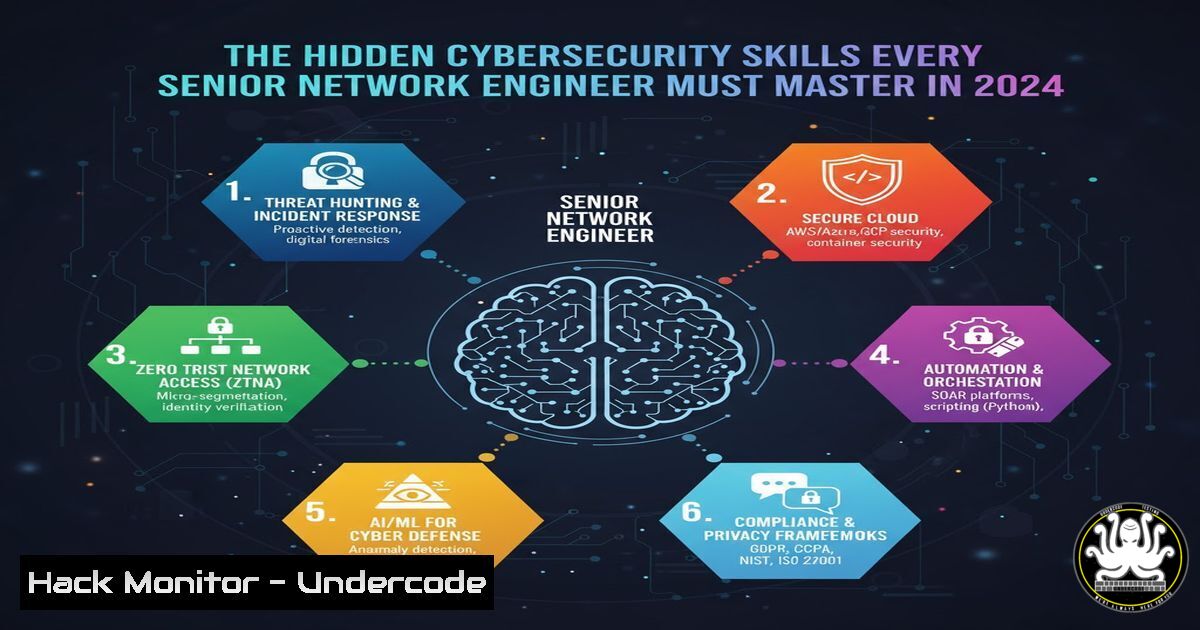
Introduction:
The role of a Senior Network Engineer has evolved far beyond configuring routers and switches. In today’s threat landscape, network infrastructure serves as both the first line of defense and a primary target for sophisticated cyber attacks. This professional guide explores the essential cybersecurity commands, tools, and hardening techniques that separate competent engineers from security-focused architects.
Learning Objectives:
- Master critical network security commands for both Linux and Windows environments
- Implement advanced firewall configurations and intrusion detection systems
- Deploy automated security monitoring and threat response protocols
You Should Know:
1. Network Security Assessment and Hardening
`nmap -sS -sV -O -A -p- target_IP` – Comprehensive network vulnerability scanning
`nessus –target target_IP –policy “advanced scan”` – Automated vulnerability assessment
Step-by-step guide: Begin with nmap scanning to identify open ports and services running on network devices. The -sS flag performs a SYN stealth scan while -sV probes service versions. Follow with Nessus for deep vulnerability analysis, focusing on unpatched services and misconfigurations that could provide entry points for attackers.
2. Firewall Configuration and Management
`iptables -A INPUT -p tcp –dport 22 -s 192.168.1.0/24 -j ACCEPT` – Linux firewall rule
`netsh advfirewall firewall add rule name=”Block RDP” dir=in protocol=TCP localport=3389 action=block` – Windows firewall command
Step-by-step guide: Implement least-privilege firewall policies by explicitly allowing only required traffic. The Linux iptables example restricts SSH access to specific subnets, while the Windows command blocks RDP from unauthorized sources. Always test rules in monitoring mode before enforcing.
3. Intrusion Detection and Traffic Analysis
`tcpdump -i eth0 -w capture.pcap host 192.168.1.100` – Network traffic capture
`snort -c /etc/snort/snort.conf -i eth0 -A console` – Real-time intrusion detection
Step-by-step guide: Deploy Snort with updated rule sets to monitor for suspicious patterns. Use tcpdump for targeted packet capture when investigating specific incidents. Configure alerts for unusual port activity, protocol anomalies, and known attack signatures.
4. Cloud Security and API Endpoint Protection
aws ec2 describe-security-groups --query 'SecurityGroups[?IpPermissions[?ToPort==\22`]]’- Audit AWS security groupsaz network nsg list –query ‘[].securityRules[?destinationPortRange==`3389`]’` – Azure NSG auditing
Step-by-step guide: Regularly audit cloud security groups for overly permissive rules, especially for management ports. Implement API gateway rate limiting and authentication. Use cloud-native tools like AWS GuardDuty and Azure Security Center for continuous monitoring.
5. Encryption and Secure Communication
`openssl s_client -connect target:443 -servername target.com` – TLS configuration testing
`ipsec statusall` – VPN tunnel status verification
Step-by-step guide: Validate TLS configurations using OpenSSL to check certificate validity, cipher strength, and protocol versions. Monitor IPsec tunnels for stability and rekey intervals. Implement perfect forward secrecy and disable weak cryptographic protocols.
6. Automated Security Compliance
`lynis audit system` – System hardening assessment
`oscap xccdf eval –profile stig-rhel7-server-upstream /usr/share/xml/scap/ssg/content/ssg-rhel7-ds.xml` – SCAP compliance scanning
Step-by-step guide: Use Lynis for system-level security auditing and OpenSCAP for policy compliance. Automate these scans through cron jobs or configuration management tools. Focus remediation efforts on critical and high-risk findings.
7. Incident Response and Forensic Readiness
`logrotate -f /etc/logrotate.conf` – Log management
`volatility -f memory.dump –profile=Win10x64_18362 pslist` – Memory forensics analysis
Step-by-step guide: Implement comprehensive logging with proper retention policies. Use Volatility Framework for memory analysis during security incidents. Create and regularly test incident response playbooks for common attack scenarios.
What Undercode Say:
- Modern network engineering requires deep integration of security principles at every architectural layer
- Automation of security controls is no longer optional but essential for enterprise-scale protection
- The convergence of cloud, hybrid, and on-premise networks demands unified security policies
The traditional separation between network operations and security teams creates dangerous gaps that attackers exploit. Senior Network Engineers must now possess security expertise comparable to dedicated cybersecurity professionals. Organizations that fail to recognize this evolution risk building beautifully engineered but fundamentally vulnerable networks. The most successful implementations treat security as a core network service rather than a bolt-on feature, with continuous monitoring, automated compliance validation, and threat-informed design principles.
Prediction:
Within three years, AI-powered network attacks will autonomously exploit configuration drift and policy inconsistencies at scale. Defensive strategies will shift toward zero-trust architectures with continuous authentication and encrypted traffic analysis. Network engineers who master security automation and AI-assisted threat hunting will become the highest-valued professionals in the field, while those relying on traditional approaches will struggle to defend against increasingly sophisticated automated threats.
🎯Let’s Practice For Free:
IT/Security Reporter URL:
Reported By: Suzymann Networkengineer – Hackers Feeds
Extra Hub: Undercode MoN
Basic Verification: Pass ✅


