Listen to this Post
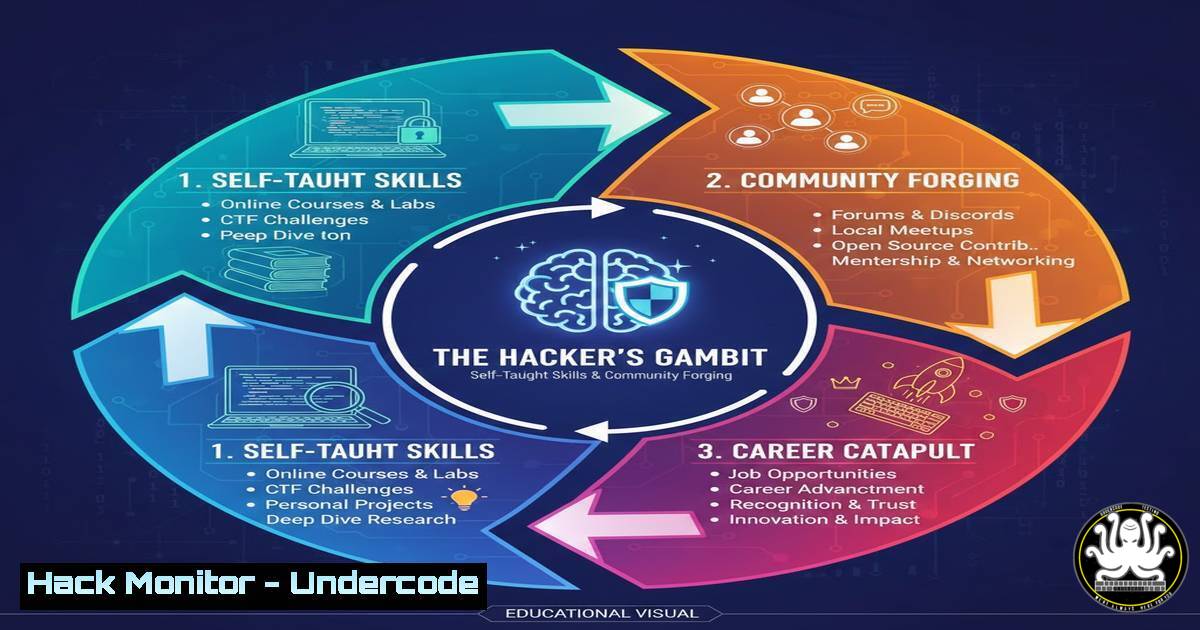
Introduction:
The journey to becoming a top-tier cybersecurity professional often bypasses traditional education, relying instead on self-driven curiosity and strategic community engagement. By understanding the attacker’s mindset, individuals can build formidable defense strategies, turning self-taught hacking skills into a legitimate and sought-after career.
Learning Objectives:
- Understand the core motivations for learning offensive security skills from a defensive perspective.
- Learn the foundational technical skills and commands for self-education in penetration testing.
- Develop a strategy for building a professional network and personal brand that attracts career opportunities.
You Should Know:
1. Cultivating the Attacker Mindset
The foundational step in a security career is adopting the perspective of an adversary. This involves shifting from asking “How does it work?” to “How can I make it do something it’s not supposed to?” This mindset is not about malicious intent, but about proactive discovery of weaknesses before they can be exploited.
Step-by-step guide explaining what this does and how to use it.
Step 1: Embrace Curiosity: Start with a simple application or system and question every assumption. What happens if you input unexpected data? Can you access a function you shouldn’t?
Step 2: Learn the Basics of Protocols: Understand HTTP/S, TCP/IP, and DNS. Use command-line tools to interact with them directly.
Linux/Windows (with curl): `curl -v http://example.com` This command shows the full HTTP request and response headers, allowing you to see the raw data exchange.
Linux: `telnet example.com 80then manually type `GET / HTTP/1.0` and press Enter twice. This provides a raw, manual way to interact with a web server.robots.txt`.
Step 3: Analyze Everything: Use browser developer tools (F12) on every website you visit. Examine network traffic, review source code for comments, and check for exposed files like
2. Self-Teaching Core Technical Skills
Formal courses provide a foundation, but the hands-on, practical skills of hacking are often self-acquired. This involves creating a safe lab environment and systematically learning tools and techniques.
Step-by-step guide explaining what this does and how to use it.
Step 1: Set Up a Lab: Never practice on systems you do not own. Use virtualization software like VirtualBox or VMware to create isolated virtual machines.
Download: Install Kali Linux (attacker machine) and a vulnerable practice OS like Metasploitable or a Windows VM with known vulnerabilities.
Step 2: Master the Command Line: Proficiency in the terminal is non-negotiable.
Linux (Network Scanning): `nmap -sS -A 192.168.1.0/24` This performs a SYN stealth scan with OS and version detection on a local subnet.
Windows (Network Info): `ipconfig /all` and `netstat -ano` to view network configuration and active connections/ports.
Step 3: Practice with Deliberate Intent: Use platforms like Hack The Box, TryHackMe, or OverTheWire to apply your skills in a structured, legal environment.
3. Web Application Reconnaissance and Testing
Web applications are a primary attack vector. Learning to probe them for common vulnerabilities like SQL Injection and Cross-Site Scripting (XSS) is a critical skill.
Step-by-step guide explaining what this does and how to use it.
Step 1: Enumerate the Application: Use tools to discover hidden directories and files.
Linux (gobuster): `gobuster dir -u http://example.com -w /usr/share/wordlists/dirb/common.txt` This brute-forces directory and file names on the target web server.
Step 2: Test for Input Validation Flaws:
SQL Injection Test: In a search field, try inputting: ' OR '1'='1— . If this alters the results, it indicates a potential SQLi vulnerability.
XSS Test: In a form field, try: <script>alert('XSS')</script>. If an alert box pops up, the site is vulnerable to reflected XSS.
Step 3: Use an Interception Proxy: Tools like Burp Suite or OWASP ZAP allow you to intercept, inspect, and modify traffic between your browser and the web server, which is essential for detailed vulnerability testing.
4. Network Exploitation and Post-Exploitation
Once a vulnerability is found, understanding how to exploit it and what to do after gaining access is key. This mirrors the “kill chain” of a real attacker.
Step-by-step guide explaining what this does and how to use it.
Step 1: Exploit a Known Vulnerability: Using the Metasploit Framework provides a structured way to test exploits.
Linux (Metasploit):
1. `msfconsole`
2. `search [bash]`
3. `use [bash]`
4. `set RHOSTS [bash]`
5. `exploit`
Step 2: Establish Persistence: An attacker will often try to maintain access.
Linux (Create a backdoor user): `sudo useradd -m -s /bin/bash backdooruser && sudo passwd backdooruser`
Windows (Via Command Line): `net user backdooruser Password123! /add && net localgroup administrators backdooruser /add`
Step 3: Lateral Movement: Use acquired credentials to access other systems on the network.
Linux (SSH): `ssh backdooruser@[bash]`
Windows (PSExec): `psexec \\[bash] -u backdooruser -p Password123! cmd`
5. Building Your Cybersecurity Community
Technical skill alone is not enough. As the original post emphasizes, community is the force multiplier that creates visibility and opportunity.
Step-by-step guide explaining what this does and how to use it.
Step 1: Engage Online: Be active on professional platforms like LinkedIn and cybersecurity forums. Share your learning journey, write-ups from lab exercises, and insights.
Step 2: Attend Events: Prioritize attending conferences like Black Hat, DEF CON, and local BSides meetings. The goal is not just to listen to talks, but to engage in conversations.
Step 3: Contribute Value: Answer questions, share useful resources, and help others. This establishes your reputation as a knowledgeable and collaborative professional, making you a magnet for opportunities.
6. From Hacker to Defender: Implementing Mitigations
The ultimate goal of ethical hacking is to inform defense. For every attack technique learned, you must understand and be able to implement the corresponding mitigation.
Step-by-step guide explaining what this does and how to use it.
Mitigation for SQLi: Use Parameterized Queries in application code. This separates SQL logic from data, preventing injection.
Mitigation for Weak Passwords: Enforce a strong password policy.
Windows (Group Policy): `gpedit.msc` -> Computer Configuration -> Windows Settings -> Security Settings -> Account Policies -> Password Policy.
Linux (PAM): Edit `/etc/pam.d/common-password` to enforce complexity.
Mitigation for Unnecessary Services: Harden systems by turning off unused services.
Linux (systemctl): `sudo systemctl disable [bash] && sudo systemctl stop [bash]`
Windows (Services.msc): Open `services.msc` and disable non-essential services.
What Undercode Say:
- A self-taught, offensive skillset is the most potent foundation for a defensive cybersecurity career, providing an intimate understanding of the adversary.
- Your professional network and personal brand are not secondary; they are critical infrastructure for career advancement, often more impactful than a traditional resume.
The narrative of a self-made cybersecurity expert underscores a fundamental industry truth: practical, hands-on skill and the ability to think like an adversary trump pedigree. The journey from curious tinkerer to hired protector is paved with continuous, self-directed learning. However, technical prowess remains latent without a community to witness and validate it. The act of “putting yourself out there”—engaging on professional platforms, contributing to discussions, and attending industry gatherings—transforms isolated skill into professional currency. This combination of demonstrated capability and strategic networking creates a feedback loop where opportunity seeks out competence, proving that in cybersecurity, you truly can build your own luck and design your career path with intention.
Prediction:
The demand for professionals with an offensive-minded, self-starter mentality will intensify as AI-powered attacks and sophisticated ransomware campaigns evolve. The future of cybersecurity leadership will be dominated by those who not only understand the technical landscape but have also cultivated resilient, organic professional networks that facilitate rapid intelligence sharing and collective defense, making community building as crucial as any technical certification.
🎯Let’s Practice For Free:
IT/Security Reporter URL:
Reported By: Monicaverma More – Hackers Feeds
Extra Hub: Undercode MoN
Basic Verification: Pass ✅


