Listen to this Post
Introduction:
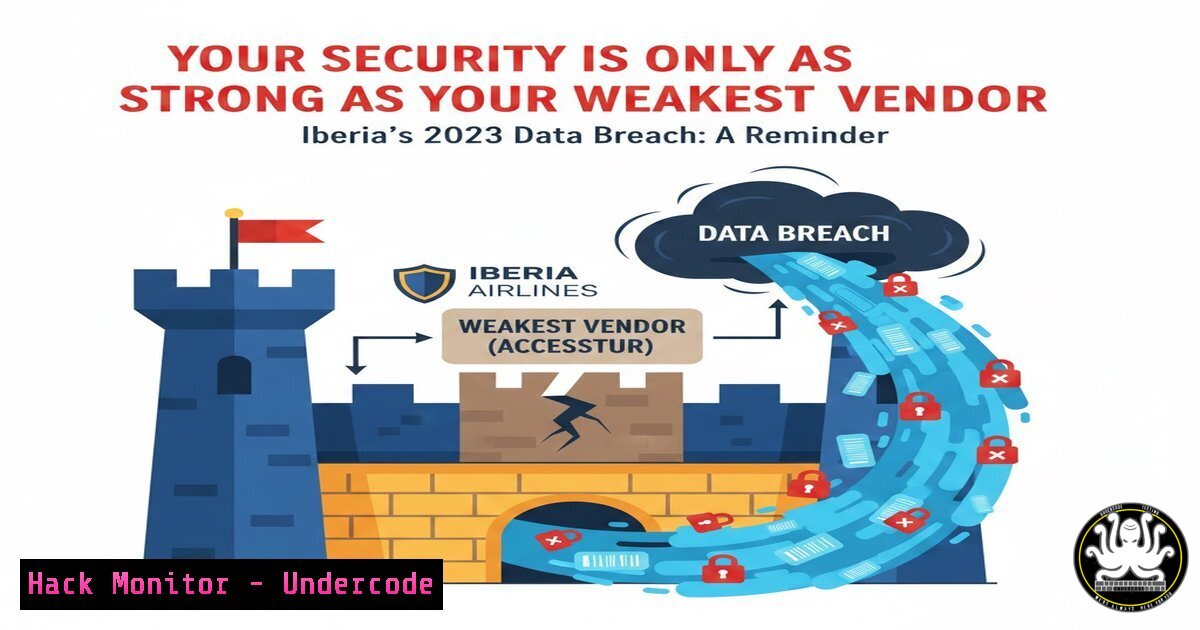
The recent data breach at Iberia, Spain’s flagship airline, underscores a critical and escalating threat in the cybersecurity landscape: supply chain attacks. By compromising a single third-party vendor, threat actors successfully exfiltrated a reported 77 GB of sensitive customer data. This incident moves beyond a simple security failure, serving as a powerful case study in the systemic risks posed by an interconnected digital ecosystem and the absolute necessity of robust third-party risk management.
Learning Objectives:
- Understand the mechanics and profound impact of supply chain attacks on modern enterprises.
- Learn immediate steps for incident response and forensic analysis following a suspected data breach.
- Implement proactive strategies for vendor risk assessment and network segmentation to hard your organization’s external attack surface.
You Should Know:
1. The Anatomy of a Supply Chain Attack
A supply chain attack, also known as a third-party or value-chain attack, occurs when an adversary infiltrates your organization’s network by first compromising a less-secure partner, vendor, or supplier. In Iberia’s case, the attacker did not need to breach the airline’s primary defenses directly. Instead, they found a vulnerable entry point at a supplier, exploiting the trusted relationship and the data access it entailed. This approach is highly effective because it bypasses the target’s core security investments, attacking the often-softer underbelly of its extended enterprise.
Step‑by‑step guide explaining what this does and how to use it.
Step 1: Reconnaissance. Attackers identify all third parties connected to the primary target (Iberia). This involves scanning for public information about suppliers, service providers, and software vendors.
Step 2: Vulnerability Identification. The attacker probes these third parties for weaknesses, such as unpatched software, misconfigured cloud storage, or phishing-prone employees.
Step 3: Initial Compromise. Using the identified vulnerability, the attacker gains a foothold in the vendor’s network.
Step 4: Lateral Movement and Escalation. The attacker moves laterally through the vendor’s network, seeking credentials or direct access points that connect to the primary target’s systems.
Step 5: Data Exfiltration. Once the target’s data is located, it is systematically collected and transferred to attacker-controlled servers, as seen with the 77 GB dataset posted on hacker forums.
2. Immediate Incident Response and Forensic Triage
When a breach is disclosed, time is of the essence. A structured incident response (IR) plan is critical to contain the threat, assess the damage, and begin recovery. The primary goal is to determine the scope of the compromise and preserve evidence for analysis.
Step‑by‑step guide explaining what this does and how to use it.
Step 1: Detection and Analysis. The IR team confirms the breach. This involves analyzing system logs, network traffic, and any intelligence (like the hacker forum post) to understand the initial entry point.
Linux Command (Check for unusual network connections): `netstat -tulpn | grep ESTABLISHED`
Windows Command (Check active connections): `netstat -ano | findstr ESTABLISHED`
Step 2: Containment. Isolate affected systems to prevent further data loss. This may involve taking critical vendor-facing servers offline or segmenting parts of the network.
Step 3: Eradication. Identify and remove the attacker’s tools, backdoors, and access methods. This could include resetting all credentials for vendor accounts and patching the exploited vulnerability.
Step 4: Recovery. Carefully restore systems from clean backups and monitor closely for signs of re-infection.
Step 5: Post-Incident Analysis. Document the entire attack lifecycle to improve defenses and prevent recurrence.
3. Proactive Vendor Risk Management (VRM)
Preventing a supply chain attack requires a proactive, ongoing program to assess and monitor the security posture of all third parties. You cannot secure what you do not know about.
Step‑by‑step guide explaining what this does and how to use it.
Step 1: Inventory and Categorization. Create a comprehensive inventory of all third-party vendors, categorizing them by the level of data access and risk they pose (e.g., high-risk for those handling customer PII).
Step 2: Security Assessments. Require vendors to complete standardized security questionnaires (like SIG or CAIQ) and provide independent audit reports (e.g., SOC 2 Type II).
Step 3: Contractual Security Controls. Ensure contracts explicitly define security responsibilities, breach notification timelines, and right-to-audit clauses.
Step 4: Continuous Monitoring. Utilize security rating services (e.g., BitSight, SecurityScorecard) to receive ongoing visibility into a vendor’s external security posture and receive alerts on any degradation.
4. Hardening Network Segmentation
A foundational security principle is to never trust a network, internal or external. Proper network segmentation acts as a firebreak, limiting how far an attacker can move laterally after breaching a single system, such as a vendor’s gateway.
Step‑by‑step guide explaining what this does and how to use it.
Step 1: Map the Data Flows. Identify how data moves between your vendors and your internal systems. Which systems do they need to access?
Step 2: Design Segmented Zones. Create separate network segments (VLANs or VXLANs) for different trust levels. Vendor access should be confined to a tightly controlled Demilitarized Zone (DMZ).
Step 3: Implement Strict Firewall Rules. Apply the principle of least privilege at the network layer. Firewall rules should only allow specific, required traffic from specific vendor IP addresses to specific internal services, and block everything else by default.
Example iptables rule to restrict access to a web service: `iptables -A INPUT -p tcp -s [Vendor-IP] –dport 443 -j ACCEPT`
Step 4: Utilize Micro-Segmentation. For advanced protection, implement micro-segmentation within your data center or cloud environment to control traffic between individual workloads, even within the same network.
5. Enhancing API Security Posture
Vendor integrations are often powered by APIs, which have become a prime target for attackers. The Iberia breach may have involved a compromised API key from the vendor, granting unfettered access to customer data.
Step‑by‑step guide explaining what this does and how to use it.
Step 1: API Inventory and Discovery. Use automated tools to discover all existing APIs in your environment, including shadow or zombie APIs.
Step 2: Implement Strong Authentication and Authorization. Enforce strict API authentication (e.g., OAuth 2.0, JWT) and ensure proper role-based access control (RBAC) is in place so vendors can only access the data they absolutely need.
Step 3: Employ an API Gateway. Use an API gateway to enforce policies, rate limiting, and threat detection. It acts as a single choke point for all API traffic.
Step 4: Continuous Security Testing. Regularly conduct penetration tests and dynamic application security testing (DAST) specifically targeting your API endpoints to find misconfigurations and vulnerabilities.
What Undercode Say:
- Trust, but Verify. A handshake agreement is not a security control. Every vendor relationship must be underpinned by rigorous, evidence-based security verification and contractual obligations.
- Your Perimeter is Now Everywhere. The modern security perimeter is no longer your corporate firewall; it extends to every laptop, cloud instance, and third-party supplier with access to your data. Defense must be architected accordingly.
Analysis: The Iberia incident is not an anomaly but a sign of the times. Attackers are economically motivated; why attack a fortified target when a weaker partner provides a backdoor? This breach demonstrates a failure in depth-in-defense, likely stemming from an over-reliance on the vendor’s own security promises without independent validation. The public disclosure forced by a hacker forum post also highlights the immense reputational damage and loss of customer trust that can dwarf the immediate forensic and recovery costs. Organizations must shift from a reactive, point-in-time compliance checklist with vendors to a continuous, risk-based monitoring approach.
Prediction:
The frequency and severity of supply chain attacks will continue to accelerate, driven by the increasing interconnectedness of business ecosystems. We predict a near-future where regulatory bodies will impose stricter liability and mandatory disclosure timelines specifically for third-party breaches, similar to updates to SEC rules or GDPR. This will force organizations to formally adopt and demonstrate mature Vendor Risk Management programs. Furthermore, the cybersecurity insurance industry will increasingly mandate specific technical controls—like mandatory multi-factor authentication for vendor access and proven network segmentation—as a prerequisite for coverage, making proactive supply chain security a financial imperative, not just a technical one.
🎯Let’s Practice For Free:
IT/Security Reporter URL:
Reported By: Wayne Shaw – Hackers Feeds
Extra Hub: Undercode MoN
Basic Verification: Pass ✅


