Listen to this Post
Introduction:
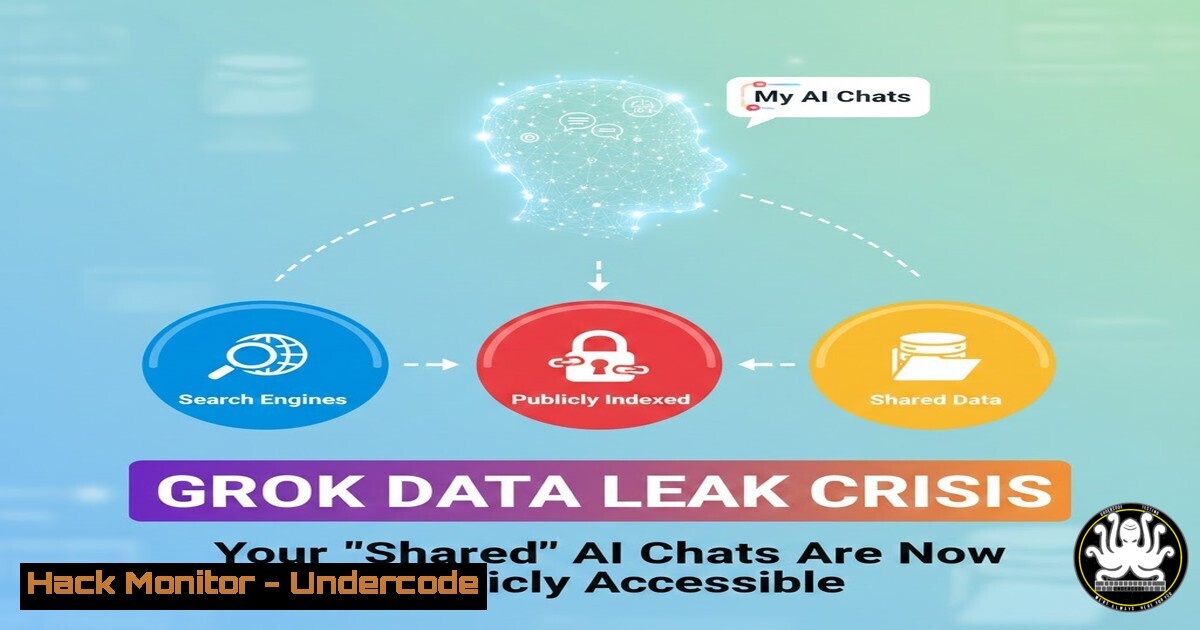
A recent security discovery has revealed that shared conversations from AI chatbots like xAI’s Grok are being publicly indexed by search engines, exposing vast amounts of sensitive personal data. This critical privacy failure occurs because the “share” function generates publicly accessible URLs that search engine crawlers automatically index, creating permanent records of what users believed were private exchanges.
Learning Objectives:
- Understand how AI chat sharing mechanisms create permanent public records
- Learn immediate steps to revoke existing shared conversations
- Master techniques to prevent future exposure of sensitive AI interactions
You Should Know:
1. The Technical Mechanism Behind the Exposure
When users click “share” on platforms like Grok, ChatGPT, or Claude, the system generates a unique, publicly accessible URL. Contrary to user expectations, these links lack `noindex` meta tags and don’t have automatic expiration policies. Search engine crawlers from Google, Yandex, and other platforms systematically discover and index these pages through normal web crawling processes.
Technical verification commands:
 Search for exposed Grok conversations
site:grok.com inurl:share/

Broader search for AI chat exposures
site:openai.com inurl:chat
site:anthropic.com inurl:share
The exposure isn’t limited to any single search engine. While Google was initially identified, security researchers have confirmed similar indexing occurs on Yandex, Bing, and other global search platforms, creating multiple points of permanent exposure.
2. Immediate Damage Control: Revoking Existing Shares
Step-by-step guide explaining what this does and how to use it:
First, identify all shared conversations by reviewing your chat history across all AI platforms. For each platform, navigate to your shared links section:
Grok: Settings → Shared Conversations → Review All
ChatGPT: Settings → Data Controls → Shared Links
Claude: Conversation History → Filter by Shared Status
For each exposed conversation, immediately click “Revoke Share” or “Delete Share Link.” This action invalidates the URL, though cached copies may persist. Document all revoked conversations for follow-up monitoring.
3. Search Engine De-indexing Requests
Step-by-step guide explaining what this does and how to use it:
After revoking shares, submit removal requests to search engines. For Google:
- Navigate to Google Search Console
- Use the URL Removal Tool
- Submit each previously shared URL
- Monitor removal status over 1-4 weeks
For accelerated removal of sensitive data (medical, financial):
 Use Google's Outdated Content removal for urgent cases
https://search.google.com/search-console/remove-outdated-content
Remember that removal from search indexes doesn’t eliminate the data from internet archives, Wayback Machine, or other caching services.
4. Monitoring for Future Exposure
Step-by-step guide explaining what this does and how to use it:
Implement automated monitoring for future exposures using Google Alerts and custom scripts:
 Python monitoring script example
import requests
import time
from googleapiclient.discovery import build

def monitor_chat_exposure(keywords, service):
 Set up search API monitoring
 Alert on new exposures containing sensitive terms
pass
Configure Google Alerts for:
- Your name + “Grok share”
- Your company + “AI chat”
- Specific project names + “shared conversation”
5. Enterprise Security Controls
Step-by-step guide explaining what this does and how to use it:
Organizations should implement technical controls to prevent accidental exposure:
 Web proxy filtering rules
 Block access to AI chat sharing domains
SecurityPolicy {
Block: .openai.com/share/
Block: .grok.com/share/
Block: .anthropic.com/shared/
}

DLP configuration for sensitive data
DataLossPrevention {
Monitor: "medical history", "salary", "confidential"
Action: Block and Alert
}
Employee training should emphasize that “share” functions equal public publication, not limited distribution.
6. Alternative Secure Sharing Methods
Step-by-step guide explaining what this does and how to use it:
Instead of built-in sharing, use secure alternatives:
- Password-protected documents with expiration dates
- Encrypted messaging platforms
- Internal enterprise systems with access controls
Technical implementation:
 Secure sharing script example
import cryptography
from datetime import datetime, timedelta

def create_secure_share(content, expiration_hours=24):
 Generate encrypted, time-limited share
 Implement proper key management
pass
7. API Security and Automation Safeguards
Step-by-step guide explaining what this does and how to use it:
For developers building with AI APIs, implement safeguards:
 Python example with sharing disabled by default
import openai
from openai import OpenAI

client = OpenAI(api_key="your_api_key")

Explicitly disable sharing in API calls
response = client.chat.completions.create(
model="gpt-4",
messages=[{"role": "user", "content": "your_message"}],
share_links=False  Critical security parameter
)
Audit all AI integrations quarterly to ensure sharing features remain disabled by default.
What Undercode Say:
- The fundamental design flaw lies in treating “sharing” as a convenience feature rather than a data publication action with permanent consequences
- This incident demonstrates that AI security requires treating every output as potentially public, regardless of intended audience
The exposure of Grok conversations represents a systemic failure in AI platform design. Companies prioritized user experience over data protection by making sharing effortless but irreversible. This incident follows a pattern seen in previous tech platforms where social features introduced unexpected privacy trade-offs. The technical community must advocate for “secure by default” configurations where sharing requires explicit understanding of public exposure. Until platforms implement automatic noindex tags, expiration policies, and clear warnings, users must operate under the assumption that anything shared becomes permanently public. This situation particularly impacts enterprises where employees might unknowingly expose proprietary information through seemingly innocent sharing features.
Prediction:
This exposure event will trigger regulatory scrutiny and class-action lawsuits within 6-12 months, forcing AI companies to implement mandatory expiration dates and clear data exposure warnings. We anticipate new compliance requirements emerging for AI platforms handling personal data, similar to GDPR’s impact on web services. Within two years, “share” functionality will evolve to include enterprise-grade access controls, audit trails, and mandatory data classification before sharing. The incident will accelerate development of zero-trust architectures for AI interactions where every access request requires verification regardless of sharing status.
🎯Let’s Practice For Free:
IT/Security Reporter URL:
Reported By: Activity 7397756772763000832 – Hackers Feeds
Extra Hub: Undercode MoN
Basic Verification: Pass ✅


