Listen to this Post
Introduction:
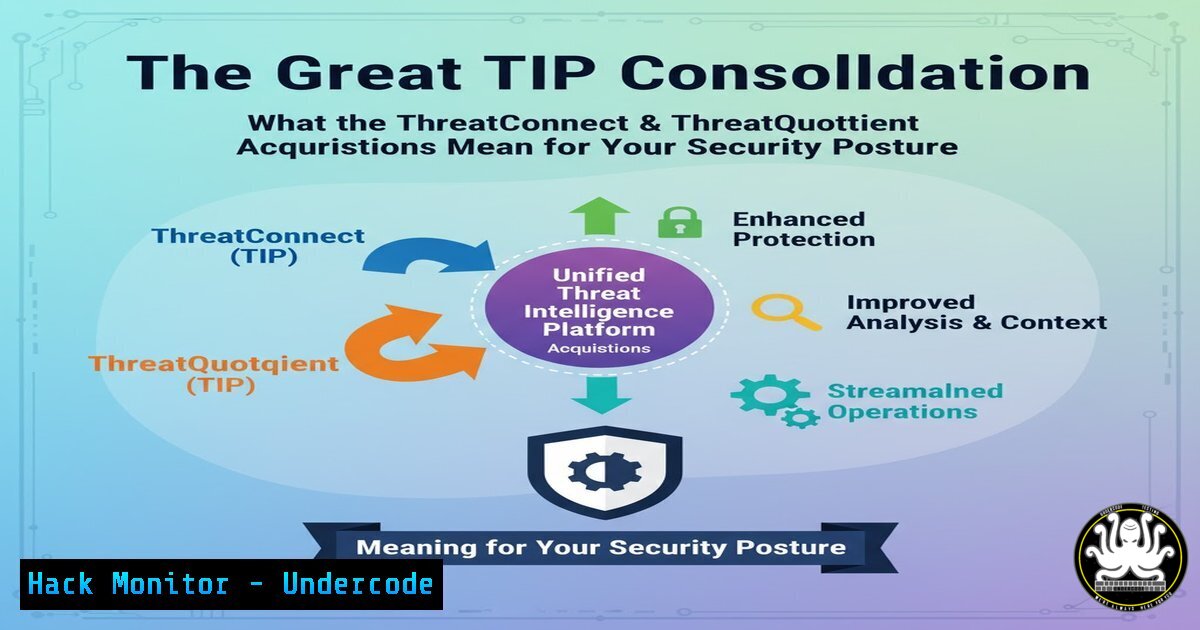
The cybersecurity landscape is witnessing a significant consolidation wave as standalone Threat Intelligence Platforms (TIPs) are being acquired by larger security entities. With ThreatConnect’s acquisition by Dataminr and ThreatQuotient’s purchase by Securonix, organizations must reassess how they operationalize threat intelligence within their existing security infrastructure.
Learning Objectives:
- Understand how to leverage open-source tools to replace or augment commercial TIP functionality
- Implement technical workflows for intelligence collection, normalization, and automation
- Develop custom integration patterns between intelligence sources and security controls
You Should Know:
1. Open-Source Intelligence Collection & Normalization
 Install MISP Threat Intelligence Platform
sudo apt-get install misp-core
sudo misp-install -s

Using the MISP API to search for IOCs
curl -H "Authorization: YOUR_API_KEY" -H "Accept: application/json" -H "Content-Type: application/json" -X POST https://your-misp-instance/events/restSearch -d '{"returnFormat":"json","value":"CobaltStrike"}'

Normalizing IOCs with PyMISP
from pymisp import PyMISP
misp = PyMISP('https://your-misp-instance/', 'YOUR_API_KEY')
results = misp.search(value='94.140.14.14')
normalized_iocs = [ioc['value'] for ioc in results['response'][bash]['Event']['Attribute']]
This setup establishes a foundation for threat intelligence collection using the open-source MISP platform. The API integration allows automated IOC queries, while PyMISP scripting enables normalization of disparate intelligence formats into actionable data structures for security automation.
2. Automating IOC Distribution to Security Controls
 Deploying IOCs to firewall via Ansible
- name: Deploy malicious IP blocklist to firewall
hosts: firewalls
tasks:
- name: Create IP blocklist
copy:
content: "{% for ip in malicious_ips %}ip deny {{ ip }}\n{% endfor %}"
dest: "/config/blocklist.conf"
vars:
malicious_ips: "{{ misp_iocs | selectattr('type', 'equalto', 'ip-src') | map(attribute='value') | list }}"

<ul>
<li>name: Reload firewall configuration
command: firewall-config --reload
This Ansible playbook demonstrates automated distribution of IOCs to network security controls. The template engine processes intelligence feeds and generates configuration files that can be deployed across multiple security devices, ensuring consistent policy enforcement.
3. Building Custom TIP Integration with Python
import requests
import json
from stix2 import Indicator, Bundle
from taxii2client import Collection

Create STIX 2.1 indicators from raw IOCs
def create_stix_indicator(ioc, indicator_type):
return Indicator(
pattern=f"[{indicator_type}:value = '{ioc}']",
pattern_type="stix",
valid_from=datetime.now(),
labels=["malicious-activity"]
)

Push to TAXII server for sharing
collection = Collection("https://taxii-server/collection1/", user="user", password="pass")
bundle = Bundle(indicators)
requests.post(collection.url, headers=collection.headers, data=bundle.serialize())
This Python script creates a lightweight TIP functionality by converting raw IOCs into STIX 2.1 format and publishing them to a TAXII server. This approach enables organizations to build custom intelligence sharing capabilities without relying on commercial platforms.
4. Integrating Threat Intelligence with SIEM Systems
 Splunk lookup generation from threat feeds
| inputlookup threat_intel.csv
| eval threat_type=case(
match(value, "^\d+.\d+.\d+.\d+$"), "ip",
match(value, "^[a-fA-F0-9]{32,64}$"), "hash",
match(value, ".(com|net|org)$"), "domain"
)
| outputlookup threat_intel_enriched.csv

Sigma rule for detecting known malicious IPs
title: Connection to Known Malicious IP
logsource:
category: firewall
detection:
selection:
dest_ip:
- {{ ip_list }}
condition: selection
These SIEM configurations demonstrate how to operationalize threat intelligence by creating enriched lookup tables and detection rules. The Sigma rule template allows security teams to automatically generate detection content based on current threat intelligence.
5. Cloud Security Control Integration
 AWS WAF IP set update with new IOCs
import boto3

def update_waf_ip_set(ip_set_id, iocs):
client = boto3.client('wafv2')
response = client.get_ip_set(
Name='malicious-ips',
Scope='REGIONAL',
Id=ip_set_id
)

current_ips = response['IPSet']['Addresses']
new_ips = current_ips + [f"{ip}/32" for ip in iocs if ip not in current_ips]

client.update_ip_set(
Name='malicious-ips',
Scope='REGIONAL',
Id=ip_set_id,
Addresses=new_ips,
LockToken=response['LockToken']
)
This AWS WAF integration automatically updates cloud security controls with the latest threat intelligence. The script retrieves current IP sets, merges new IOCs, and pushes updated blocklists to AWS WAF for immediate protection.
6. Container Security Hardening with Intelligence Feeds
 Kubernetes admission controller with threat intelligence
apiVersion: admissionregistration.k8s.io/v1
kind: ValidatingWebhookConfiguration
metadata:
name: threat-intel-validator
webhooks:
- name: threat.intel.validator
rules:
- operations: ["CREATE", "UPDATE"]
apiGroups: [""]
apiVersions: ["v1"]
resources: ["pods"]
clientConfig:
service:
name: threat-intel-service
path: /validate
caBundle: ${CA_BUNDLE}
failurePolicy: Fail

Dockerfile security scanning
FROM alpine:latest
RUN curl -sSfL https://raw.githubusercontent.com/aquasecurity/trivy/main/contrib/install.sh | sh -s -- -b /usr/local/bin
RUN trivy filesystem --exit-code 1 --no-progress /
This Kubernetes configuration implements an admission controller that validates container deployments against threat intelligence feeds. Combined with Trivy scanning, it ensures that known malicious container images and vulnerable components are blocked from deployment.
7. Endpoint Detection Response Integration
 PowerShell script to deploy IOCs to Windows Defender
$IOCs = Get-Content -Path ".\threat_intel_iocs.json" | ConvertFrom-Json

foreach ($ioc in $IOCs) {
if ($ioc.type -eq "hash") {
Add-MpPreference -AttackSurfaceReductionRules_Ids 75668C1F-73B5-4CF0-BB93-3ECF5CB7CC8D -AttackSurfaceReductionRules_Actions Enabled
Add-MpPreference -AttackSurfaceReductionOnlyExclusions $ioc.value
}
}

Deploy Sigma rules to EDR via Splunk
| rest /services/saved/searches splunk_server=local
| fields title search action.correlationsearch.label
| where like(search, "%threat_intel%")
| outputlookup sigma_rules_deployed.csv
This PowerShell automation deploys threat intelligence directly to endpoint protection platforms. The script configures Windows Defender to block known malicious hashes and integrates Sigma rules for enhanced detection capabilities across the endpoint estate.
What Undercode Say:
- The TIP market consolidation reflects a fundamental shift toward integrated security platforms rather than standalone intelligence tools
- Organizations must develop abstraction layers between their intelligence consumption and specific vendor implementations to maintain flexibility
- The future of threat intelligence lies in real-time operationalization rather than static indicator databases
The acquisitions signal that raw intelligence collection has become commoditized, with true value shifting to contextualization and automated response. Organizations that invested heavily in standalone TIP platforms now face integration challenges and potential vendor lock-in. However, this consolidation also presents opportunities to leverage open-source alternatives and build more resilient intelligence workflows. The technical implementations demonstrated provide a pathway to maintain intelligence-driven security regardless of commercial market movements.
Prediction:
Within 24 months, we predict that 70% of enterprise organizations will shift from standalone TIPs to intelligence capabilities embedded within XDR platforms and SOAR solutions. This will drive increased demand for interoperability standards like STIX 2.1 and OpenC2, while organizations that fail to adapt their intelligence workflows will experience a 40% increase in mean time to respond (MTTR) to threats. The consolidation will ultimately benefit mature security programs through tighter integration but may leave smaller organizations with limited customization options and reduced visibility into their intelligence sources.
🎯Let’s Practice For Free:
IT/Security Reporter URL:
Reported By: Mthomasson Were – Hackers Feeds
Extra Hub: Undercode MoN
Basic Verification: Pass ✅


