Listen to this Post
Introduction:
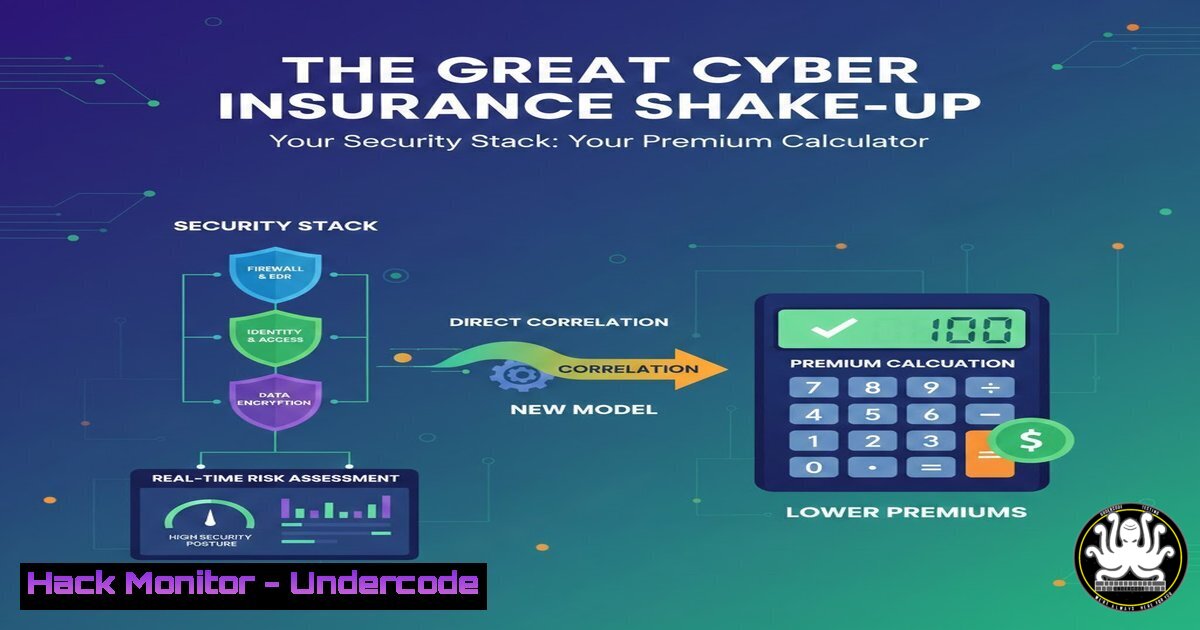
The cyber insurance market is undergoing a radical transformation, moving from a broad safety net to a highly selective risk-transfer mechanism. As highlighted by Beazley’s strategic decision to shrink its cyber book, insurers are no longer willing to underwrite unprepared organizations. This shift forces businesses to treat their cybersecurity posture not just as a defensive measure, but as a direct determinant of their insurability and financial resilience.
Learning Objectives:
- Understand the specific security controls and protocols that cyber insurers now mandate for coverage.
- Learn how to implement technical hardening measures across endpoints, networks, and identities to meet insurer requirements.
- Develop a continuous compliance and monitoring strategy to maintain coverage and negotiate favorable premiums.
You Should Know:
- The Endpoint Security Arms Race: Going Beyond Basic Antivirus
Insurers now demand evidence of advanced Endpoint Detection and Response (EDR) capabilities. Simple, signature-based antivirus solutions are considered obsolete against modern ransomware and fileless attacks. EDR platforms provide deep visibility into endpoint activity, enabling real-time detection and response to malicious behavior.
Step‑by‑step guide explaining what this does and how to use it.
Step 1: Evaluate and Deploy an EDR Solution. Choose a reputable EDR vendor (e.g., CrowdStrike, SentinelOne, Microsoft Defender for Endpoint). The key differentiator is the ability to record and analyze system activity for anomalous patterns.
Step 2: Ensure Full Deployment Coverage. Use centralized management consoles to verify 100% deployment across all servers, workstations, and laptops. A single unprotected endpoint can be the initial breach point.
Step 3: Configure Threat Hunting and Automated Response. Activate the EDR’s automated remediation features, such as quarantining malicious files and isolating compromised hosts from the network. Regularly review alerts and conduct proactive hunts.
Example (Conceptual): A PowerShell script suddenly attempts to disable the EDR agent. A properly configured EDR would immediately block the action, kill the PowerShell process, and generate a high-severity alert for the SOC team.
2. The Non-Negotiable: Enforcing Multi-Factor Authentication (MFA)
The absence of MFA, especially on internet-facing systems, is a near-instant disqualifier for cyber insurance. Attackers routinely exploit stolen passwords via phishing and brute-force attacks. MFA adds a critical layer of protection by requiring a second verification factor.
Step‑by‑step guide explaining what this does and how to use it.
Step 1: Identify Critical Systems. Prioritize MFA implementation on VPN gateways, Remote Desktop Protocol (RDP) servers, cloud administration consoles (e.g., AWS, Azure), and all email systems (e.g., Microsoft 365, Google Workspace).
Step 2: Implement Phishing-Resistant MFA. Where possible, move beyond SMS-based codes, which are susceptible to SIM-swapping. Utilize authenticator apps (like Microsoft Authenticator or Google Authenticator) or hardware security keys (like Yubikey).
Step 3: Configure Conditional Access Policies (Azure AD Example). Use conditional access to enforce MFA based on risk.
Azure AD PowerShell Command (Conceptual): While typically configured via the GUI, you can use PowerShell to check policies: `Get-AzureADMSConditionalAccessPolicy` to list all conditional access policies ensuring one exists that requires MFA for all cloud apps.
3. Network Segmentation: Containing the Breach
Insurers scrutinize network architecture for flat networks where a single breach can spread laterally to critical assets. Segmentation involves dividing the network into smaller zones to control and monitor traffic between them, effectively containing ransomware.
Step‑by‑step guide explaining what this does and how to use it.
Step 1: Map Critical Data Flows. Identify which systems need to communicate (e.g., a web server needs to talk to a database, but not to the HR department’s workstations).
Step 2: Implement Segmentation via Firewalls and VLANs. Create separate VLANs for user workstations, servers, and IoT devices. Use firewall rules to explicitly allow only necessary traffic between segments and deny all else by default.
Windows Command (Check Network Profile): `Get-NetConnectionProfile` shows the network category (Domain, Private, Public). Ensure domain networks are used for corporate devices to apply stricter policies.
Linux Command (Basic Firewall – iptables): A simple rule to drop forward traffic from the workstation subnet (192.168.1.0/24) to the server subnet (10.0.1.0/24) would be: `sudo iptables -A FORWARD -s 192.168.1.0/24 -d 10.0.1.0/24 -j DROP`
4. Proving Your Backup and Recovery Mettle
Having backups is not enough; you must prove they are isolated, immutable, and regularly tested. Insurers want confidence that you can recover from a ransomware attack without paying the ransom.
Step‑by‑step guide explaining what this does and how to use it.
Step 1: Adopt the 3-2-1 Rule. Maintain at least three copies of data, on two different media, with one copy stored offline or in an immutable, air-gapped cloud storage.
Step 2: Test Restoration Regularly. Schedule quarterly recovery drills. Restore a critical server or a sample dataset to a isolated environment and verify data integrity and application functionality. Document these tests for your insurer.
Step 3: Secure Backup Credentials. The backup administrative accounts and systems are high-value targets for attackers who will try to delete or encrypt your backups. Protect them with MFA and strict access controls.
5. Vulnerability Management: From Periodic to Continuous
An annual penetration test is no longer sufficient. Insurers expect a formal, ongoing program for identifying, prioritizing, and remediating vulnerabilities, especially those with public exploits.
Step‑by‑step guide explaining what this does and how to use it.
Step 1: Automate Scanning. Use a vulnerability scanner (e.g., Nessus, Qualys) to run weekly or monthly scans of your entire network.
Step 2: Prioritize by Risk. Focus on Critical and High-severity vulnerabilities that are remotely exploitable and have known exploits. Use the Common Vulnerability Scoring System (CVSS) as a starting point.
Step 3: Patch Relentlessly. Establish a phased patching schedule. Critical patches should be applied within 72 hours for internet-facing systems. For systems that cannot be patched immediately, implement compensating controls like network segmentation or web application firewalls (WAFs).
What Undercode Say:
- Your security posture is now a quantifiable asset. The cost of implementing advanced controls like EDR and MFA is directly offset by reduced insurance premiums and lower overall risk.
- Insurers are not just selling policies; they are enforcing a global baseline for cybersecurity hygiene. Failure to meet this baseline doesn’t just mean higher costs—it means no coverage at all, leaving a company fully exposed in the event of an inevitable incident.
The Beazley case is a canary in the coal mine, signaling a market-wide correction. The era of easy cyber insurance is over. The underwriting process has evolved into a rigorous technical audit. Companies must now operationalize their cybersecurity, moving from checkbox compliance to demonstrable, resilient architectures. This is a fundamental shift from risk transfer to risk reduction, where the insurer and the insured are aligned in the goal of preventing a breach, not just paying for one.
Prediction:
The cyber insurance market will continue to harden, leading to a stark bifurcation between “insurable” and “uninsurable” organizations. We will see the rise of integrated security-and-insurance bundles, where insurers partner with MSSPs to offer monitored security services as a prerequisite for coverage. This will create a powerful economic incentive for widespread adoption of advanced security frameworks, ultimately raising the global baseline for cyber defense but potentially leaving smaller, less-resourced businesses behind in a dangerously uninsured position.
🎯Let’s Practice For Free:
IT/Security Reporter URL:
Reported By: Drsaifabed Despite – Hackers Feeds
Extra Hub: Undercode MoN
Basic Verification: Pass ✅


