Listen to this Post
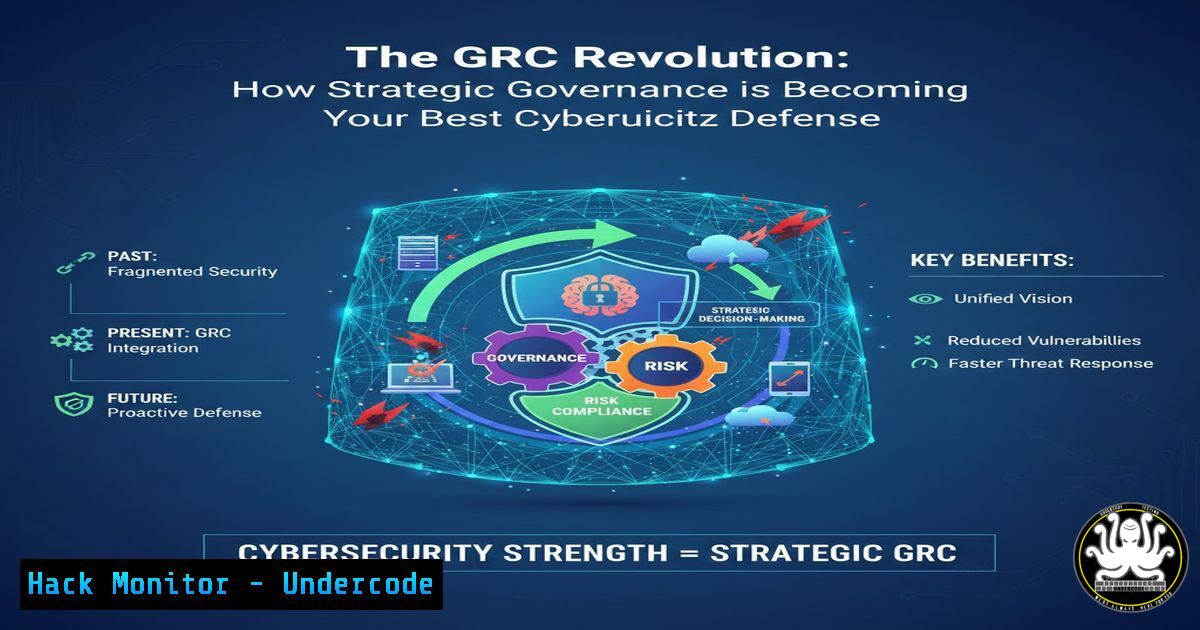
Introduction:
Governance, Risk, and Compliance (GRC) is undergoing a radical transformation, shifting from a passive, document-centric burden to a dynamic, strategic cybersecurity function. This evolution is driven by regulatory pressure, sophisticated threats, and the convergence of security and business continuity objectives. Organizations that fail to integrate GRC into their operational fabric risk not only compliance failures but catastrophic operational disruption.
Learning Objectives:
- Understand the shift from “tick-box” compliance to continuous, evidence-based risk management.
- Learn how to leverage automation and AI to quantify cyber-risk and monitor controls in real-time.
- Implement technical processes that bridge the gap between GRC frameworks and hands-on security hardening.
You Should Know:
1. Quantifying Cyber-Risk: Moving Beyond the Qualitative Register
The modern risk register must be driven by data, not guesswork. This involves technical discovery and quantification to answer the critical question: “What risks could actually stop operations?”
Step‑by‑step guide explaining what this does and how to use it.
Step 1: Asset & Vulnerability Discovery. You cannot quantify risk for systems you don’t know exist. Use automated discovery tools.
Linux Command (using Nmap for network discovery): `sudo nmap -sV -O –script vuln 192.168.1.0/24 -oA network_scan`
Cloud (AWS CLI): `aws ec2 describe-instances –query ‘Reservations[].Instances[].[InstanceId,PrivateIpAddress,Platform,Tags]’`
Step 2: Threat Exposure Scoring. Assign quantitative values. Use the FAIR (Factor Analysis of Information Risk) model or simple scoring: Risk Score = (Asset Criticality x Vulnerability Severity x Threat Likelihood). A critical database server (Criticality=10) with an unpatched RCE flaw (Severity=9) exposed to the internet (Likelihood=8) has a risk score of 720.
Step 3: Continuous Monitoring. Integrate findings into a SIEM or dashboard. A Grafana dashboard fed from your vulnerability scanner and asset inventory creates a live risk heatmap.
2. Automating Compliance Evidence Collection
Manual evidence gathering for audits is unsustainable. Automation ensures “continuous readiness” by collecting proof of control effectiveness around the clock.
Step‑by‑step guide explaining what this does and how to use it.
Step 1: Identify Critical Controls. Start with a high-impact control like “Ensure administrative access is logged and reviewed.”
Step 2: Script the Evidence Gathering. Write scripts to query systems for compliance states.
Linux (Check for unsuccessful sudo attempts): `sudo grep “sudo.FAILED” /var/log/auth.log | tail -20`
Windows PowerShell (Check local admin group membership): `Get-LocalGroupMember -Group “Administrators” | Select-Object Name, PrincipalSource`
Step 3: Automate & Log. Use a tool like Ansible, Chef, or a simple cron/PowerShell Scheduled Task to run these checks daily, outputting structured logs (JSON) to a secure, centralized location like a SIEM (e.g., Wazuh, Splunk) for auditor access.
3. Hardening Systems Against Evolving Audit Scrutiny
Audits now test resilience, not just control existence. This requires proactive system hardening beyond baseline configuration.
Step‑by‑step guide explaining what this does and how to use it.
Step 1: Apply Hardening Benchmarks. Use industry-standard guides like CIS Benchmarks.
Linux (Using `auditd` for CIS compliance – check for immutable audit rules): `sudo auditctl -l | head -5`
Windows (Via PowerShell – enforce password policy): `net accounts /MINPWLEN:14`
Step 2: Configuration Drift Detection. Use tools like OpenSCAP or commercial CSPM (Cloud Security Posture Management) tools to scan for deviations from your hardened baseline and alert in real-time.
Step 3: Test Resilience. Conduct controlled chaos engineering tests (e.g., using Chaos Monkey for Kubernetes) to see if systems fail gracefully as required by audit “resilience” tests.
4. Implementing API Security for Third-Party Vendor Risk
Modern operations are deeply dependent on third-party APIs, a major risk vector. Governance must extend to these external connections.
Step‑by‑step guide explaining what this does and how to use it.
Step 1: Inventory All External APIs. Use network traffic analysis tools (like Zeek) or API gateways to discover all outbound/inbound API calls.
Step 2: Enforce Security Policies. Implement a Web Application Firewall (WAF) or API gateway with rules for:
Rate Limiting: Prevent abuse.
Schema Validation: Ensure payloads match expected format.
Authentication Checks: Validate JWT tokens or API keys.
Step 3: Continuous Secret Management. Never hard-code API keys. Use a secrets manager (HashiCorp Vault, AWS Secrets Manager). A compromised vendor API key is a direct breach.
Code Snippet (Python – retrieving a secret from AWS Secrets Manager):
import boto3
from botocore.exceptions import ClientError

def get_secret():
secret_name = "prod/vendor/api-key"
client = boto3.client('secretsmanager')
try:
response = client.get_secret_value(SecretId=secret_name)
except ClientError as e:
raise e
return response['SecretString']
5. AI-Enabling Risk Processes: From Data to Foresight
AI amplifies good governance by identifying subtle patterns and predicting exposure, moving GRC from reactive to predictive.
Step‑by‑step guide explaining what this does and how to use it.
Step 1: Aggregate Data Sources. Feed your SIEM alerts, vulnerability scan results, asset inventory, and threat intelligence feeds into a data lake or platform capable of machine learning.
Step 2: Develop Predictive Models. A simple starting point: Use historical incident data to train a model that predicts the likelihood of a control failure based on system load, patch age, and external threat feeds.
Step 3: Automated Reporting & Insight. Use AI-driven tools to automatically generate risk reports, highlight top-priority findings from audit logs, and even draft sections of compliance documentation based on collected evidence, freeing analysts for strategic work.
What Undercode Say:
- Strategy is the New Control. The most advanced technical controls fail if not directed by a business-impact-driven governance strategy. Start with “what can stop us?” not “what does the checklist say?”
- Automation is the Great Divider. The capability gap between organizations that automate compliance evidence collection, risk scoring, and system hardening and those that do it manually is becoming a chasm of competitive resilience. The latter will be perpetually unprepared.
Prediction:
The integration of AI into GRC will create a two-tiered future. Proactive organizations will employ “Autonomous GRC” systems—self-healing networks that automatically remediate compliance drifts, dynamically adjust security policies based on predicted threat actors, and generate real-time regulatory reports. Reactive organizations will face overwhelming complexity, stricter penalties, and inevitable breaches. GRC will cease to be a separate department and will become the intelligent, automated nervous system of the entire secure digital enterprise. The mantra will shift from “prove you are compliant” to “demonstrate your inherent, automated resilience.”
🎯Let’s Practice For Free:
IT/Security Reporter URL:
Reported By: Adeoluwa Obadofin – Hackers Feeds
Extra Hub: Undercode MoN
Basic Verification: Pass ✅


