
Listen to this Post
Introduction:
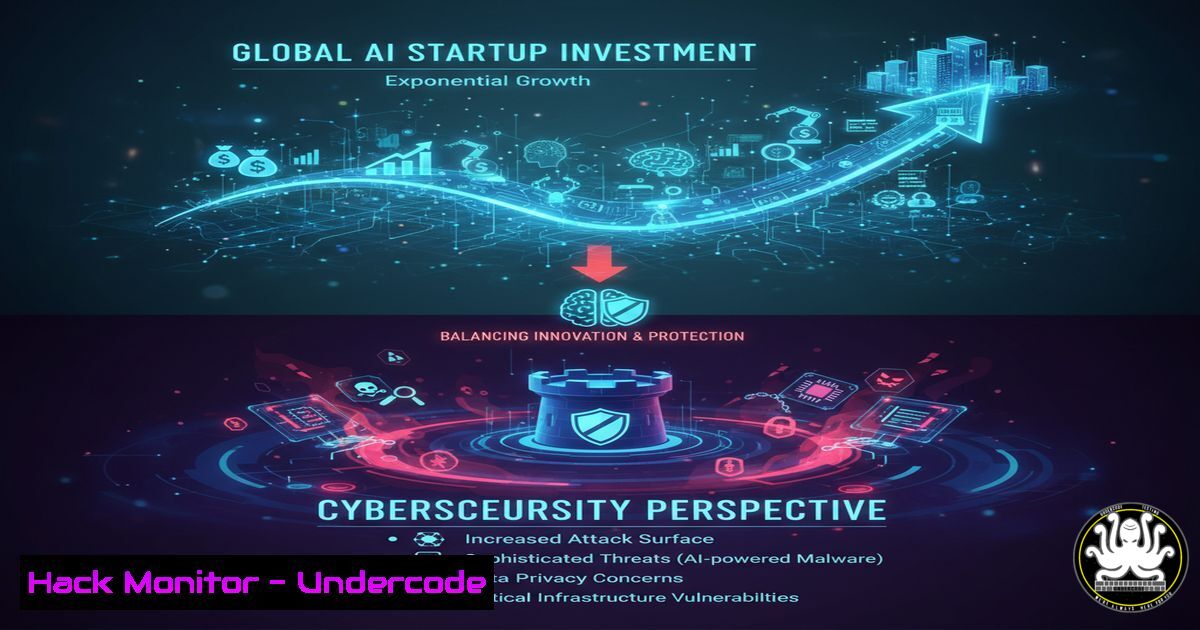
The recent influx of global investment into Australian AI startups, as highlighted by platforms like Starmate, represents a significant shift in the technological landscape. While this capital injection fuels innovation and economic growth, it simultaneously expands the attack surface for malicious actors. This article explores the critical cybersecurity and IT infrastructure commands that every scaling startup must master to secure their venture from the ground up.
Learning Objectives:
- Implement foundational cloud security hardening for IaaS platforms like AWS and Azure.
- Deploy and configure essential application security controls, including WAFs and API gateways.
- Establish robust internal IT governance and endpoint detection protocols.
- Understand and mitigate common vulnerability exploitation techniques.
- Develop a proactive incident response and logging strategy.
You Should Know:
1. Cloud Infrastructure Hardening
Verified cloud security commands are the first line of defense for any startup hosting on major platforms.
AWS IAM Policy Creation:
{
"Version": "2012-10-17",
"Statement": [
{
"Effect": "Allow",
"Action": [
"s3:GetObject",
"s3:ListBucket"
],
"Resource": [
"arn:aws:s3:::example-secure-bucket/",
"arn:aws:s3:::example-secure-bucket"
],
"Condition": {
"IpAddress": {
"aws:SourceIp": "192.0.2.0/24"
}
}
}
]
}
Step-by-step guide: This JSON policy enforces the principle of least privilege for an AWS S3 bucket. It restricts access to specific IP ranges (your office network), preventing unauthorized external access. Create this policy in the AWS IAM console, attach it to a user or role, and apply it to your S3 resources to minimize the risk of data leakage.
Azure Network Security Group Rule:
az network nsg rule create \
--resource-group MyResourceGroup \
--nsg-name MyNetworkSecurityGroup \
--name Allow-HTTPS-Only \
--protocol Tcp \
--direction Inbound \
--priority 100 \
--source-address-prefix '' \
--source-port-range '' \
--destination-address-prefix '' \
--destination-port-range 443 \
--access Allow
Step-by-step guide: This Azure CLI command creates a network security group rule that allows only HTTPS traffic (port 443) from any source, effectively blocking unencrypted HTTP. Execute this in your Azure Cloud Shell or local CLI after authenticating with az login. This is a fundamental step for securing web application endpoints.
2. Web Application Firewall (WAF) Configuration
A properly configured WAF is non-negotiable for public-facing applications.
AWS WAFv2 SQL Injection Rule:
aws wafv2 create-web-acl \
--name MyProtectiveACL \
--scope REGIONAL \
--default-action Allow={} \
--rules '[
{
"Name": "AWS-AWSManagedRulesSQLiRuleSet",
"Priority": 0,
"Statement": {
"ManagedRuleGroupStatement": {
"VendorName": "AWS",
"Name": "AWSManagedRulesSQLiRuleSet"
}
},
"OverrideAction": { "None": {} },
"VisibilityConfig": {
"SampledRequestsEnabled": true,
"CloudWatchMetricsEnabled": true,
"MetricName": "AWS-AWSManagedRulesSQLiRuleSet"
}
}
]' \
--visibility-config SampledRequestsEnabled=true,CloudWatchMetricsEnabled=true,MetricName=MyProtectiveACL-metrics
Step-by-step guide: This command deploys an AWS WAF Web ACL with a managed rule set specifically designed to block SQL Injection attacks. Run this via the AWS CLI after configuring your credentials. Once created, associate this ACL with your Application Load Balancer or CloudFront distribution to filter malicious HTTP requests before they reach your application logic.
3. Container Security Scanning
Startups heavily utilizing containerization must integrate security into their CI/CD pipeline.
Trivy Container Vulnerability Scan:
 Install Trivy
curl -sfL https://raw.githubusercontent.com/aquasecurity/trivy/main/contrib/install.sh | sh -s -- -b /usr/local/bin

Scan a container image
trivy image your-registry/your-startup-app:latest
Step-by-step guide: Trivy is an open-source vulnerability scanner. The first command installs it on a Linux system. The second command scans a Docker image for known CVEs (Common Vulnerabilities and Exposures). Integrate this command into your Docker build process to fail builds that contain critical vulnerabilities, ensuring only secure containers are deployed.
4. API Security Testing
With startups offering API-driven services, securing these endpoints is critical.
OWASP ZAP API Baseline Scan:
docker run -v $(pwd):/zap/wrk/:rw -t owasp/zap2docker-stable zap-api-scan.py \
-t https://your-api-endpoint.com/openapi.json \
-f openapi \
-r API-Security-Report.html
Step-by-step guide: This command runs the OWASP ZAP (Zed Attack Proxy) tool in a Docker container to perform an automated security scan against an API defined by an OpenAPI specification. It will test for common issues like broken authentication, excessive data exposure, and injection flaws. The report (API-Security-Report.html) will detail vulnerabilities found, their risk level, and potential remedies.
5. Endpoint Detection and Response (EDR) Queries
Visibility into endpoint activity is key for detecting intrusions.
Microsoft Defender for Endpoint Advanced Hunting Query (KQL):
DeviceEvents
| where Timestamp > ago(7d)
| where ActionType == "PowerShellCommand"
| where FileName =~ "powershell.exe"
| where ProcessCommandLine contains "-EncodedCommand"
| project Timestamp, DeviceName, InitiatingProcessAccountName, ProcessCommandLine
Step-by-step guide: This Kusto Query Language (KQL) statement hunts for PowerShell commands that have been executed using the encoded command (-EncodedCommand) switch, a technique often used by attackers to obfuscate malicious scripts. Run this in the Advanced Hunting section of the Microsoft Defender Security Center to proactively identify potential malicious activity on your Windows endpoints.
6. Linux Server Hardening
Secure your foundational Linux servers against common attack vectors.
Linux Auditd Rule for SSH Logins:
 Add a rule to monitor SSH logins
echo "-w /etc/ssh/sshd_config -p wa -k sshd_config" >> /etc/audit/rules.d/audit.rules

Monitor for failed sudo attempts
echo "-a always,exit -F arch=b64 -S execve -C uid!=euid -F euid=0 -k sudo_privilege_esc" >> /etc/audit/rules.d/audit.rules

Apply the rules
service auditd restart
ausearch -k sshd_config
Step-by-step guide: These commands enhance the Linux Audit Daemon (auditd) configuration. The first rule watches the SSH configuration file for any write or attribute changes. The second rule logs all commands executed via `sudo` (privilege escalation). After adding the rules and restarting the service, use `ausearch` to query the logs. This provides an immutable audit trail for compliance and security investigations.
7. Secret Management and Discovery
Accidental secret leakage in code repositories is a leading cause of breaches.
TruffleHog Secret Scan in CI/CD:
 Scan a git repository for secrets
docker run --rm -v "$PWD":/project trufflesecurity/trufflehog:latest git file:///project --only-verified
Step-by-step guide: This command uses a TruffleHog Docker container to scan the current directory (/project) for high-entropy strings and verified secrets (like API keys, passwords) that have been committed to the Git history. The `–only-verified` flag ensures it only reports secrets it has actively verified against the relevant service API. Integrate this into your pre-commit hooks or CI pipeline to prevent secrets from being merged into your main codebase.
What Undercode Say:
- Security is a Feature, Not an Afterthought: The most successful startups in this new investment wave will be those that bake security into their product design from day zero, treating it as a core competitive advantage rather than a compliance burden.
- The Scale-Security Paradox: The capital and expertise that enable rapid scaling also dramatically increase risk. A security posture that was adequate for a 10-person team will be catastrophically insufficient for a 100-person organization with global customers and valuable data.
The analysis suggests that the narrative of global investment, while positive, creates a gold rush environment where security can be deprioritized in favor of speed-to-market. Startups leveraging this influx of capital must allocate a significant portion to building a robust security foundation. The technical commands outlined are not just operational tasks; they are the building blocks of investor confidence and customer trust. Neglecting them in the race for growth is the single biggest strategic error a modern tech startup can make.
Prediction:
The convergence of increased AI startup valuation and the sophisticated targeting of these companies by advanced persistent threats (APTs) will lead to a high-profile breach of a newly funded startup within the next 18-24 months. This event will trigger a market correction where investor due diligence will heavily scrutinize cybersecurity postures, making a demonstrably strong security framework as important as the business idea itself for securing Series A and B funding. Startups that proactively implement the security measures described will not only be more secure but will also become significantly more attractive investment opportunities.
🎯Let’s Practice For Free:
IT/Security Reporter URL:
Reported By: Hamishfromatech From – Hackers Feeds
Extra Hub: Undercode MoN
Basic Verification: Pass ✅


