
Listen to this Post
Introduction:
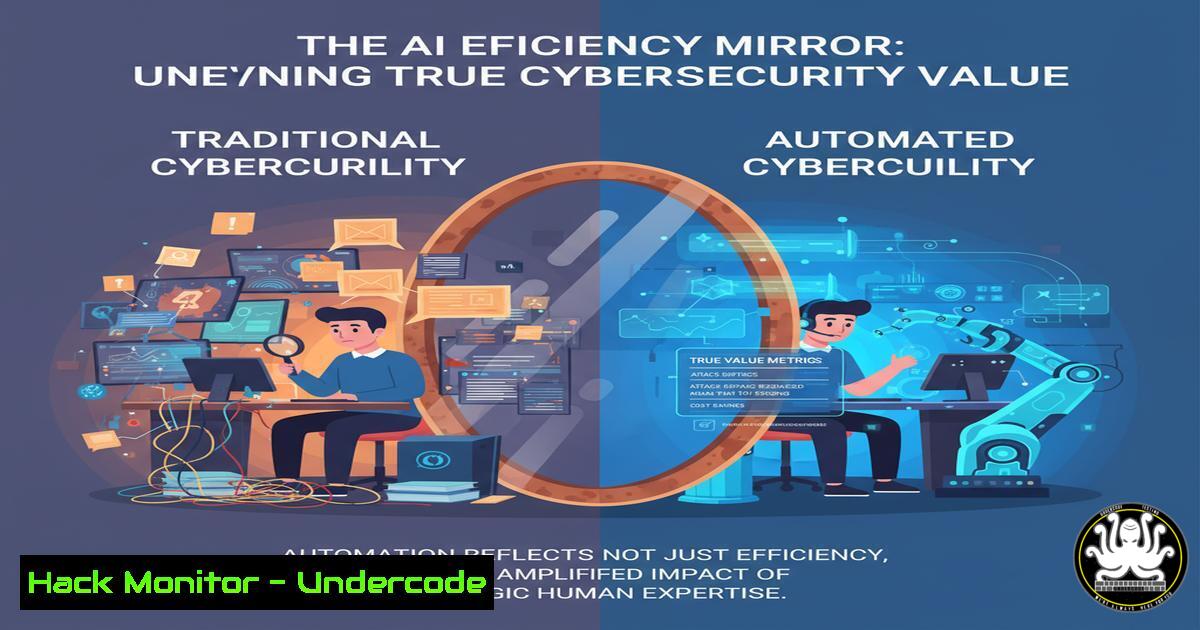
The advent of Artificial Intelligence is not eliminating cybersecurity roles but fundamentally transforming them by automating repetitive security tasks. This shift forces professionals to demonstrate higher-value strategic skills, exposing the gap between those who merely perform routine functions and those who drive genuine security innovation and leadership.
Learning Objectives:
- Identify which cybersecurity tasks are most susceptible to AI automation
- Develop the strategic and analytical skills that AI cannot replicate
- Implement practical command-level controls to secure AI-integrated environments
You Should Know:
1. Automated Threat Intelligence Analysis
 Using curl and jq to query threat intelligence APIs
curl -s "https://otx.alienvault.com/api/v1/indicators/IPv4/8.8.8.8/general" | jq '.pulse_info.pulses[] | {name, description, tags}'
Step-by-step guide: This command queries AlienVault’s OTX for threat intelligence on a specific IP address. The curl command fetches the data while jq parses the JSON output to extract pulse names, descriptions, and tags. Security analysts can automate this for multiple indicators, but must still interpret the context and relevance to their specific environment.
2. AI-Powered Log Analysis Automation
 Using grep with AI-generated pattern recognition
grep -E "(failed|denied|error)" /var/log/auth.log | awk '{print $1,$2,$3,$11}' | sort | uniq -c | sort -nr
Step-by-step guide: This pipeline extracts authentication failures from system logs, counts occurrences, and sorts by frequency. While AI can generate such patterns and identify anomalies, human analysts must investigate the root causes and determine appropriate response actions based on organizational risk tolerance.
3. Automated Vulnerability Scanning Integration
 Nessus API automation for scan management
curl -X POST https://localhost:8834/scans \
-H "X-ApiKeys: accessKey=YOUR_ACCESS_KEY; secretKey=YOUR_SECRET_KEY" \
-H "Content-Type: application/json" \
-d '{"uuid":"TEMPLATE_UUID", "settings": {"name":"Automated_Scan", "text_targets":"192.168.1.1-254"}}'
Step-by-step guide: This API call automates vulnerability scan initiation using Nessus. While AI can schedule, execute, and even prioritize scans, security professionals must interpret results in business context and make risk-based remediation decisions.
4. Security Configuration Hardening Automation
 Windows security baseline automation
Get-Service | Where-Object {$<em>.StartType -eq "Automatic" -and $</em>.Status -eq "Stopped"} | Select-Object Name,DisplayName
Set-Service -Name "RemoteRegistry" -StartupType "Disabled"
Step-by-step guide: This PowerShell script identifies automatically starting services that are stopped and disables the Remote Registry service. AI can generate hardening scripts, but security architects must understand service dependencies and potential business impact.
5. Cloud Security Posture Management
 AWS security group audit using AWS CLI
aws ec2 describe-security-groups --query 'SecurityGroups[?IpPermissions[?ToPort==`22` && IpRanges[?CidrIp==`0.0.0.0/0`]]].GroupId' --output text
Step-by-step guide: This AWS CLI command identifies security groups with SSH open to the world. AI can detect misconfigurations at scale, but cloud security engineers must balance security with operational requirements and implement least privilege principles.
6. Incident Response Automation Framework
 Python script for automated IOC collection
import os
import hashlib
import json

def collect_iocs(suspicious_file):
iocs = {}
iocs['md5'] = hashlib.md5(open(suspicious_file,'rb').read()).hexdigest()
iocs['sha256'] = hashlib.sha256(open(suspicious_file,'rb').read()).hexdigest()
iocs['file_size'] = os.path.getsize(suspicious_file)
return json.dumps(iocs, indent=2)
Step-by-step guide: This Python script automates indicator of compromise collection. While AI can generate and execute such scripts, incident responders must analyze the broader attack pattern and coordinate containment strategies.
7. API Security Testing Automation
 OWASP ZAP API security scanning automation
docker run -v $(pwd):/zap/wrk/:rw -t owasp/zap2docker-stable zap-api-scan.py \
-t https://api.example.com/openapi.json -f openapi -r report.html
Step-by-step guide: This Docker command runs OWASP ZAP against an OpenAPI specification. AI can automate API security testing, but application security specialists must interpret findings and work with developers to implement secure coding practices.
What Undercode Say:
- AI automation in cybersecurity creates a “competence gap” where technical skills alone are no longer sufficient for career advancement
- The most valuable security professionals will be those who can translate technical findings into business risk and strategic guidance
- Organizations must invest in continuous security education that focuses on analytical thinking and risk management rather than rote task execution
The cybersecurity industry is experiencing a fundamental stratification where AI handles tactical implementation while humans provide strategic direction. Security teams that embrace this division of labor will achieve greater efficiency, while those resisting will struggle with alert fatigue and resource constraints. The true value of cybersecurity professionals now lies in their ability to make context-aware decisions that balance security, usability, and business objectives.
Prediction:
Within three years, AI will handle 40-60% of routine cybersecurity operations, forcing a 30% reduction in entry-level security analyst roles while simultaneously creating new hybrid positions blending security expertise with AI governance. Organizations that successfully navigate this transition will see 50% faster threat response times and significantly reduced breach impacts, while those failing to adapt will experience increased security gaps and talent retention challenges.
🎯Let’s Practice For Free:
IT/Security Reporter URL:
Reported By: Sandy Chiu – Hackers Feeds
Extra Hub: Undercode MoN
Basic Verification: Pass ✅


