Listen to this Post
Introduction:
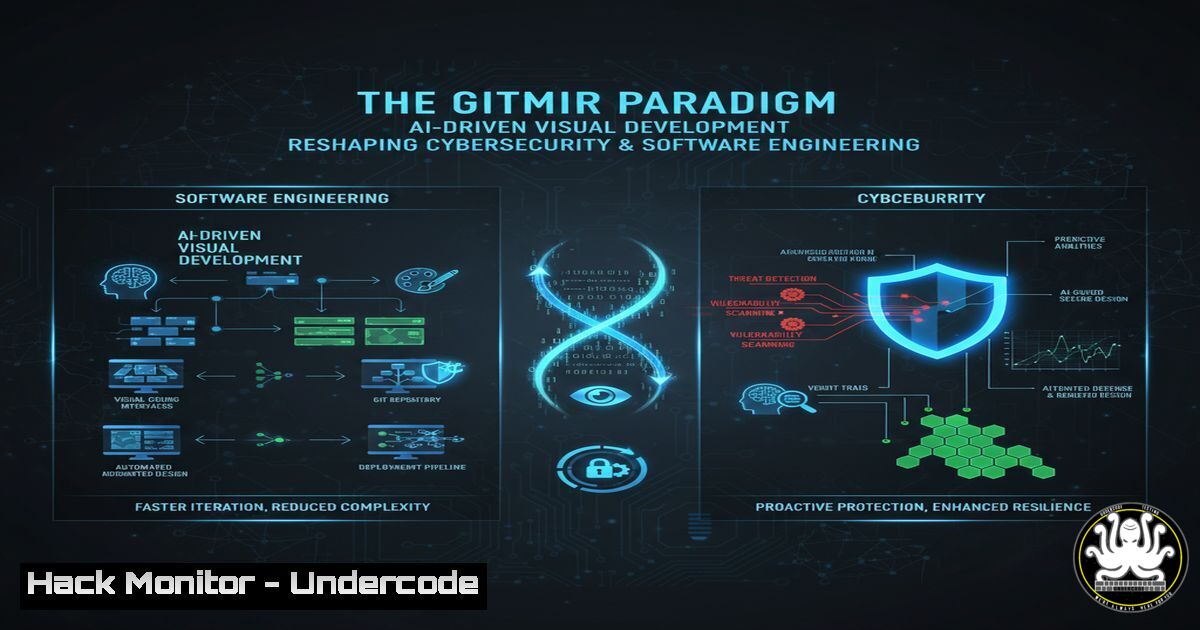
The emergence of AI-driven visual development platforms like Gitmir represents a fundamental shift in how software is architected and assembled. By promoting the reuse of proven logic and visual connections, this paradigm not only accelerates development but also introduces new cybersecurity considerations and opportunities. Understanding this evolution is critical for security professionals tasked with protecting modern, composable applications.
Learning Objectives:
- Understand the core principles of AI-driven visual development and its impact on the Software Development Lifecycle (SDLC).
- Identify the potential security benefits and risks associated with composable, logic-reusing platforms.
- Learn practical commands and techniques for securing CI/CD pipelines and infrastructure in a rapidly iterating development environment.
You Should Know:
1. Securing the Composable CI/CD Pipeline
In a environment where components are visually reassembled, the integrity of the CI/CD pipeline is paramount. Automation must include rigorous security checks.
 .gitlab-ci.yml snippet for security scanning
stages:
- test
- security
- deploy

sast:
stage: security
image: docker:stable
variables:
SAST_VERSION: "15"
script:
- export SAST_ANALYZER_IMAGES="registry.gitlab.com/gitlab-org/security-products/analyzers/api-fuzzing:$SAST_VERSION"
- /analyzer run
artifacts:
reports:
sast: gl-sast-report.json

secret_detection:
stage: security
script:
- git clone https://gitlab.com/gitlab-org/security-products/tests/secret-detection.git
- cd secret-detection && ./secret_detection
artifacts:
reports:
secret_detection: gl-secret-detection-report.json
Step-by-step guide:
This GitLab CI configuration integrates Static Application Security Testing (SAST) and secret detection directly into the pipeline. The `sast` job uses a dedicated Docker image to scan the codebase for vulnerabilities like SQL injection or cross-site scripting every time a change is pushed. The `secret_detection` job actively scans for accidentally committed API keys, passwords, or tokens. By defining these as a dedicated `security` stage, the pipeline will fail if critical vulnerabilities are found, preventing vulnerable “composed” applications from being deployed.
2. Infrastructure as Code (IaC) Security Scanning
When projects are built from reusable visual components, the underlying infrastructure must be consistently secure.
 Using tfsec to scan Terraform files for misconfigurations
 Install tfsec
curl -L "$(curl -s https://api.github.com/repos/aquasecurity/tfsec/releases/latest | grep -o -E "https://.+?tfsec-linux-amd64" | head -n1)" -o tfsec
chmod +x tfsec
sudo mv tfsec /usr/local/bin/

Scan a Terraform directory
tfsec .

Example: Check for unencrypted S3 buckets
tfsec --exclude-generated-files --filter-service s3
Step-by-step guide:
Tfsec is a static analysis tool for Terraform code. After installing it via the curl command, you can run it against your IaC directory. It will parse the `.tf` files and check them against hundreds of predefined security rules from providers like AWS, Azure, and GCP. For instance, it will flag any S3 bucket that doesn’t have encryption enabled, ensuring that a visually assembled project does not inadvertently deploy non-compliant infrastructure.
3. Container Image Hardening for Reusable Components
Components in a visual ecosystem are often containerized. Ensuring their base images are secure is non-negotiable.
 Scan a Docker image for vulnerabilities using Trivy
 Install Trivy
sudo apt-get install trivy

Scan a local image
trivy image your-registry/your-composable-component:latest

Scan and output to a report for CI integration
trivy image --format template --template "@contrib/junit.tpl" -o report.xml your-registry/your-composable-component:latest

Build a minimal image from a secure base
docker build -t your-secure-app . -f Dockerfile
 Example secure Dockerfile
FROM gcr.io/distroless/base-debian11:nonroot  A minimal, secure base image

WORKDIR /app
COPY --from=build-stage /app/your-binary ./

USER nonroot:nonroot  Run as non-root user

CMD ["/app/your-binary"]
Step-by-step guide:
First, use Trivy to scan your Docker images for known CVEs. The command `trivy image` will list all vulnerabilities by severity. Integrating this into your CI pipeline (using the `–format` flag) can block images with critical flaws. The accompanying Dockerfile demonstrates best practices: using a minimal, distroless base image to reduce the attack surface and running the container as a non-root user to minimize the impact of a potential breach.
4. API Security Testing for Inter-Component Communication
In a system built on “reusable connections,” APIs are the lifelines. Their security is critical.
 Using OWASP ZAP to baseline API endpoints
 Pull and run ZAP in daemon mode
docker pull owasp/zap2docker-stable
docker run -u zap -p 8080:8080 -i owasp/zap2docker-stable zap.sh -daemon -host 0.0.0.0 -port 8080 -config api.disablekey=true &

Run a quick scan against an API endpoint
docker run -i owasp/zap2docker-stable zap-baseline.py -t https://your-api.gitmir.internal/api/v1/components

Generate a detailed HTML report
docker run -i owasp/zap2docker-stable zap-full-scan.py -t https://your-api.gitmir.internal/api/v1/components -r report.html
Step-by-step guide:
OWASP ZAP is a powerful tool for finding vulnerabilities in web applications and APIs. Start the ZAP daemon container. The `zap-baseline.py` script performs a passive scan and some active tests, ideal for a quick check in a development pipeline. For a more thorough assessment, `zap-full-scan.py` performs extensive active attacks. This is crucial for testing the APIs that allow visual components in a platform like Gitmir to communicate, checking for issues like broken authentication, injection, and insecure deserialization.
5. Detecting Dependency Confusion Attacks
A platform that reuses intelligence across projects is a high-value target for dependency and namespace attacks.
 Using PyPI's `twine` to verify a package upload and check for namespace squatting
 Install twine
pip install twine

Check if your internal package name exists on public repositories
twine check dist/

Example: Using pip-audit to scan for known vulnerabilities in dependencies
pip install pip-audit
pip-audit .

PowerShell command to check NuGet package sources and priorities
Get-PackageSource | Format-Table Name, Location, IsTrusted, IsRegistered
Step-by-step guide:
A dependency confusion attack occurs when a malicious package with the same name as an internal, private package is uploaded to a public repository (like PyPI or NuGet). If your build system is misconfigured, it might pull the malicious public version. Using `twine check` before uploading internal packages can help you be aware of naming conflicts. `pip-audit` scans your Python dependencies for known vulnerabilities. In Windows environments, use the `Get-PackageSource` PowerShell cmdlet to audit your NuGet sources and ensure internal feeds are prioritized over public ones.
6. Windows Hardening for Development Environments
The workstations where visual development occurs must be locked down to prevent supply chain attacks.
 Enable Windows Defender Application Control (WDAC) for a code integrity policy
 Create a base policy from a reference computer
New-CIPolicy -Level FilePublisher -FilePath "C:\ReferenceApps" -UserPEs -Fallback Hash -PolicyName "GitmirDevPolicy.xml"

Convert the policy to binary format
ConvertFrom-CIPolicy -XmlFilePath "C:\GitmirDevPolicy.xml" -BinaryFilePath "C:\GitmirDevPolicy.bin"

Deploy the policy (requires reboot)
CiTool --update-policy "C:\GitmirDevPolicy.bin"

Audit mode (to test before enforcing)
Set-RuleOption -FilePath "C:\GitmirDevPolicy.xml" -Option 3  Audit Mode
Step-by-step guide:
WDAC allows you to create a whitelist policy for executable files. The `New-CIPolicy` cmdlet scans a reference computer (known to be secure) with all approved Gitmir development tools and generates a base policy. Converting it to binary and deploying it with `CiTool` enforces the policy. Starting with Audit Mode (Option 3) is critical; it logs policy violations without blocking, allowing you to refine the rules before full enforcement, thus preventing unauthorized software from running on developer machines.
7. Linux Auditd Rules for Monitoring Sensitive Directories
Monitor the file integrity of critical system and application directories to detect unauthorized changes.
 Configure Auditd to monitor the Gitmir application directory
 Install auditd
sudo apt-get install auditd

Add a rule to watch the /opt/gitmir directory for write, attribute changes, and deletion
sudo auditctl -w /opt/gitmir/ -p wa -k gitmir_core

View the generated audit logs
sudo ausearch -k gitmir_core | aureport -f -i

Make the rule permanent
echo "-w /opt/gitmir/ -p wa -k gitmir_core" | sudo tee -a /etc/audit/audit.rules

Check the integrity of key binaries using AIDE (Advanced Intrusion Detection Environment)
sudo aideinit
sudo aide --check
Step-by-step guide:
The Linux Audit Daemon (auditd) provides powerful file-system monitoring. The command `auditctl -w /opt/gitmir/ -p wa` sets a watch on the specified directory for any write operations or attribute changes (w and a). The `-k` flag tags these events with a key for easy searching. Use `ausearch` and `aureport` to filter and display these logs. For a more comprehensive integrity check, AIDE creates a database of file checksums and can alert you to any modifications, a crucial defense against backdoors in a composable system.
What Undercode Say:
- The abstraction of complex logic into visual, reusable components does not eliminate risk; it merely shifts the security left to the component design and integration phase.
- The centralization of “proven connections” creates a single point of truth that is an extremely high-value target for advanced persistent threats (APTs), requiring a zero-trust approach to the platform’s own architecture.
The promise of Gitmir and similar platforms is a double-edged sword from a security perspective. The ability to reassemble products 3-5x faster dramatically shortens the threat development lifecycle as well. If an attacker discovers a vulnerability in a foundational, widely-reused visual component, the blast radius is immense, potentially compromising every application built upon it. This necessitates a paradigm where each “proven connection” must come with its own verified security profile and runtime behavior audit trail. Security can no longer be an afterthought applied to the final, assembled product; it must be an inherent, verifiable property of every composable building block. The future of secure software engineering in this context depends on seamlessly integrating the security controls outlined above directly into the visual development workflow itself.
Prediction:
The widespread adoption of AI-driven visual development platforms will fundamentally alter the software threat landscape within the next 3-5 years. We will see the first major software supply chain attack originating from a compromised “verified” component within a platform like Gitmir, leading to simultaneous breaches across hundreds of organizations. This will trigger a industry-wide push for “Software Bills of Materials” (SBOMs) for visual components and the rise of “Security-as-Code” integrations that are as composable as the logic they protect. The role of the security professional will evolve from code auditor to ecosystem architect, focusing on securing the assembly process itself.
🎯Let’s Practice For Free:
IT/Security Reporter URL:
Reported By: Vladimir Miroshnichenko – Hackers Feeds
Extra Hub: Undercode MoN
Basic Verification: Pass ✅


