Listen to this Post
Introduction:
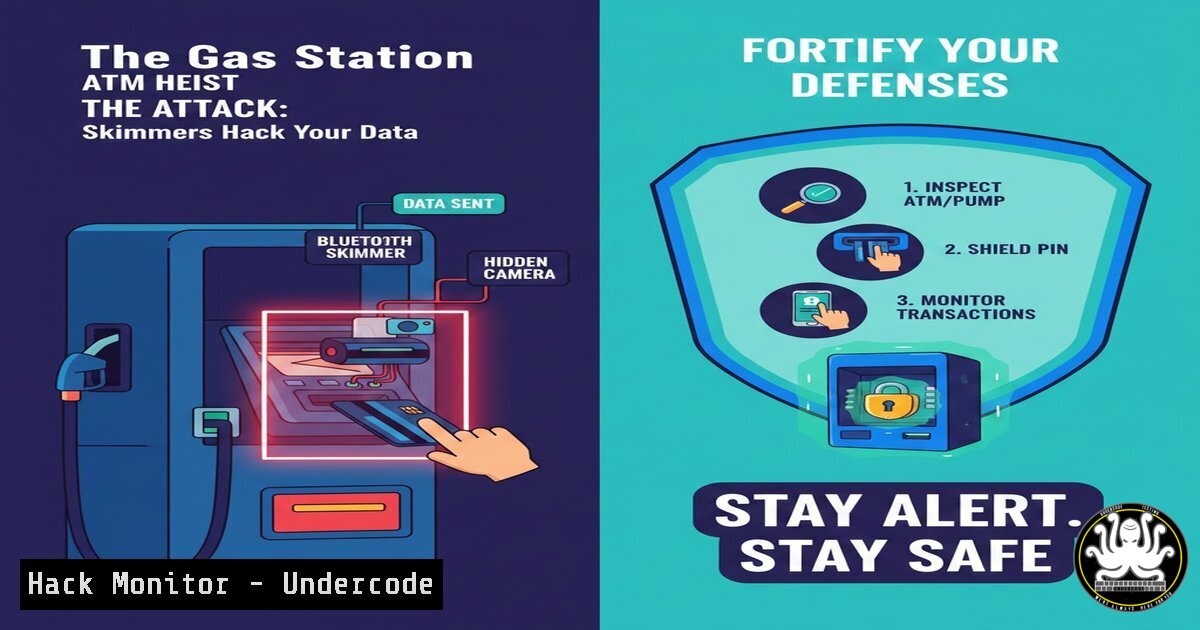
ATM skimming represents a pervasive physical-digital hybrid threat where criminals install illicit devices on cash machines to steal card data and PINs. This attack vector exploits lapses in physical security and outdated software, leading to significant financial fraud and eroding consumer trust in critical infrastructure.
Learning Objectives:
- Understand the technical mechanisms and components of modern ATM skimming attacks.
- Learn practical steps to detect skimming devices and associated network compromises using command-line tools.
- Implement hardening measures for ATM endpoints and networks to mitigate these threats.
You Should Know:
1. Deconstructing the Skimmer: Hardware and Installation
A skimming operation typically involves two components: a card reader overlay that captures magnetic stripe data and a hidden camera or keypad overlay to record PIN entries. Modern skimmers may use Bluetooth modules to wirelessly exfiltrate data.
Step-by-step guide explaining what this does and how to use it.
While ethical security professionals do not install skimmers, understanding their placement is key for detection. Physical inspection is the first line of defense.
1. Tug Test: Before inserting your card, physically tug on the card reader entry. A legitimate reader is solid; an overlay may wiggle or feel loose.
2. Inspect the Keypad and Surroundings: Look for abnormal thickness on the keypad (indicating an overlay) or small pinhole cameras positioned above or to the side of the ATM to record PIN entries.
3. Check for Wireless Signals: Use a smartphone app like `nRF Connect` for Bluetooth scanning. A skimmer with a data transmitter may broadcast a Bluetooth signal with a generic or suspicious name (e.g., “HC-05”). The presence of an unknown, persistent Bluetooth signal near an ATM is a major red flag.
- The Digital Frontier: ATM Malware and Network Intrusion
Beyond physical devices, ATMs are vulnerable to malware installed via network breaches or USB drives. Malware like Tyupkin or Ploutus.D can control the ATM, dispensing cash on command or harvesting data from memory.
Step-by-step guide explaining what this does and how to use it.
Detecting a network breach requires monitoring and analysis. The following commands help identify anomalous activity on an ATM’s host system or network.
On a Windows-based ATM (from a secure, isolated forensic workstation):
Check for unusual processes: Get-Process | Where-Object {$_.Path -like "temp" -or $_.Company -eq ""}. This PowerShell command filters processes running from temporary directories or with no company name, common malware indicators.
Analyze network connections: netstat -ano | findstr LISTENING. Review listening ports for unknown applications. Cross-reference with `tasklist /FI “PID eq [bash]”` to identify the process.
On the Network (Linux-based security server):
Scan the ATM network segment for unauthorized devices: nmap -sV 192.168.1.0/24. Replace the IP range with your ATM network. Look for devices with open ports (e.g., 22, 23, 445) that shouldn’t be there.
Capture and analyze network traffic to the ATM: tcpdump -i eth0 host <ATM_IP> -w atm_capture.pcap. Analyze the `.pcap` file in Wireshark for unexpected outbound connections (e.g., to foreign IPs) signaling data exfiltration.
3. Hardening the ATM: Endpoint and OS Security
The ATM operating system must be locked down to prevent initial infection and lateral movement.
Step-by-step guide explaining what this does and how to use it.
1. Application Whitelisting: Implement whitelisting (e.g., via Windows AppLocker) to allow only authorized executable files, scripts, and installers to run. This blocks malware execution.
Command (PowerShell – to audit policy): `Get-AppLockerPolicy -Effective -Xml`
2. USB Port Control: Disable USB mass storage access via Group Policy or BIOS settings to prevent physical malware installation.
3. Least Privilege: The ATM application should run under a dedicated user account with minimal permissions, not as `Administrator` or root.
4. Patch Management: Enforce a strict schedule for applying OS and software patches. Use tools like `wsusscn2.cab` on Windows or configure a local `apt` repository for Linux-based systems to ensure updates are tested and applied offline.
4. Securing the ATM Network Segment
ATMs should never reside on the same network as point-of-sale systems or corporate IT. Segmentation is critical.
Step-by-step guide explaining what this does and how to use it.
1. Network Segmentation: Place all ATMs in a dedicated VLAN. Configure firewall rules (e.g., using `iptables` on Linux or Windows Firewall with Advanced Security) to only allow necessary traffic.
Example iptables rule (on the network gateway): `iptables -A FORWARD -s
This rule only allows ATMs from their subnet to connect to the transaction processor on port 443, blocking all other outbound traffic.
2. Outbound Traffic Filtering: Block all outbound internet traffic from the ATM VLAN except to specific, authorized transaction hosts. This prevents malware from “phoning home.”
3. Intrusion Detection: Deploy a Network Intrusion Detection System (NIDS) like Suricata on the ATM VLAN’s mirror port. Monitor for signatures related to card data exfiltration or command-and-control traffic.
5. Forensic Evidence Collection After a Breach
If a skimmer is found or fraud is reported, systematic evidence collection is vital.
Step-by-step guide explaining what this does and how to use it.
1. Isolate the System: Immediately disconnect the compromised ATM from the network to prevent further data loss.
2. Image the Hard Drive: Use a forensic tool like `FTK Imager` or the Linux `dd` command to create a bit-for-bit copy of the ATM’s hard drive for analysis.
Command: `dd if=/dev/sda of=/evidence/atm_image.img bs=4M status=progress`
- Capture Memory: If possible, capture the system’s RAM before powering down using a tool like
Belkasoft Live RAM Capturer. - Log Analysis: Collect system and application logs. On Windows, use `wevtutil` to export logs:
wevtutil epl Security C:\SecurityLog.evtx. On Linux, secure copies of/var/log/auth.log,/var/log/syslog, etc. - Chain of Custody: Document every step, the personnel involved, and the timeline to preserve evidence integrity for law enforcement.
What Undercode Say:
- Key Takeaway 1: The ATM skimming threat landscape has evolved from simple physical devices to sophisticated hybrid attacks combining hardware tampering, malware, and network intrusion. Defense now requires an integrated physical-digital security strategy.
- Key Takeaway 2: Proactive, continuous monitoring and strict adherence to hardening baselines are non-negotiable. Relying solely on periodic physical inspections is inadequate against modern, remotely managed skimmers and malware.
Analysis:
The post and comments highlight a critical failure in security governance: treating physical and digital security as separate domains. The repeated incidents at specific locations point to a lack of layered defense and assumed trust in publicly accessible hardware. Effective mitigation requires shifting from a reactive, incident-response model to a proactive, intelligence-driven one. This involves implementing the technical controls outlined above, conducting regular red-team exercises that simulate skimmer installation and network penetration, and fostering collaboration between physical security teams and IT/cybersecurity analysts. The reference to tools like “huntercat” in the comments suggests the growing role of specialized threat hunting in these environments.
Prediction:
The future of ATM fraud will increasingly leverage artificial intelligence and the Internet of Things (IoT). We predict the emergence of AI-powered skimmers that can selectively capture data based on card issuer or user behavior, making detection harder. Furthermore, as ATMs become more connected IoT devices within “smart” retail environments, attackers will pivot to exploiting vulnerabilities in the broader network ecosystem, such as targeting HVAC or inventory systems to gain a foothold before moving laterally to ATMs. Defenses must correspondingly evolve to incorporate AI-based anomaly detection in real-time transaction streams and implement zero-trust architectures for all connected store systems.
▶️ Related Video (76% Match):
🎯Let’s Practice For Free:
IT/Security Reporter URL:
Reported By: Svanryder Why – Hackers Feeds
Extra Hub: Undercode MoN
Basic Verification: Pass ✅


