Listen to this Post
Introduction:
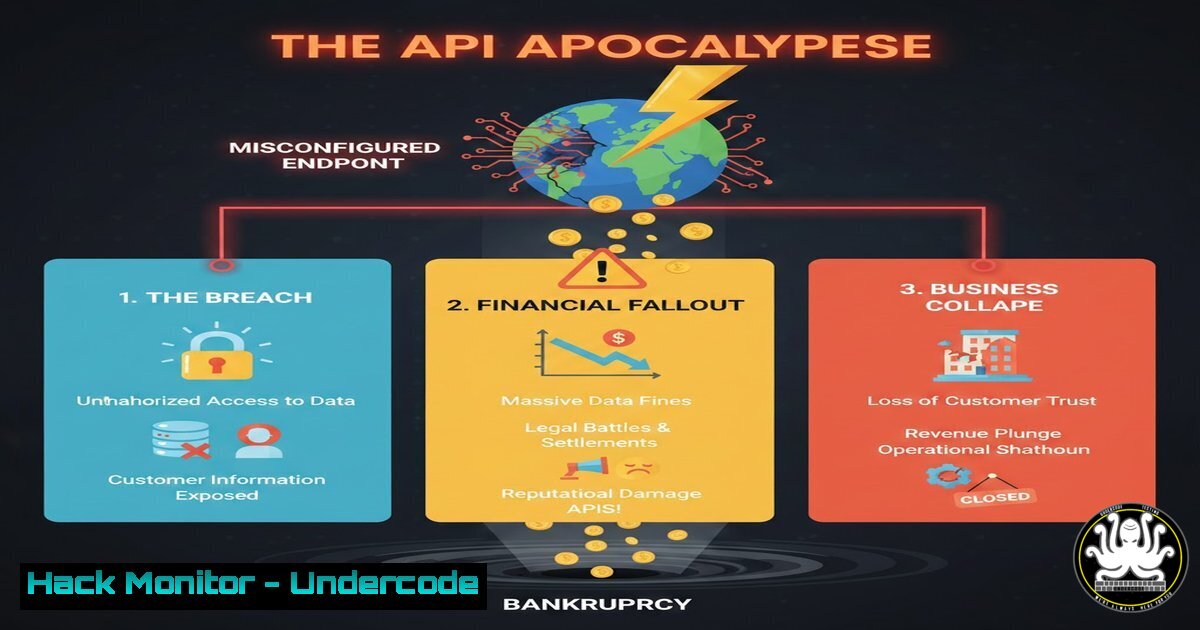
In today’s hyper-connected digital ecosystem, Application Programming Interfaces (APIs) have become the silent backbone of business operations, facilitating data exchange between microservices, cloud platforms, and third-party integrations. However, this reliance has turned APIs into a prime target for attackers, where a single oversight in authentication or authorization can lead to catastrophic data breaches and financial ruin. This article delves into the critical vulnerabilities plaguing modern API security and provides a hands-on guide to hardening your digital perimeter.
Learning Objectives:
- Understand the most common and devastating API security vulnerabilities, including Broken Object Level Authorization (BOLA) and excessive data exposure.
- Learn to use proactive testing tools like OWASP Amass and Postman to map and audit your API attack surface.
- Implement hardened security controls using API gateways, rate limiting, and mandatory schema validation.
You Should Know:
- Mapping Your Invisible Attack Surface with OWASP Amass
Before you can defend your APIs, you must discover them. Shadow APIs and undocumented endpoints are a primary attack vector. OWASP Amass is a powerful tool for mapping your external attack surface by passively and actively collecting information.
Step‑by‑step guide explaining what this does and how to use it.
Installation (Linux): `sudo snap install amass` or `go install -v github.com/owasp-amass/amass/v4/…@master`
Passive Enumeration: Run amass enum -passive -d yourcompany.com -o amass_passive.txt. This command collects subdomains and potential API endpoints from open sources without direct interaction with your target.
Active Enumeration: For authorized testing, use amass enum -active -d api.yourcompany.com -brute -w /usr/share/wordlists/api-list.txt -o amass_active.txt. This aggressively discovers endpoints by fuzzing common API paths.
Analysis: Import the output files into a spreadsheet or SIEM to identify undocumented, legacy, or test APIs running in production that require immediate scrutiny.
- Exploiting and Mitigating Broken Object Level Authorization (BOLA)
BOLA, identified as API1:2023 by OWASP, occurs when an API endpoint fails to verify that the authenticated user has permission to access the requested data object. Attackers can simply increment or guess object IDs (e.g.,/api/v1/orders/1001) to access another user’s data.
Step‑by‑step guide explaining what this does and how to use it.
Exploitation Test with cURL: After authenticating and obtaining a JWT token, test for BOLA by manipulating the object ID in a GET request.
 Legitimate request for your order
curl -H "Authorization: Bearer YOUR_JWT_TOKEN" https://api.target.com/v1/orders/1234
 Attacker's test by incrementing the ID
curl -H "Authorization: Bearer YOUR_JWT_TOKEN" https://api.target.com/v1/orders/1235
Mitigation with Server-Side Checks: Implement mandatory authorization checks in your business logic. Pseudocode example:
 Flask/Python Example
@app.route('/api/v1/orders/<order_id>', methods=['GET'])
@require_jwt
def get_order(order_id):
order = Order.query.get(order_id)
if order.user_id != current_user.id:  CRITICAL CHECK
abort(403, "Unauthorized access to this object.")
return order.serialize()
3. Curbing Excessive Data Exposure through Schema Validation
APIs often return full data model objects, leaking sensitive fields meant for internal use. Attackers sniff this data from responses. The fix is strict output control using serialization schemas.
Step‑by‑step guide explaining what this does and how to use it.
Problematic Response: An API endpoint `/api/v1/users/me` might return {"id":101, "email":"[email protected]", "ssn":"123-45-6789", "credit_limit":50000, "password_hash":"$2y$..."}.
Solution with Marshmallow (Python): Define a schema to whitelist only safe fields.
from marshmallow import Schema, fields
class PublicUserSchema(Schema):
id = fields.Int()
email = fields.Str()
 SSN, credit_limit, and password_hash are NOT included
Usage in Endpoint: Serialize the database object using the schema: return PublicUserSchema().dump(user).
- Implementing Rate Limiting and Monitoring at the Gateway
Brute-force attacks on login and API endpoints are prevalent. Rate limiting restricts the number of requests from a single IP or user account within a timeframe.
Step‑by‑step guide explaining what this does and how to use it.
Using NGINX as an API Gateway: Configure rate limiting in your nginx.conf.
http {
limit_req_zone $binary_remote_addr zone=apiperip:10m rate=10r/s;
server {
location /api/ {
limit_req zone=apiperip burst=20 nodelay;
proxy_pass http://api_backend;
}
}
}
This zone allows 10 requests per second per IP, with a burst of 20.
Windows PowerShell Monitoring: Use PowerShell to audit failed login attempts from IIS logs, which can signal brute-forcing.
Get-Content .\u_ex240101.log | Select-String "POST./api/login" | Where-Object { $_ -match " 401 " } | Group-Object { ($_ -split ' ')[bash] } | Sort-Object Count -Descending | Select-Object -First 10
- Securing AI Model APIs from Data Poisoning and Inference Attacks
APis serving machine learning models are vulnerable to adversarial attacks. Input sanitization and monitoring for data drift are essential.
Step‑by‑step guide explaining what this does and how to use it.
Input Validation Sanity Check: Before sending data to your model, validate ranges, types, and size.
import numpy as np
def validate_input(inference_request):
data = inference_request.get("features")
if not isinstance(data, list) or len(data) != 100:
raise ValueError("Invalid feature vector shape")
if not all(-1 <= x <= 1 for x in data):  Example range
raise ValueError("Features out of expected bounds")
return np.array(data).reshape(1, -1)
Monitoring for Model Evasion: Log all prediction inputs and use a library like `alibi-detect` to track statistical drift that may indicate attack patterns.
6. Automating Security Testing in CI/CD Pipelines
Integrate API security testing directly into your development lifecycle to catch vulnerabilities before production.
Step‑by‑step guide explaining what this does and how to use it.
Step 1: Use OWASP ZAP in a GitHub Action.
 .github/workflows/api-scan.yml
- name: OWASP ZAP API Scan
uses: zaproxy/[email protected]
with:
target: 'http://localhost:3000/openapi.json'
rules_file_name: 'rules-api.conf'
Step 2: Test with a dedicated API security tool like Schemathesis.
 Install and run against your OpenAPI spec
pip install schemathesis
schemathesis run --checks all http://api.service/openapi.json
What Undercode Say:
- Key Takeaway 1: API security is not a feature; it’s a fundamental design imperative. The “default deny” principle must be applied to object authorization, data exposure, and input validation. Every endpoint must assume every request is hostile.
- Key Takeaway 2: Visibility is 70% of the battle. Without comprehensive, automated discovery and testing of your API landscape—including shadow IT—you are defending a fortress with unknown, open doors.
The analysis underscores a shift left in API security philosophy. The most critical flaws (BOLA, data exposure) are not complex cryptographic failures but logical bugs in business logic, making them harder to detect with traditional scanners. This necessitates a blend of automated penetration testing, mandatory code reviews focused on authorization paths, and real-time monitoring specifically tuned for API call patterns. The integration of AI-powered APIs further complicates the threat model, requiring specialized safeguards around training data and model inference.
Prediction:
Within the next 18-24 months, we will witness a paradigm shift where API security postures become a primary metric in cyber insurance underwriting and corporate due diligence. As regulations like the EU’s Digital Operational Resilience Act (DORA) crystallize, mandatory, continuous API security testing will become as standard as SSL certificates are today. Simultaneously, the attacker economy will pivot, with automated BOLA exploitation kits being commodified on dark web markets, leading to a surge in mass-scale, automated data exfiltration campaigns targeting mid-market enterprises. The businesses that survive will be those that baked API security into their DevOps DNA from day one.
▶️ Related Video (86% Match):
🎯Let’s Practice For Free:
IT/Security Reporter URL:
Reported By: Biren Bastien – Hackers Feeds
Extra Hub: Undercode MoN
Basic Verification: Pass ✅


