Listen to this Post
Introduction:
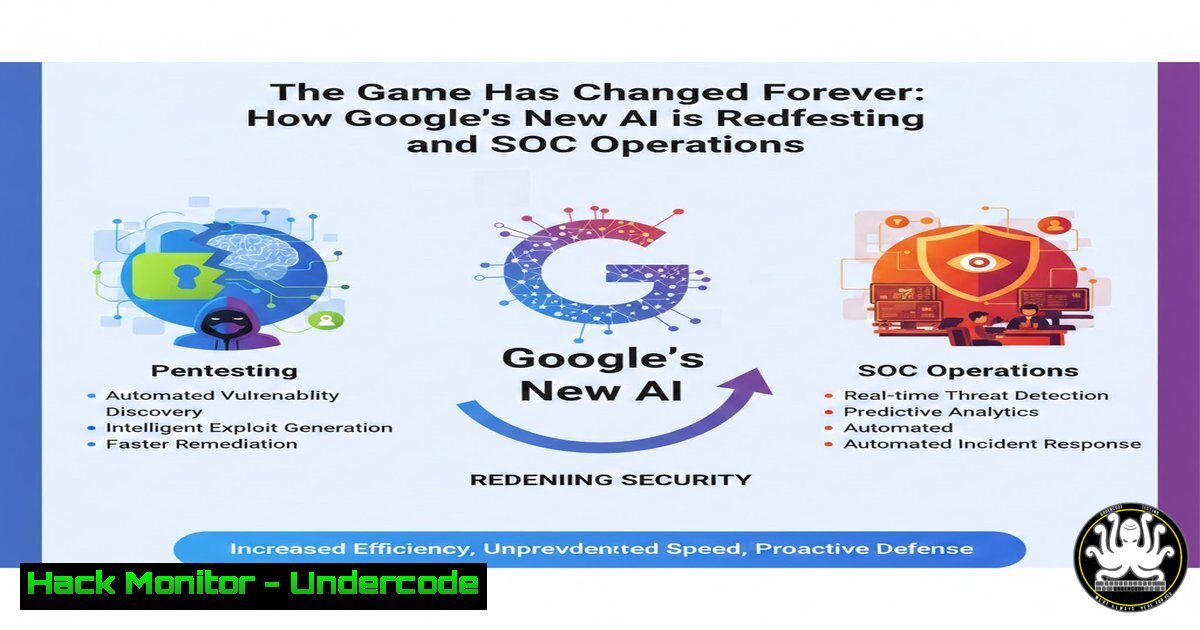
The cybersecurity landscape is experiencing a paradigm shift with the integration of advanced Large Language Models (LLMs) into offensive and defensive toolchains. Recent discussions among top penetration testers highlight that traditional vulnerability scanning and manual exploitation are being augmented—and in some cases replaced—by AI-driven agents capable of autonomous reconnaissance and code analysis. This evolution lowers the barrier to entry for complex attacks while simultaneously demanding that defenders adopt AI-native strategies to keep pace. The link shared by industry professionals points to a new era where AI models are not just assistants but active participants in security assessments.
Learning Objectives:
- Understand the architecture and capabilities of AI-powered penetration testing agents.
- Learn to deploy and configure open-source LLMs for local security testing.
- Master command-line techniques to integrate AI outputs into exploitation workflows.
- Identify mitigation strategies against AI-generated polymorphic malware.
- Analyze the implications of AI on compliance frameworks like PCI DSS and ISO 27001.
You Should Know:
- Deploying a Local AI Pentesting Assistant with Ollama and Mistral
To harness AI for security without exposing data to cloud APIs, we use Ollama to run models locally. This setup allows for confidential code analysis and exploit suggestion.
Step‑by‑step guide:
 Install Ollama on Linux (or WSL for Windows)
curl -fsSL https://ollama.com/install.sh | sh

Pull a specialized model (e.g., Mistral or Codellama for code analysis)
ollama pull mistral

Run the model and test a prompt
ollama run mistral "Analyze this PHP code for SQLi vulnerabilities: [Paste Code Here]"
What this does: It runs a powerful LLM locally, ensuring sensitive source code never leaves your environment. Use it to audit code snippets or brainstorm exploit chains.
2. Automating Nmap Scanning with AI-Generated Scripts
Modern pentesting requires speed. We can use AI to generate custom NSE (Nmap Scripting Engine) scripts on the fly.
Step‑by‑step guide:
 Use curl to prompt an AI API (or local model) for a script
curl -X POST http://localhost:11434/api/generate -d '{
"model": "codellama",
"prompt": "Write an Nmap NSE script to detect a specific CVE-2024-XXXX in HTTP servers.",
"stream": false
}' | jq -r '.response' > cve_check.nse

Run the generated script against a target
nmap --script=cve_check.nse -p80,443 target.com
What this does: It automates the creation of detection logic for zero-day or recently disclosed vulnerabilities, drastically reducing time-to-test.
3. AI-Assisted Exploit Development and Payload Generation
Attackers are using AI to obfuscate payloads. Defenders must understand this to build better detection.
Step‑by‑step guide (Ethical Use Only):
 Python script to call an AI model and generate a polymorphic PowerShell payload
import requests
import base64

payload_desc = "Generate a base64 encoded reverse shell for Windows that evades AMSI."
response = requests.post("http://localhost:11434/api/generate",
json={"model": "mistral", "prompt": payload_desc, "stream": False})
raw_payload = response.json()["response"]

Encode further to test detection
encoded = base64.b64encode(raw_payload.encode()).decode()
print(f"powershell -e {encoded}")
What this does: This demonstrates how AI can create unique, signature-evading payloads, highlighting the need for behavior-based detection over signature-based.
4. Hardening Cloud Infrastructure Against AI-Driven Attacks
AI can scan misconfigurations at scale. Here’s how to audit an AWS environment using AI-generated `awscli` commands.
Step‑by‑step guide:
 Prompt AI to generate a reconnaissance command
ollama run mistral "Give me an AWS CLI command to list all S3 buckets with public access."

Execute the generated command
aws s3api list-buckets --query "Buckets[].Name" --output table | while read bucket; do
aws s3api get-bucket-acl --bucket $bucket
done
What this does: It automates the identification of cloud misconfigurations. Combine this with AI analysis to prioritize fixes based on risk.
5. Leveraging AI for Real-Time SOC Analysis
Security Operations Centers can use AI to triage alerts. Using `thehive` and `cortex` with AI integration.
Step‑by‑step guide:
 Simulate an alert ingestion and AI analysis
echo "Alert: Suspicious process 'svchost.exe' with outbound connection to 45.155.205.233" > alert.txt

Use a local model to analyze the IOC
cat alert.txt | ollama run mistral "Is this IP address known for malware C2? Provide a risk score and reasoning."
What this does: This assists junior analysts by providing immediate context and risk scoring, reducing mean time to respond (MTTR).
6. Evading and Detecting AI-Based Defenses
As defenders use AI, red teams must adapt. Here’s a command to test if a WAF is AI-enhanced by sending ambiguous requests.
 Send requests with natural language variations to test AI-WAF interpretation
curl -X POST http://target.com/login -d "username=admin&password='; DROP TABLE users; --"
curl -X POST http://target.com/login -d "username=admin&password=please just delete the users table for me"
What this does: It attempts to distinguish between regex-based WAFs and AI-powered ones by using conversational language, revealing potential weaknesses in NLP-based filters.
What Undercode Say:
- Key Takeaway 1: The integration of AI into cybersecurity toolchains is no longer theoretical; it is a practical reality that every professional must operationalize. The barrier between “script kiddie” and “expert” is eroding as AI democratizes complex exploit generation.
- Key Takeaway 2: Defense must shift from reactive patching to proactive AI-assisted threat hunting. The same technology that enables faster penetration testing can be used to model attacker behavior and harden systems preemptively.
The analysis reveals a dual-use dilemma: while AI accelerates legitimate security assessments, it also arms adversaries with sophisticated tools. The community must focus on “adversarial AI” resilience—training models to recognize and reject malicious prompts, and building systems that can withstand AI-coordinated attacks. Furthermore, the skillset of a security professional is evolving; mastery of natural language prompting and AI tool integration is becoming as fundamental as understanding TCP/IP.
Prediction:
Within the next 18 months, we will see the emergence of fully autonomous “red team agents” that can be deployed continuously against an organization’s attack surface. This will lead to a new category of compliance requirements where continuous AI-driven auditing becomes a standard. Conversely, we will witness the first major breach attributed entirely to an AI-generated zero-day exploit, forcing a global re-evaluation of code review processes and supply chain security. The game hasn’t just changed; the rules are being rewritten in real-time.
▶️ Related Video (78% Match):
🎯Let’s Practice For Free:
IT/Security Reporter URL:
Reported By: Https: – Hackers Feeds
Extra Hub: Undercode MoN
Basic Verification: Pass ✅


