Listen to this Post
Introduction:
When security researcher Shivang Maurya recently leveraged his cybersecurity expertise to win a hackathon by building a multi-language learning platform, it highlighted a powerful modern truth: the analytical and systems-thinking skills honed in penetration testing are directly transferable to creative development. This same methodological mindset—understanding systems, probing their boundaries, and systematically building solutions—is the cornerstone of successful bug bounty hunting. Bug bounty programs are structured initiatives where organizations incentivize ethical hackers to find and report security vulnerabilities, creating a public or private arena for this skillset to thrive.
Learning Objectives:
- Understand the core components of a bug bounty program and how to develop a personal, effective hunting methodology.
- Learn practical, actionable steps for reconnaissance, vulnerability validation, and tool automation.
- Analyze how the skills developed in bug bounty hunting extend beyond security, fostering innovation in adjacent tech fields.
You Should Know:
- Building Your Hunter’s Methodology: From Fundamentals to Focus
The key to consistent success in bug bounty is not just tool knowledge but a repeatable, personalized methodology. This is your unique strategic approach to dissecting a target.
Step‑by‑step guide:
Master the Fundamentals: Before hunting, solidify your grasp of how the web works (HTTP/S, cookies, headers) and the OWASP Top 10 vulnerabilities, like SQL Injection and Cross-Site Scripting (XSS). Practice in controlled labs and Capture The Flag (CTF) challenges.
Identify Your Battlefield: Audit your own skills. Are you great at reading JavaScript and finding client-side flaws? Do you understand business logic in e-commerce systems? Or does network reconnaissance and discovering hidden subdomains excite you? Double down on your strongest area to gain a unique edge.
Create a Reusable System: Document your process. This can be a checklist to ensure consistency or an automated script for repetitive tasks. For example, if you always start with subdomain enumeration, automate it with a tool like `amass` or a custom Bash script.
 Example Bash snippet for initial subdomain enumeration and quick HTTP check
!/bin/bash
echo "Target: $1"
echo "Running Amass enumeration..."
amass enum -d $1 -o "subdomains_$1.txt"
echo "Checking for live HTTP/HTTPS servers..."
cat "subdomains_$1.txt" | httprobe -c 50 > "live_$1.txt"
echo "Initial recon complete. Live targets saved to live_$1.txt"
- The Reconnaissance Deep Dive: Seeing What Others Miss
Reconnaissance is about mapping the attack surface beyond the obvious. Successful hunters find assets others overlook.
Step‑by‑step guide:
Go Wide with Scope: On programs with a wide scope (e.g., .company.com), comprehensively map all subdomains and subsidiary assets. Use tools like amass, subfinder, and assetfinder. Search for old or staging subdomains (staging, dev, test) which often have weaker security controls.
Inspect the Digital Blueprints: Thoroughly read the target’s public documentation, API docs, and even JavaScript files. JS files can contain hard-coded API keys, internal endpoints, and hidden paths. Use browser developer tools or a tool like `LinkFinder` to extract URLs from JS files.
Probe Non-Standard Ports: Don’t limit testing to ports 80 and 443. Use a port scanner like `nmap` to discover web services running on other ports (8080, 3000, 8443). These often host admin panels, development, or internal tools.
 Nmap command to quickly scan for common web ports
nmap -p 80,443,8080,8443,3000,8000 -sV --open -oG web_ports.txt $TARGET_IP
- Vulnerability Hunting & Validation: From Noise to a Proof of Concept
Finding a potential flaw is only the first step; validating and crafting a clear proof of concept (PoC) is what leads to a paid bounty.
Step‑by‑step guide:
Test Beyond Automated Scanners: Focus on manual testing for business logic flaws. For example, on an e-commerce site, test if you can manipulate the price parameter in a POST request during checkout, or if you can apply a coupon multiple times.
Meticulously Document Everything: For every interesting request or anomaly, take detailed notes. Use a tool like Obsidian or Notion. Note the request, response, and why it seemed odd. This context is invaluable when you circle back to investigate.
Build a Reproducible PoC: Your report must allow the company’s engineers to reproduce the issue exactly. Capture all steps, using a proxy tool like Burp Suite to generate a `curl` command or save the exact HTTP request/response pair. Clearly demonstrate the impact (e.g., “This IDOR allows me to view any user’s personal invoice by changing the `id` parameter from 1001 to 1002”).
- From Hunter to Program Architect: Understanding the Other Side
Understanding how bug bounty programs are structured makes you a better hunter and opens doors to security leadership roles.
Step‑by‑step guide:
Decode the Program Brief: A well-run program has a clear scope (what’s in and out of bounds), rules of engagement (what testing is allowed), and a defined reward table. Always read this first to avoid legal issues and focus your efforts.
Understand the Business Logic: Programs are a cost-effective, continuous security testing model for companies. They pay only for valid results and get diverse perspectives from a global crowd. As a hunter, aligning your findings with business risk (e.g., “This flaw could lead to a data breach affecting millions of users”) increases severity and payout.
Recognize Program Maturity: Companies often start with private, invite-only programs to test processes before going public. Engaging respectfully and submitting high-quality reports in private programs can lead to long-term relationships and special invitations.
5. The Toolsmith’s Edge: Automating Your Workflow
Automation reclaims time for deep, creative hunting. It’s about working smarter.
Step‑by‑step guide:
Automate the Mundane: Script your initial reconnaissance pipeline. Chain tools together using Bash or Python. For example, automate: subdomain discovery -> filtering out dead domains -> taking screenshots of live ones -> launching a background vulnerability scanner.
Build a Custom Toolkit: If you repeatedly test for a specific vulnerability (e.g., SSRF), write a small script that takes a list of URLs and probes for it. Use Python’s `requests` library to send crafted payloads and filter responses.
 Python pseudo-code for a simple SSRF probe
import requests
target_urls = ["https://target.com/api/user?url="]
probe_payloads = ["http://169.254.169.254/latest/meta-data/", "http://internal.service"]
for url in target_urls:
for payload in probe_payloads:
test_url = url + payload
try:
r = requests.get(test_url, timeout=5)
if "instance-id" in r.text or r.status_code != 404:
print(f"[!] Potential SSRF: {test_url}")
except:
pass
Manage Your Data: Use tools like `notion-sdk` or build a simple local database to track targets, vulnerabilities found, report statuses, and payout history. This turns your activity from a hobby into a managed operation.
What Undercode Say:
- Security Thinking is Product Thinking: The systematic approach of a hacker—breaking down a system, understanding its dependencies, and stress-testing its limits—is identical to the process of building robust, user-centric software. Winning a hackathon with a language app is not a departure from security; it’s an application of the same foundational problem-solving skills.
- The Economic Catalyst of Bug Bounties: Bug bounty programs have evolved into a sophisticated, scalable component of the cybersecurity economy. They provide a meritocratic platform for global talent, offer organizations a cost-effective, continuous testing model, and ultimately translate to safer software for everyone. This creates a powerful, positive feedback loop between skill development and real-world security enhancement.
Analysis:
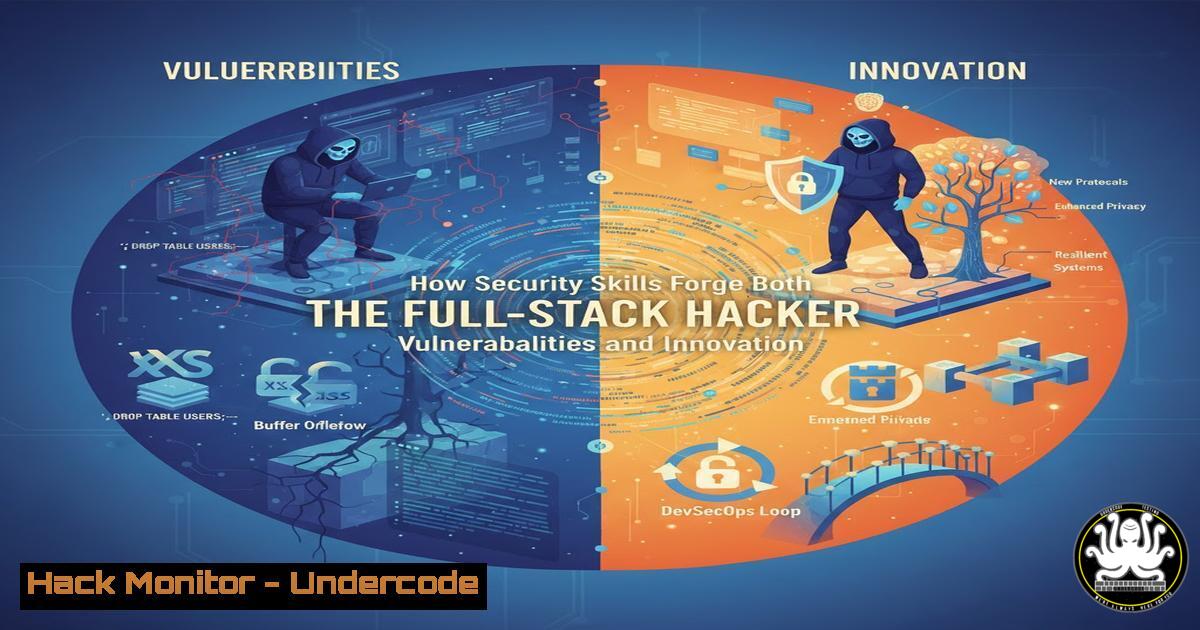
The trajectory illustrated by the researcher’s journey—from finding vulnerabilities to building applications—signals a broader trend in the tech industry. The “hacker mindset” is increasingly valued not just for defense, but for innovation. Bug bounty platforms formalize this, turning adversarial curiosity into a constructive, rewarded activity. For individuals, it builds a potent portfolio; for the industry, it crowdsources resilience. This fusion of skills suggests the next generation of tech leaders will be those who can seamlessly operate across the traditional boundaries of security and development, understanding that to build truly secure systems, you must first learn how they break.
Prediction:
In the next 3-5 years, we will see the “full-stack hacker” become a central figure in tech innovation. The methodological rigor, systems analysis, and automation skills honed in bug bounty hunting and penetration testing will be explicitly sought after not only in AppSec roles but also in product development, DevOps, and AI safety engineering. Furthermore, bug bounty principles will expand beyond software into stress-testing AI models, cloud infrastructure configurations, and complex IoT ecosystems, creating new economic opportunities for ethical hackers and raising the security baseline for emerging technologies. The line between building and breaking will blur, fostering a generation of creators who architect with security as a first principle.
▶️ Related Video (86% Match):
🎯Let’s Practice For Free:
IT/Security Reporter URL:
Reported By: Shivangmauryaa Secured – Hackers Feeds
Extra Hub: Undercode MoN
Basic Verification: Pass ✅


