Listen to this Post
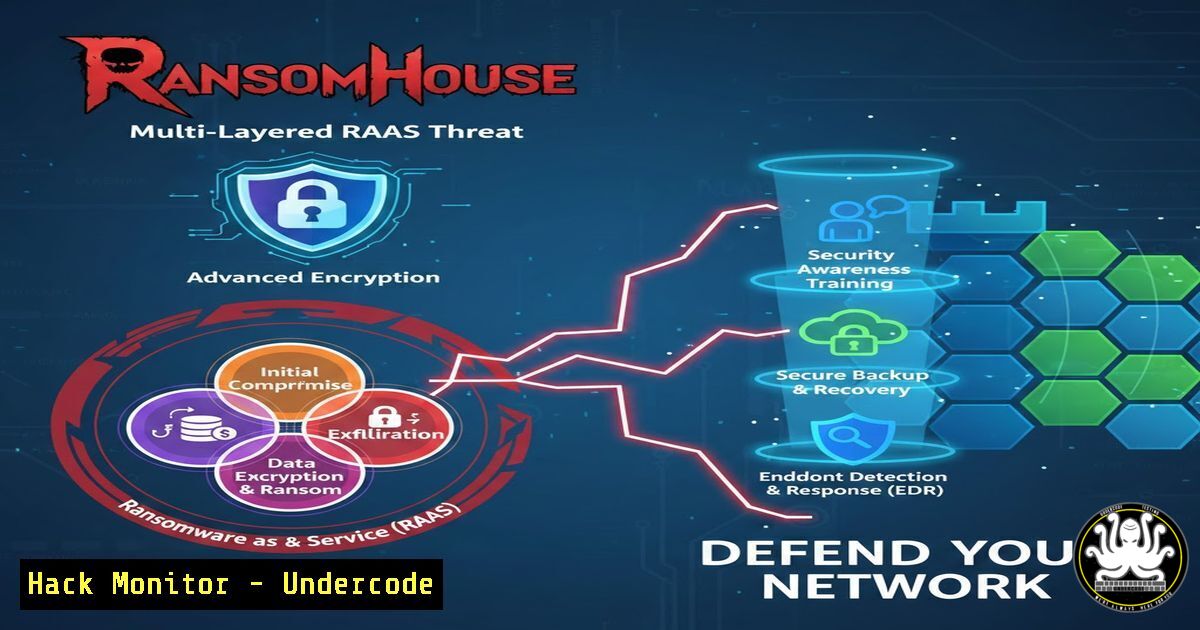
Introduction:
The RansomHouse ransomware-as-a-service (RaaS) operation has significantly evolved its tactics, shifting from a basic single-phase encryption model to a sophisticated, multi-layered data processing method. This technical upgrade provides threat actors with faster, more reliable encryption on modern systems, directly strengthening their position during extortion negotiations. This evolution underscores a critical trend in the cyber threat landscape, where RaaS platforms are becoming more advanced and accessible, lowering the barrier for entry and increasing the overall volume and severity of attacks.
Learning Objectives:
- Understand the technical specifics of RansomHouse’s new multi-layered encryption technique and its operational advantages.
- Learn to identify Indicators of Compromise (IOCs) and implement detection rules for this upgraded threat.
- Implement proactive hardening measures for both cloud and on-premises environments to mitigate ransomware risk.
- Develop a clear incident response plan tailored to a sophisticated, multi-stage ransomware attack.
You Should Know:
1. The Technical Core of the Encryption Upgrade
RansomHouse’s shift from a linear to a multi-layered encryption process represents a major leap in operational sophistication. The new method likely involves separating the processes of file discovery, encryption, and integrity checking into parallel, interdependent stages. This architecture allows for more efficient use of system resources, leading to the reported faster encryption speeds and improved reliability across diverse target environments, from enterprise servers to cloud storage. The core of this upgrade aims to minimize the chance of failure during the encryption process, ensuring maximum data loss for the victim and maximum leverage for the attacker.
Step‑by‑step guide explaining what this does and how to use it.
While we cannot replicate the malicious encryptor, security analysts can understand its behavior by simulating detection techniques. The process can be broken down into stages an analyst would look for:
- Stage 1 – Discovery & Targeting: The malware first executes with high privileges to traverse the file system. You can simulate looking for this activity by using command-line tools to audit processes accessing large volumes of files.
Linux Command to Monitor Process File Access:sudo lsof +D /home /data 2>/dev/null | head -20. This lists files opened by processes under common directories, which could indicate ransomware scanning.
Windows PowerShell to Get Recent File Activities:Get-Process | Where-Object {$_.CPU -gt 50} | Select-Object Name, CPU, Path. This helps identify processes with high CPU usage that may be actively encrypting files. -
Stage 2 – Multi-Threaded Encryption: The encryptor uses multiple threads. One thread may handle rapid encryption using a fast algorithm like ChaCha20 on file contents, while another manages key encapsulation using a strong algorithm like RSA-8192.
Linux Command to Check for Suspicious Multi-threaded Processes:ps -eLf | awk '{print $2,$4,$10}' | sort -n | tail -20. This shows processes with a high number of threads (LWP column), which could be a sign of the parallel encryption process. -
Stage 3 – Integrity & Cleanup: A final layer verifies encryption was successful and drops the ransom note. This ensures files are truly inaccessible before negotiation begins.
2. Detecting RansomHouse Activity in Your Environment
Early detection is paramount. The upgraded encryptor may leave different fingerprints than its predecessor. Security teams must focus on behavioral indicators and specific artifacts associated with RansomHouse’s new tooling. This involves monitoring for the creation of specific file extensions, abnormal network connections to known malicious IPs, and patterns in process execution that match the multi-stage approach.
Step‑by‑step guide explaining what this does and how to use it.
Implement layered detection using open-source tools and logs:
- File System Monitoring: RansomHouse often appends a specific extension (e.g.,
.rhive). Use File Integrity Monitoring (FIM) or simple scripts to alert on mass file renames.
Linux AIDE (Advanced Intrusion Detection Environment) Initialization & Check:
Initialize DB: `sudo aide –init`
Move DB: `sudo mv /var/lib/aide/aide.db.new.gz /var/lib/aide/aide.db.gz`
Run Check: `sudo aide –check`
Windows Command to Search for Newly Created Ransom Notes: dir /s /b C:\.readme.txt C:\_HOW_TO_RECOVER_.txt 2>nul. Search for common ransom note filenames.
- Network Traffic Analysis: The malware may communicate with a C2 server before or after encryption. Use firewall logs or network monitoring tools.
Analyze Connections with `netstat` (Linux/Windows): On Windows:netstat -ano | findstr ESTABLISHED. Look for unknown outgoing connections on non-standard ports. Correlate the PID with running processes. -
Process & Memory Analysis: The multi-layered technique may spawn child processes or inject code into legitimate ones.
Linux Command to View Process Tree:pstree -p -a. Look for unusual parent-child relationships from a single source.
YARA Rule for Static Detection: Create a simple YARA rule to scan for known strings in memory or files. A basic rule might look for mentions of “RansomHouse” or its associated algorithms.rule RansomHouse_Indicator { meta: description = "Detects potential RansomHouse strings" author = "YourSecurityTeam" strings: $a = "RansomHouse" nocase $b = "CHA_CHA_20" wide $c = "RSA_8192" wide condition: any of them }
3. Hardening Cloud and On-Premises Systems
The ransomware threat landscape is broad, as seen in the BleepingComputer feed with attacks targeting FortiCloud SSO devices, Microsoft 365 via OAuth phishing, and Gladinet CentreStack. A robust defense requires hardening all fronts. This involves principle of least privilege, timely patching of known vulnerabilities (like the critical WatchGuard Firebox flaw), and securing identity systems, which are a prime target as highlighted in the NIS2 compliance article.
Step‑by‑step guide explaining what this does and how to use it.
1. Identity & Access Management (Critical): As OAuth phishing and password spraying attacks (like those on Cisco and PAN VPNs) show, identity is the new perimeter.
Enforce Multi-Factor Authentication (MFA) Everywhere: Do not rely on passwords alone. Use phishing-resistant MFA methods (FIDO2/WebAuthn) for admins.
Implement Conditional Access Policies (Azure/M365): Restrict logins based on device compliance, location, and user risk level. Block legacy authentication protocols.
2. System Hardening:
Patch Relentlessly: Prioritize patches for internet-facing devices (firewalls, VPNs, email gateways). The UEFI flaw in ASUS, Gigabyte, MSI, and ASRock motherboards is a stark reminder that firmware must be included in patch management.
Windows Command to List Recent Hotfixes: wmic qfe list brief /format:table. Review the output to ensure critical security updates are installed.
Disable Unnecessary Services: Reduce attack surface. For example, if not needed, disable the Windows Message Queuing (MSMQ) service mentioned in the patch article.
Windows PowerShell to Disable MSMQ Service: Set-Service -Name MSMQ -StartupType Disabled.
4. Implementing Proactive Defense Measures
Proactive defense moves beyond prevention to assume a breach will occur. It involves measures to detect lateral movement, contain outbreaks, and render stolen data useless. This aligns with intelligence-led defense, using platforms like Criminal IP integrated with Palo Alto Networks Cortex XSOAR for automated threat response.
Step‑by‑step guide explaining what this does and how to use it.
1. Network Segmentation: Isolate critical segments (finance, R&D, OT networks) so ransomware cannot spread laterally from a compromised workstation to a domain controller or file server.
Conceptual Firewall Rule (Example): Create rules that only allow specific, necessary traffic between segments (e.g., only port 445/SMB from specific admin subnets to file servers).
- Endpoint Detection & Response (EDR): Deploy EDR solutions and ensure they are properly tuned to alert on ransomware behaviors like mass file encryption, process injection, and disabling of backup services.
Test EDR Responsiveness: Create a safe test file (e.g.,C:\test\ransom_test.txt) and use a tool like `Streams` from Sysinternals to attempt to lock it with an exclusive write handle, simulating ransomware behavior. Monitor if your EDR triggers an alert. -
Secure & Isolate Backups: Maintain offline, immutable backups. Test restoration regularly. The 3-2-1 rule (3 copies, 2 different media, 1 offline) is your ultimate recovery tool.
5. Developing an Effective Incident Response Plan
When prevention fails, a clear, practiced plan is vital. The plan must account for the speed of modern ransomware and include communication protocols, decision-making authority for ransom negotiation (generally discouraged by law enforcement), and recovery procedures.
Step‑by‑step guide explaining what this does and how to use it.
1. Preparation Phase:
Establish a Contact List: Include IT, legal, PR, executive management, and external contacts (cyber insurance, forensic firm).
Create Communication Templates: Draft holding statements for internal staff and external customers.
2. Identification & Containment Phase:
Step 1: Isolate the Threat. Disconnect affected systems from the network. Do not turn them off to preserve memory for forensic analysis.
Linux Command to Disconnect a Single Host from Network (Drastic): sudo iptables -P INPUT DROP && sudo iptables -P OUTPUT DROP && sudo iptables -P FORWARD DROP. (Use only if immediate isolation is required on a critical host).
Step 2: Determine Scope. Use logs and EDR telemetry to answer: When did it start? Patient zero? Which systems/data are impacted?
3. Eradication & Recovery Phase:
Eradicate: Rebuild infected systems from clean gold images after identifying the initial access vector (e.g., a phishing email) and closing that hole.
Recover: Restore data from clean, validated backups. Test system functionality before bringing back online.
What Undercode Say:
- Key Takeaway 1: The professionalization of RaaS, as demonstrated by RansomHouse’s encryption upgrade, is a force multiplier for cybercrime. It enables less technically skilled actors to deploy high-impact attacks, increasing the threat surface for all organizations.
- Key Takeaway 2: Defense can no longer be solely preventive. A multi-layered security posture that integrates robust identity protection, continuous vulnerability management, proactive network monitoring, and immutable backups is the only effective counter to a multi-layered attack.
The analysis of the provided cybersecurity feed reveals a concentrated offensive against identity and edge devices. RansomHouse’s technical evolution is not an isolated event but part of a broader pattern where attackers refine tools for efficiency and impact. Simultaneously, complementary attacks focus on stealing credentials (OAuth phishing, password spraying) and exploiting vulnerabilities in perimeter devices (Fortinet, WatchGuard, VPNs) to gain initial access. This synergy means defenders cannot view ransomware in a vacuum. The encryption payload is often the final stage of a kill chain that begins with a phished credential or an unpatched firewall. Therefore, mitigation strategies must be equally holistic, bridging IT and security operations to strengthen identity, patch management, and monitoring simultaneously. The integration of AI-driven threat intelligence (like Criminal IP) into automation platforms (like XSOAR) is becoming essential to keep pace with the speed and scale of these coordinated threats.
Prediction:
The trend toward more sophisticated, efficient, and “safer” RaaS operations will accelerate. Future ransomware strains will likely incorporate AI to intelligently select the most valuable data for encryption, optimize encryption speed per file type, and dynamically evade detection based on the environment. The line between data theft for extortion and outright destruction (as seen in state-linked attacks on critical infrastructure) may blur, with ransomware being used as a disruptive payload in geopolitical conflicts. Defensively, AI and automation will transition from luxury to necessity. Security platforms will move towards fully autonomous prevention and response cycles for known attack patterns, freeing human analysts to hunt for novel threats. The focus of compliance (like NIS2) will increasingly mandate these proactive and technical measures, not just policy frameworks.
▶️ Related Video (80% Match):
🎯Let’s Practice For Free:
IT/Security Reporter URL:
Reported By: Wayne Shaw – Hackers Feeds
Extra Hub: Undercode MoN
Basic Verification: Pass ✅


