
Listen to this Post
Introduction:
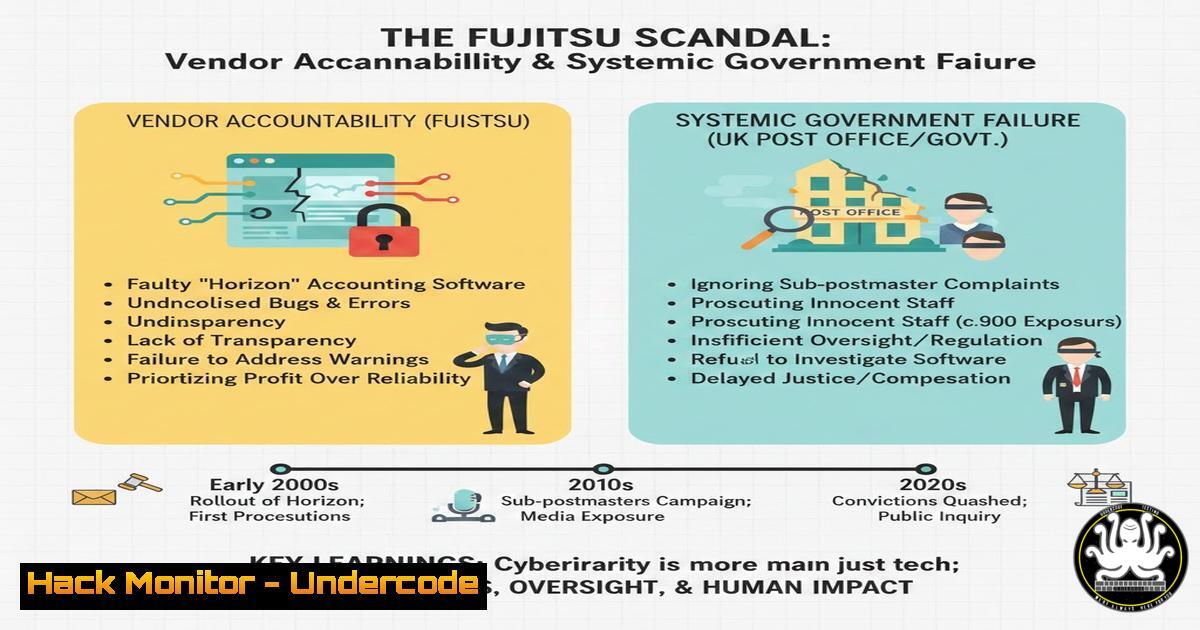
The ongoing Fujitsu Post Office scandal represents more than a procedural failure; it exposes critical vulnerabilities in government technology procurement, vendor accountability, and software integrity verification. This case study examines how inadequate cybersecurity oversight, flawed software development practices, and insufficient contractual safeguards created a perfect storm that devastated hundreds of lives while costing taxpayers billions.
Learning Objectives:
- Understand the critical importance of third-party risk management in government technology contracts
- Identify red flags in vendor relationships and software procurement processes
- Implement technical safeguards to prevent similar systemic failures
You Should Know:
1. Third-Party Risk Management Framework Implementation
Government agencies must implement rigorous third-party risk management frameworks that extend beyond initial procurement. The Fujitsu case demonstrates how continuous monitoring and accountability mechanisms failed at multiple levels.
Step-by-step guide:
- Establish a Vendor Risk Management Program: Classify vendors based on criticality and data access levels
- Implement Continuous Security Assessments: Conduct quarterly security reviews for critical vendors
- Deploy Configuration Management Databases: Maintain accurate asset inventories of all third-party systems
Verified Commands:
 Using OpenSCAP for continuous compliance monitoring
oscap xccdf eval --profile xccdf_org.ssgproject.content_profile_cui \
--results scan-report.xml --report scan-report.html \
/usr/share/xml/scap/ssg/content/ssg-rhel8-ds.xml

Automated vendor system inventory scanning
nmap -sS -O -sV -p 1-65535 vendor-system.gov.uk -oA vendor-scan
2. Software Integrity Verification and Code Signing
The Horizon software’s alleged bugs and lack of transparency highlight the critical need for verifiable software integrity throughout the development lifecycle.
Step-by-step guide:
- Implement mandatory code signing for all production deployments
- Establish cryptographic verification chains for software updates
- Create independent software validation committees with audit access
Verified Commands:
 Verify GPG signature on software packages
gpg --verify package-name-version.tar.gz.asc package-name-version.tar.gz

Check Windows digital signatures
Get-AuthenticodeSignature -FilePath C:\Software\vendor-app.exe

Linux package verification
rpm --checksum -v package-name.rpm
dpkg --verify package-name
3. Secure Software Development Lifecycle Enforcement
The Horizon system’s alleged defects reveal fundamental flaws in software development and testing practices that proper SSDLC implementation could have prevented.
Step-by-step guide:
- Mandate OWASP ASVS Level 2 compliance for government systems
- Implement automated security testing in CI/CD pipelines
- Establish independent security review boards with veto power
Verified Commands:
 Integrate security scanning in CI/CD
semgrep --config=auto .
bandit -r /path/to/code
npm audit --audit-level high

Container security scanning
trivy image vendor-image:latest
docker scan vendor-image:latest
4. Whistleblower Protection and Security Reporting Channels
The persecution of whistleblowers in this case demonstrates the critical need for secure, anonymous reporting mechanisms protected by cryptographic guarantees.
Step-by-step guide:
- Implement cryptographically secure whistleblower systems using Tor or similar anonymity networks
- Establish mandatory escrow of all source code and documentation
- Create independent oversight bodies with subpoena power
Verified Commands:
 Secure communication setup for whistleblowers
gpg --encrypt --recipient [email protected] report.docx
tor --HTTPTunnelPort 8080

Secure log collection and integrity verification
auditctl -w /etc/passwd -p wa -k identity_access
journalctl --system --since="1 hour ago" --no-pager
5. Contractual Security Requirements and Enforcement
The continued payments to Fujitsu despite known issues highlight the failure of contractual security enforcement mechanisms.
Step-by-step guide:
- Implement security performance bonds tied to verifiable metrics
- Establish automatic penalty triggers for security failures
- Create independent third-party validation requirements
Verified Configuration:
 Example security requirements in infrastructure-as-code
security_compliance:
third_party_audit: required
pen_test_frequency: quarterly
code_review: mandatory
incident_response: 4_hour_sla
data_breach_penalties: 10_percent_contract_value
6. Digital Forensics and Evidence Preservation
The legal implications of flawed digital evidence underscore the need for robust forensic preservation practices.
Step-by-step guide:
- Implement cryptographically verified audit trails
- Establish evidence chain-of-custody protocols
- Create independent forensic validation procedures
Verified Commands:
 Digital evidence preservation
dcfldd if=/dev/sda hash=sha256,md5 hashwindow=1G hashlog=hashes.txt | \
gzip -c > evidence-image.img.gz

Windows event log collection
wevtutil epl Security C:\Forensics\Security-Backup.evtx
Get-WinEvent -ListLog  | Where-Object {$_.RecordCount} |
Export-Csv -Path event_logs_inventory.csv
7. Supply Chain Security and Dependency Management
The systemic nature of this failure highlights vulnerabilities in the entire technology supply chain that require comprehensive mitigation strategies.
Step-by-step guide:
- Implement Software Bill of Materials (SBOM) requirements
- Establish software provenance verification
- Create dependency vulnerability management programs
Verified Commands:
 SBOM generation and verification
syft packages vendor-app:latest -o cyclonedx > sbom.xml
grype sbom:sbom.xml

Dependency vulnerability scanning
snyk test --all-projects
oss-attribution-generator generate --source-dir ./src
What Undercode Say:
- Vendor accountability must be enforced through technically verifiable means, not just contractual language
- Government technology procurement requires independent technical oversight with enforcement authority
- Software systems used in legal proceedings must meet forensic-grade evidence standards
The Fujitsu scandal represents a catastrophic failure of multiple security and governance layers. From inadequate software testing to the absence of proper whistleblower protections, every level of the technology stack and governance framework failed. This case demonstrates that without technically enforceable accountability measures, contractual requirements become meaningless. The continued payments to Fujitsu despite known issues reveal fundamental flaws in how government entities manage vendor relationships and enforce security requirements.
Prediction:
The fallout from the Fujitsu scandal will catalyze significant changes in government technology procurement worldwide. We anticipate mandatory open-source escrow for all critical government systems, blockchain-verified audit trails for legal evidence, and the emergence of AI-driven compliance monitoring that automatically triggers contract penalties. Within five years, expect to see standardized security performance bonds and the rise of independent third-party validators with legally mandated access rights. The era of trusting vendor assertions without technically verifiable proof is ending, replaced by cryptographically enforced accountability and transparent, auditable systems architecture.
🎯Let’s Practice For Free:
IT/Security Reporter URL:
Reported By: Stuart G – Hackers Feeds
Extra Hub: Undercode MoN
Basic Verification: Pass ✅


