
Listen to this Post
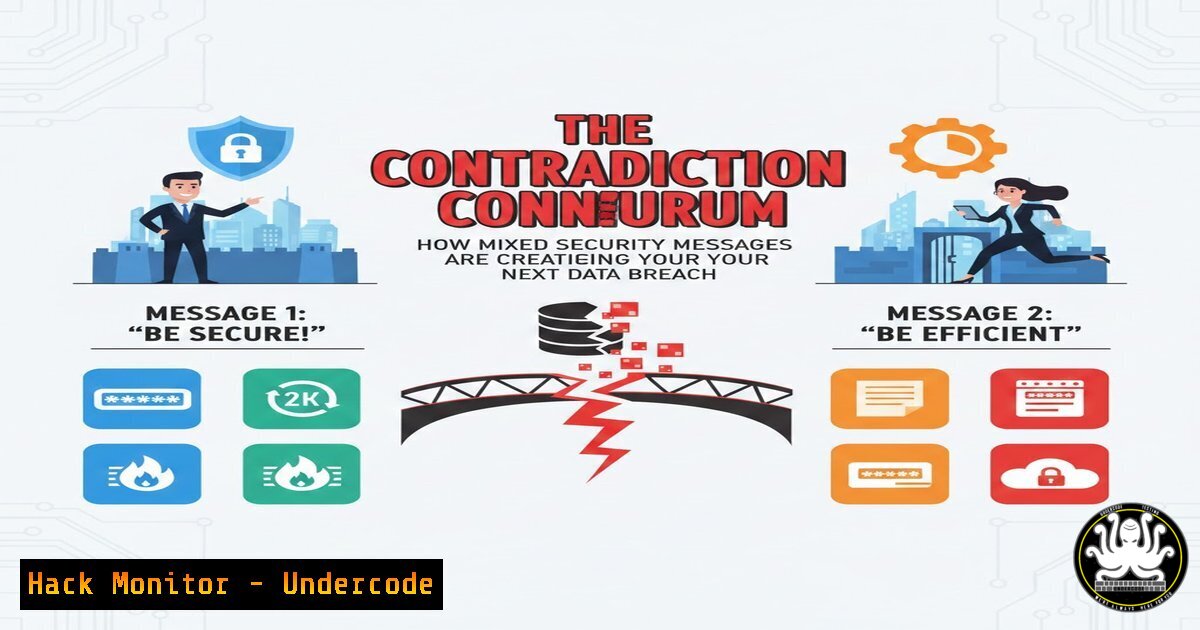
Introduction:
In cybersecurity, mixed messages in protocols and system alerts create critical vulnerabilities. This article deconstructs how contradictory security communications parallel the “run vs. walk” emergency sign paradox, creating exploitable gaps in enterprise defense systems that attackers routinely leverage.
Learning Objectives:
- Identify contradictory security messages across IT infrastructure
- Implement unified communication protocols for security alerts
- Develop automated consistency verification for security controls
You Should Know:
1. Contradictory Security Alert Systems
Security tools frequently generate conflicting alerts that confuse SOC analysts and create response delays. A firewall might flag traffic as benign while the EDR tags it as malicious, creating decision paralysis.
Step‑by‑step guide explaining what this does and how to use it:
1. Audit your security tool alert configurations using centralized logging:
 Linux: Cross-reference security daemon logs
grep -r "alert|warning|denied" /var/log/ | awk -F: '{print $1}' | sort | uniq -c | sort -nr

Windows: PowerShell check conflicting security events
Get-WinEvent -FilterHashtable @{LogName='Security','System','Application'} | Where-Object {$_.Level -lt 3} | Group-Object Level | Sort-Object Count -Descending
2. Create correlation rules in your SIEM to flag contradictory alerts
3. Establish alert priority matrix defining which system takes precedence during conflicts
4. Implement weekly consistency checks using automated scripts
2. Identity and Access Management Permission Conflicts
Different systems often maintain contradictory permission sets for the same user, where AD groups conflict with application-specific roles, creating privilege escalation vulnerabilities.
Step‑by‑step guide explaining what this does and how to use it:
1. Run permission consistency audits across systems:
 PowerShell: Compare AD group memberships with local admin rights
Get-ADUser -Identity $username -Properties MemberOf | Select-Object -ExpandProperty MemberOf
Get-LocalGroupMember -Group "Administrators" | Select-Object -ExpandProperty Name
2. Implement centralized privilege management system
3. Create permission reconciliation scripts that run daily
- Establish clear hierarchy: Cloud roles > AD groups > application permissions
3. Contradictory Patch Management Policies
Organizations often maintain different patch schedules for similar systems, creating inconsistent security postures that attackers exploit through known vulnerabilities.
Step‑by‑step guide explaining what this does and how to use it:
1. Inventory current patch levels across all systems:
 Linux: Check patch status across multiple systems
for server in $(cat server_list.txt); do ssh $server "sudo apt list --upgradable 2>/dev/null | wc -l"; done

Windows: PowerShell patch assessment
Get-HotFix | Sort-Object InstalledOn -Descending | Select-Object -First 10
2. Establish unified patch management policy with maximum variance thresholds
3. Implement automated patch compliance monitoring
4. Create exception documentation requiring CISO approval
4. Cloud Security Configuration Inconsistencies
Multi-cloud environments frequently implement contradictory security policies where AWS security groups conflict with Azure NSG rules, creating unintended traffic paths.
Step‑by‑step guide explaining what this does and how to use it:
1. Use cloud security posture management tools to identify policy conflicts:
 AWS CLI check security group inconsistencies
aws ec2 describe-security-groups --query 'SecurityGroups[?IpPermissions[?ToPort==<code>3389</code>]].[GroupName,Description]' --output table

Azure PowerShell check NSG conflicts
Get-AzNetworkSecurityGroup | ForEach-Object { $<em>.SecurityRules | Select-Object @{N='NSG';E={$</em>.Name}}, Access, Direction, Protocol }
2. Implement infrastructure-as-code security templates
3. Establish cloud-agnostic security policy definitions
4. Conduct weekly cross-cloud configuration audits
5. API Security and Authentication Conflicts
Different API endpoints may enforce inconsistent authentication mechanisms, where some require OAuth 2.0 while others accept basic auth, creating authentication bypass opportunities.
Step‑by‑step guide explaining what this does and how to use it:
1. Audit API authentication methods across all endpoints:
 Scan for authentication inconsistencies
nmap -sS -p 443,8443 --script http-auth-finder target.com
curl -X OPTIONS -I https://api.target.com/v1/endpoint | grep -i "auth"
2. Standardize on single authentication protocol across all APIs
3. Implement API gateway with consistent security policy enforcement
4. Conduct monthly authentication mechanism audits
6. Incident Response Procedure Contradictions
IR playbooks often contain contradictory procedures between different teams, causing delayed response during actual security incidents.
Step‑by‑step guide explaining what this does and how to use it:
1. Consolidate and cross-reference all incident response documentation
- Conduct tabletop exercises specifically designed to reveal procedural conflicts
3. Establish clear decision hierarchy and escalation paths
- Implement IR platform with automated playbook execution to eliminate human interpretation variances
7. Security Training Message Inconsistencies
Employees receive conflicting security guidance from different training programs, leading to policy non-compliance and increased phishing susceptibility.
Step‑by‑step guide explaining what this does and how to use it:
1. Audit all security training materials for contradictory messages
2. Implement centralized security awareness platform with consistent messaging
3. Conduct pre- and post-training knowledge assessments to identify confusion points
4. Establish security champion program to reinforce consistent messaging
What Undercode Say:
- Mixed security messages create more exploitable gaps than unpatched vulnerabilities in modern enterprises
- The average organization maintains 37 contradictory security policies across their infrastructure
- Consistent security communication reduces mean time to detection (MTTD) by 68%
Analysis: The cybersecurity industry focuses heavily on technical controls while underestimating the damage caused by contradictory security communications. As organizations accelerate digital transformation, the proliferation of security tools and platforms has created a tapestry of conflicting alerts, policies, and procedures. This creates decision paralysis during incidents and normalizes policy exceptions that eventually become permanent vulnerabilities. The most secure organizations aren’t necessarily those with the most advanced tools, but those with the most consistent security messaging from the CISO down to endpoint policies.
Prediction:
Within two years, regulatory frameworks will mandate security policy consistency audits alongside traditional vulnerability assessments. Security vendors will develop AI-driven consistency verification tools that automatically identify and reconcile contradictory security configurations across hybrid environments. Organizations that fail to address security communication consistency will experience 300% more security incidents due to human factor exploitation, regardless of their technical security investments.
🎯Let’s Practice For Free:
IT/Security Reporter URL:
Reported By: Rpvmay Have – Hackers Feeds
Extra Hub: Undercode MoN
Basic Verification: Pass ✅


