Listen to this Post
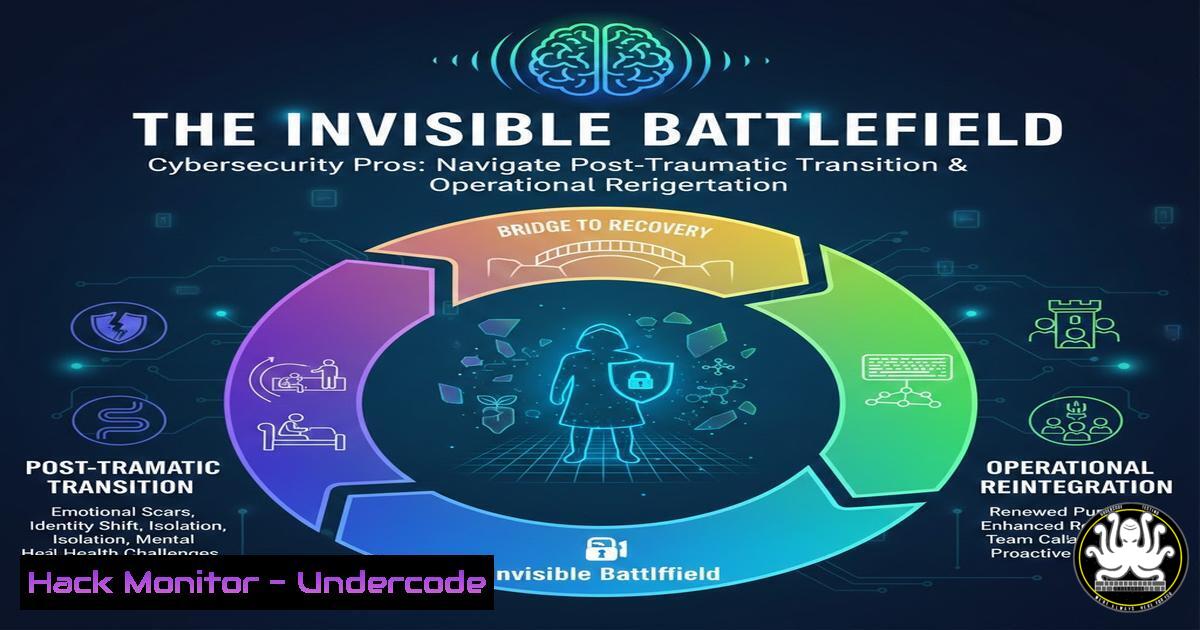
Introduction:
The transition from high-stakes combat environments to routine office settings creates profound psychological and professional disorientation, particularly for security professionals. This article examines the parallels between military decompression and cybersecurity operational readiness, providing structured methodologies for reintegrating technical personnel while maintaining organizational security posture.
Learning Objectives:
- Implement phased reintegration protocols for security team members returning from extended absence
- Establish psychological safety nets while maintaining enterprise security standards
- Develop resilience training techniques adapted from military to cybersecurity contexts
You Should Know:
1. Structured Reintegration Protocol Development
The abrupt transition from combat alertness to desk-based monitoring creates cognitive dissonance that undermines both personnel well-being and security operations. Security leaders must implement graduated return-to-work frameworks that acknowledge this psychological whiplash while ensuring operational integrity.
Step-by-step guide:
- Week 1: Limited operational access (read-only monitoring, documentation review)
- Week 2: Supervised tactical operations (with dual authorization requirements)
- Week 3: Full tactical reinstatement with mentorship checkpoints
- Implement continuous psychological support through EAP programs with security-cleared professionals
 Example: Graduated access restoration script for Linux environments
!/bin/bash
USERNAME=$1
WEEK=$2

case $WEEK in
1)
usermod -G soc-readonly $USERNAME
auditctl -w /home/$USERNAME -p wa -k returnee_monitoring
;;
2)
usermod -G soc-analysts $USERNAME
;;
3)
usermod -G soc-fullaccess $USERNAME
;;
esac
2. Operational Readiness Verification After Extended Absence
Technical skills degradation during extended absence represents significant security risk, particularly for personnel handling critical security systems. Organizations must validate competency without stigmatizing returnees.
Step-by-step guide:
- Conduct blinded skill assessments using capture-the-flag scenarios
- Implement paired analysis during initial shifts
- Establish clear competency checkpoints before restoring privileged access
- Create “sandbox reorientation” periods with realistic but isolated security events
 Windows security audit for returning personnel
$Returnee = Read-Host "Enter username"
$Checkpoints = @('SIEM Navigation','Alert Triage','Incident Documentation')

foreach ($Checkpoint in $Checkpoints) {
$Result = Read-Host "Has $Returnee completed $Checkpoint verification? (Y/N)"
if ($Result -eq 'Y') {
Add-Content -Path "C:\Security\ReturneeTracking\$Returnee.txt" -Value "$(Get-Date): $Checkpoint completed"
}
}
3. Psychological First Aid for Security Teams
The hypervigilance developed in combat environments can manifest as either asset or liability in security operations. Organizations must channel this alertness without allowing burnout or paranoid analysis.
Step-by-step guide:
- Establish mandatory decompression periods between intense monitoring shifts
- Implement “buddy check” systems where team members monitor each other’s alertness
- Create structured outlets for heightened awareness through red team exercises
- Develop transition rituals to mark shift between operational modes
4. Communication Protocols for Extended Absence Management
The post mentions difficulty communicating need for additional recovery time. Security organizations need standardized protocols for leave management that maintain operational security while supporting personnel needs.
Step-by-step guide:
- Implement encrypted communication channels for preliminary return negotiations
- Establish clear medical/psychological confidentiality boundaries
- Create tiered return options with predefined criteria
- Develop manager training for recognizing reintegration stress indicators
5. Skill Maintenance During Extended Absence
The rapid evolution of security threats means extended absence creates significant knowledge gaps. Organizations must provide secure, accessible training mechanisms for personnel during service periods.
Step-by-step guide:
- Deploy secure mobile learning platforms with offline capability
- Establish “threat intelligence briefings” tailored for remote consumption
- Create gradual reacclimation curricula focusing on major developments
- Implement mentorship programs pairing returnees with continuous personnel
 Sample training progress tracker for mobile devices
import sqlite3

class ReturneeTraining:
def <strong>init</strong>(self, user_id):
self.user_id = user_id
self.conn = sqlite3.connect('security_training.db')

def get_curriculum(self):
cursor = self.conn.cursor()
cursor.execute("SELECT module_name, completed FROM training_progress WHERE user_id=?", (self.user_id,))
return cursor.fetchall()

def update_progress(self, module_name):
cursor = self.conn.cursor()
cursor.execute("UPDATE training_progress SET completed=1 WHERE user_id=? AND module_name=?", (self.user_id, module_name))
self.conn.commit()
6. Organizational Security Posture During Personnel Transitions
The absence of key security personnel creates inherent vulnerability. Organizations must maintain defensive capabilities while supporting their team members’ service obligations.
Step-by-step guide:
- Implement cross-training requirements for all critical security functions
- Establish “overlap periods” where returning personnel shadow their replacements
- Create comprehensive documentation protocols that survive personnel transitions
- Develop incident response playbooks accounting for reduced staffing scenarios
7. Long-Term Resilience Building for Security Organizations
The cyclical nature of reserve duty requires sustainable approaches to personnel management that acknowledge this reality as ongoing rather than exceptional.
Step-by-step guide:
- Integrate reserve service into business continuity planning
- Establish rotational coverage models that anticipate periodic absences
- Create knowledge preservation systems that capture insights before departure
- Develop alumni networks that maintain connection during service periods
What Undercode Say:
- The psychological transition from combat to keyboard represents a legitimate security concern, not merely an HR issue
- Organizations that fail to formalize reintegration protocols risk both personnel welfare and security vulnerabilities
- Structured return pathways benefit both the individual and organizational security posture
- The hypervigilance developed in combat can be channeled into enhanced security awareness when properly managed
- Reserve service cycles should be treated as predictable events rather than emergencies in security planning
The fundamental challenge lies in reconciling the necessarily paranoid mindset of security operations with sustainable mental health practices. Security professionals returning from combat environments bring invaluable heightened awareness, but organizations must provide the structure to prevent this awareness from curdling into counterproductive hypervigilance. The most secure organizations will be those that recognize personnel resilience as foundational to operational resilience.
Prediction:
The increasing global prevalence of reserve military service requirements will force security organizations to develop more sophisticated personnel transition frameworks. We anticipate emerging standards for “psychological operational readiness” that parallel technical readiness assessments, with specialized EAP providers focusing specifically on security professionals. Organizations that master this integration will gain significant advantage in both personnel retention and security effectiveness, as they learn to harness the unique perspectives gained in extreme environments while maintaining sustainable operations.
🎯Let’s Practice For Free:
IT/Security Reporter URL:
Reported By: Danelschwartz 6 – Hackers Feeds
Extra Hub: Undercode MoN
Basic Verification: Pass ✅


