
Listen to this Post
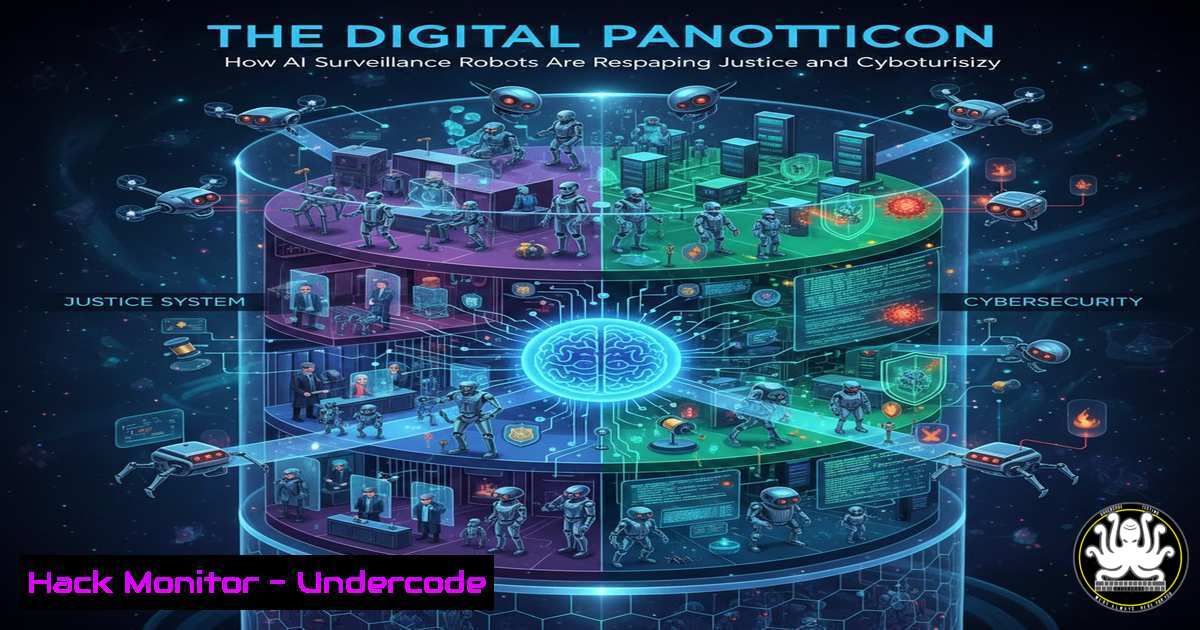
Introduction:
The concept of replacing physical prisons with AI-powered surveillance robots represents a seismic shift in criminal justice and societal control. This proposal, while framed as innovative, introduces a host of unprecedented cybersecurity, privacy, and ethical challenges. It effectively transforms a static prison system into a dynamic, networked panopticon, creating new attack surfaces and threats to individual liberty that security professionals must urgently understand.
Learning Objectives:
- Understand the core architecture and potential attack vectors of a mobile, AI-driven surveillance system.
- Learn the critical cybersecurity controls required to harden such systems against exploitation.
- Analyze the ethical and privacy implications of deploying pervasive AI monitoring in public spaces.
You Should Know:
1. The Architecture of a Mobile Surveillance Robot
The proposed system is not a single device but a complex ecosystem. At its core, it would consist of a mobile robotic platform (the “body”) integrated with a sophisticated AI stack (the “brain”). This stack would include real-time computer vision for tracking, microphone arrays for audio monitoring, and secure communication modules to relay data to a central command cloud, likely dubbed “Tesla Cloud” as hinted in the post. The entire system operates on a continuous feedback loop: Sense -> Process -> Act -> Report.
Step-by-step guide explaining what this does and how to use it.
Step 1: Sensor Data Acquisition: The robot uses its suite of sensors (LiDAR, cameras, microphones, GPS) to create a constant stream of data about its environment and the subject.
Step 2: On-Device AI Processing: To reduce latency and bandwidth, initial processing happens on the robot itself. This involves using lightweight AI models (e.g., TensorFlow Lite, PyTorch Mobile) for object detection, gait analysis, and voice activity detection to identify the subject and potential “anomalous behavior.”
Step 3: Secure Data Transmission: Processed data and alerts are encrypted and sent to the central cloud via cellular or Wi-Fi networks using protocols like TLS 1.3. The cloud performs deeper analysis with more powerful models.
Step 4: Central Command & Control: The cloud dashboard allows human overseers to monitor multiple robots, review flagged incidents, and potentially issue remote commands to the device (e.g., “move closer,” “issue an audio warning”).
2. Critical Attack Vectors and System Hardening
This architecture presents a target-rich environment for attackers. Key vulnerabilities include the communication channel, the on-device software, and the cloud API.
Step-by-step guide explaining what this does and how to use it.
Vector: Man-in-the-Middle (MiTM) Attacks. An attacker could intercept the encrypted data stream between the robot and the cloud.
Mitigation with Linux Commands:
Enforce strong TLS: Use `nmap –script ssl-enum-ciphers
Certificate Pinning: Implement certificate pinning on the robot to reject any connection not presenting the specific certificate from the Tesla Cloud, preventing spoofing.
Vector: Physical Tampering and Jailbreaking. Attackers with physical access could attempt to tamper with the device’s hardware or operating system.
Mitigation: Implement a Measured Boot process. Using a TPM (Trusted Platform Module), the boot sequence cryptographically measures each component (BIOS, bootloader, OS kernel). A remote attestation server can verify these measurements to ensure the device’s software state is untampered. On a Linux system, you can check TPM presence with ls /dev/tpm.
3. Securing the AI Decision-Making Pipeline
The AI’s judgment is a core vulnerability. The “bug on a Monday morning” scenario is a real threat involving model failure, bias, or adversarial attacks.
Step-by-step guide explaining what this does and how to use it.
Threat: Data Poisoning. During training, an attacker introduces corrupted data to cause the model to misclassify. For example, training it to classify “yawning” as “aggressive behavior.”
Mitigation: Maintain a cryptographically verifiable and immutable audit trail of all training data. Use tools like `git lfs` for data versioning with signed commits to ensure integrity.
Threat: Adversarial Attacks. An attacker could wear specially designed patterns or use subtle audio signals to fool the robot’s vision/audio models into not recognizing them.
Mitigation: Employ adversarial training, where the model is trained on examples that include these subtle perturbations to build resilience.
4. API Security for the “Tesla Cloud” Backend
The cloud API is the brain of the operation. A breach here could lead to mass surveillance, data theft, or even a coordinated shutdown of the entire robot fleet.
Step-by-step guide explaining what this does and how to use it.
Step 1: Implement Strict Authentication and Authorization. Use OAuth 2.0 with strong scopes. Ensure the principle of least privilege; a dashboard user should not have the same permissions as a system administrator.
Step 2: Conduct Regular API Security Testing. Use tools like OWASP ZAP to perform automated security scans.
Example OWASP ZAP Command: `zap-baseline.py -t https://api.teslacloud.justice -J report.json` This runs a baseline scan against the target API and outputs a JSON report.
Step 3: Rate Limiting and Throttling. Protect against Denial-of-Service (DoS) attacks by limiting how many requests a single IP or API key can make per minute.
5. Privacy-Enhancing Technologies (PETs) and Data Sovereignty
The robot collects a firehose of personal data. Regulations like GDPR will require minimization and protection of this data.
Step-by-step guide explaining what this does and how to use it.
Technique: Data Anonymization. Instead of storing raw video with identifiable faces, use on-device AI to convert video into anonymous skeletal stick figures or metadata (e.g., “subject entered geo-fenced zone at 14:32”).
Technique: Federated Learning. Instead of sending all data to the cloud to improve the AI model, send only the model updates (weights and biases). This allows the model to learn without centrally storing everyone’s personal data. A basic example using a Python script with PyTorch would involve training a model locally on a device and then only sending the `model.state_dict()` to the cloud for aggregation.
6. Incident Response for a Compromised Robot
What happens when a robot is hacked? A prepared IR plan is essential.
Step-by-step guide explaining what this does and how to use it.
Step 1: Detection & Analysis. Security monitoring detects anomalous traffic from a specific robot (e.g., connecting to a known C2 server).
Step 2: Containment. The IR team immediately issues a command to the robot to enter a “safe mode” – disabling its microphones and cameras and returning to a base station, all while maintaining a secure log of its actions for later forensic analysis.
Step 3: Eradication & Recovery. The compromised robot is isolated. Its firmware is wiped and re-flashed with a known clean version, verified by a checksum (e.g., using `sha256sum firmware.img` to verify against a published hash).
7. Ethical Hacking and Red Teaming
Proactively testing these systems is the only way to ensure their security before deployment.
Step-by-step guide explaining what this does and how to use it.
Step 1: Scoping & Reconnaissance. The red team defines the rules of engagement and begins gathering information on the robot’s public-facing APIs and known hardware components.
Step 2: Vulnerability Scanning & Exploitation. They use tools like Metasploit to test for known vulnerabilities in the robot’s OS or software stack.
Example Metasploit Command: `use exploit/linux/misc/custom_robot_rce` to attempt to exploit a hypothetical remote code execution flaw.
Step 3: Reporting & Remediation. The team provides a detailed report of all findings, from low-risk information leaks to critical RCE flaws, allowing the developers to patch them before malicious actors can find them.
What Undercode Say:
- The convergence of AI, robotics, and justice creates a system where a software bug or a malicious hack can directly result in the deprivation of liberty, making cybersecurity a fundamental human rights issue in this context.
- The attack surface is massively expanded, moving from securing static data centers to securing a fleet of mobile, connected, and intelligent devices operating in unpredictable public environments.
This proposal is a textbook case of a technologically sophisticated but ethically precarious solution. The core problem is the transfer of immense power—judgment, surveillance, and control—to an automated system that is inherently fallible and hackable. The “low-cost” aspect is a red flag, suggesting potential corners will be cut in security implementation. The real danger is not a Skynet-style takeover, but a slow, insidious erosion of freedom through unreliable automation and centralized control, all vulnerable to the very criminals the system is meant to monitor.
Prediction:
In the next 3-5 years, we will see the first pilot programs of such AI surveillance systems for non-violent offenders, likely marketed as “humanitarian alternatives.” This will be followed by the first major public security breach, where a state actor or hacktivist group will successfully compromise the system, either to free individuals by manipulating tracking data or to conduct mass surveillance of the populace. This event will trigger a global regulatory scramble, leading to the creation of new “AI Penitentiary Security” standards and certifications, forcing a more secure, transparent, and auditable design from the outset.
🎯Let’s Practice For Free:
IT/Security Reporter URL:
Reported By: Fabienmrs Vous – Hackers Feeds
Extra Hub: Undercode MoN
Basic Verification: Pass ✅


