
Listen to this Post
Introduction:
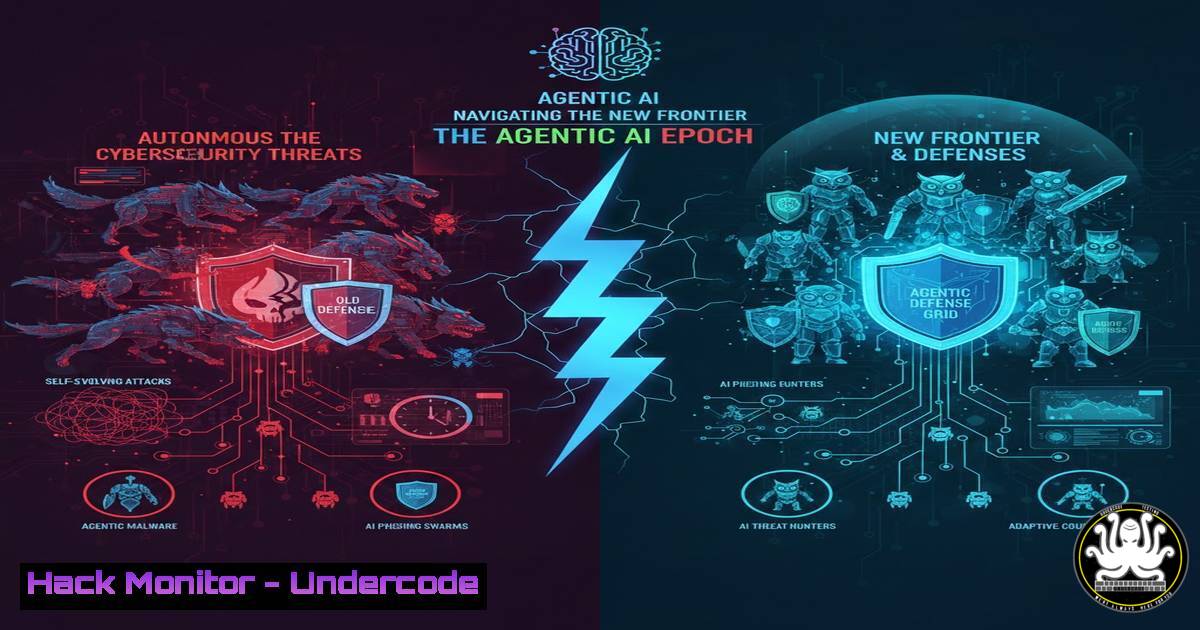
The cybersecurity landscape is entering its most transformative phase with the dawn of the “agentic era,” where autonomous AI agents are shifting from tools to active participants. These systems can now perceive their environment, make independent decisions, and execute complex tasks without constant human oversight, creating a new attack surface for defenders. This evolution demands a fundamental rethinking of security postures, moving from static defense to dynamic, intelligent response systems.
Learning Objectives:
- Understand the core architecture of AI agents and their inherent security vulnerabilities.
- Learn to implement monitoring and containment strategies for AI agent interactions.
- Develop skills to harden APIs and cloud environments against agentic exploitation.
- Master techniques for detecting and mitigating AI-powered social engineering and prompt injection attacks.
- Formulate a strategic roadmap for integrating autonomous defenses against autonomous threats.
You Should Know:
- Deconstructing the AI Agent: Core Components and Attack Vectors
An AI agent is typically composed of a planning mechanism, a memory module, and tools for action. The security risk lies at each intersection: the planning logic can be manipulated, the memory poisoned, and the tools misused.
Step‑by‑step guide explaining what this does and how to use it.
Step 1: Identify Agent Components. Map out your AI system. What is the brain (LLM), what are its goals, what tools/APIs does it have access to, and where does it store context?
Step 2: Threat Model Each Component.
Planning: Can it be tricked by a prompt injection? Yes. Use input sanitization and goal-checking functions.
Memory: Can its context window be corrupted? Yes. Implement memory integrity checks and versioning.
Tools: Can it be instructed to call a destructive API? Yes. Enforce strict, role-based access control (RBAC) for every tool the agent uses.
Step 3: Implement a “Kill Switch.” Every autonomous agent must have a programmatic way to be halted. This can be a dedicated API endpoint or a monitoring system that triggers a shutdown based on anomalous behavior patterns.
- Fortifying the Digital Perimeter: API Security for Agentic Ecosystems
AI agents operate by making API calls. An unsecured API is an open door for a compromised agent to exfiltrate data or inflict damage.
Step‑by‑step guide explaining what this does and how to use it.
Step 1: Enforce Strict Rate Limiting and Quotas. Prevent an agent from being used in a Denial-of-Wallet (DoW) attack or from spamming your systems.
Command Example (API Gateway):
 Using AWS CLI to create a usage plan and API key
aws apigateway create-usage-plan --name "AI-Agent-Plan" --throttle burstLimit=100,rateLimit=50
aws apigateway create-api-key --name "Agent-Key" --enabled
aws apigateway create-usage-plan-key --usage-plan-id "plan_id" --key-type API_KEY --key-id "key_id"
Step 2: Validate and Sanitize All Inputs and Outputs. Assume any data from an agent could be malicious. Use strong schema validation for all API requests and responses.
Step 3: Implement Robust Authentication and Token Management. Agents should use short-lived, scoped credentials (e.g., OAuth2 client credentials flow) instead of long-lived API keys.
- The Art of Deception: Detecting AI-Powered Social Engineering
Agentic AI can scale and personalize phishing and social engineering attacks to an unprecedented degree, making traditional signature-based detection obsolete.
Step‑by‑step guide explaining what this does and how to use it.
Step 1: Deploy Advanced Email Security Tools. Utilize solutions that leverage AI to analyze language patterns, sentiment, and metadata for signs of machine-generated malicious intent, rather than just checking links and attachments.
Step 2: Conduct AI-Aware Security Training. Train employees to spot the new hallmarks of AI-generated content, such as unusual formality, perfect grammar in a context that doesn’t warrant it, or requests that bypass normal procedures.
Step 3: Monitor for Anomalous Communication Patterns. Use SIEM or SOAR platforms to alert on a high volume of external emails from a single user account or communications sent at unusual times, which could indicate a compromised account being used by an agent.
- Containment and Sandboxing: Running Agents in a Digital Playpen
No agent should have unrestricted access to your core production environment. Sandboxing is no longer optional.
Step‑by‑step guide explaining what this does and how to use it.
Step 1: Deploy Using Containerization. Run AI agents in isolated containers (e.g., Docker) with minimal required privileges.
Command Example (Docker):
 Run an agent container with no network access and read-only filesystem by default
docker run --read-only --network none my-ai-agent-image
Step 2: Leverage Linux Security Modules. Use AppArmor or SELinux to enforce mandatory access control policies, strictly defining what the agent’s process can and cannot do.
Command Example (AppArmor):
 Check the status of AppArmor profiles
sudo aa-status
 Generate a new profile for your agent in complain mode
sudo aa-genprof /path/to/agent/binary
Step 3: Implement Network Microsegmentation. Place the agent’s environment in a tightly controlled network segment, only allowing outbound connections to explicitly approved destinations.
- The Defender’s Advantage: Leveraging AI Agents for Cyber Defense
The same technology used by attackers can be your greatest asset. Autonomous response agents can act at machine speed to contain threats.
Step‑by‑step guide explaining what this does and how to use it.
Step 1: Define Clear Playbooks. Codify your incident response procedures into a format an AI can execute. For example: “IF [unusual lateral movement is detected] THEN [isolate the affected host AND create a ticket].”
Step 2: Integrate with SOAR Platforms. Configure your defensive AI agents to interact with your SOAR (Security Orchestration, Automation, and Response) system via APIs to execute complex workflows.
Step 3: Continuous Threat Hunting. Program defensive agents to proactively scan logs, network traffic, and cloud configurations for IOCs (Indicators of Compromise) and IOAs (Indicators of Attack) using continuously updated threat intelligence feeds.
- The Invisible Threat: Mitigating Data Exfiltration and Model Poisoning
Agents with access to sensitive data can be manipulated to leak it subtly. Furthermore, the data they consume can be used to poison their underlying models.
Step‑by‑step guide explaining what this does and how to use it.
Step 1: Apply Data Loss Prevention (DLP) Policies. Classify sensitive data and enforce DLP rules that block agents from exfiltrating it via email, web uploads, or unauthorized APIs.
Step 2: Monitor for Anomalous Data Access. Use tools like Microsoft Purview or AWS CloudTrail to log and alert every data access attempt by an agent’s service account. Look for access patterns that deviate from the norm.
Step 3: Secure Training Data Pipelines. If your agents learn from operational data, ensure the data ingestion pipeline is secure and monitored for injection of malicious training examples designed to corrupt the agent’s future behavior.
What Undercode Say:
- The Perimeter is Now Cognitive. The most critical border to defend is no longer your network, but the reasoning process of your AI agents. A single manipulated decision can bypass billions of dollars worth of traditional security controls.
- Asymmetric Warfare is Amplified. A single malicious actor can now deploy an army of inexpensive, autonomous AI agents, forcing defenders to match this scale with their own automated systems. Human-scale response is no longer viable.
Analysis: The transition to the agentic era is not a gradual shift but a phase change. It fundamentally breaks the “detect and respond” model because the “respond” phase is now instant and automated on the attacker’s side. Defenders must pre-emptively architect their systems with the assumption that any AI component can and will be subverted. This requires a deep cultural and technical shift towards zero-trust principles applied directly to AI reasoning loops, where every decision and action is verified and constrained, not just the user or network connection. The organizations that succeed will be those that build resilience and oversight directly into the fabric of their autonomous systems.
Prediction:
The next 18-24 months will see the first major enterprise-scale breach directly caused by the exploitation of an AI agent, likely through a sophisticated prompt injection or tool misuse attack. This event will trigger a regulatory scramble, leading to the creation of new compliance frameworks (similar to GDPR for data) specifically governing the security, auditability, and liability of autonomous AI systems. Cybersecurity insurance premiums will skyrocket for companies that cannot demonstrate proven agentic security controls, making this a foundational element of corporate risk management.
🎯Let’s Practice For Free:
IT/Security Reporter URL:
Reported By: Palo Alto – Hackers Feeds
Extra Hub: Undercode MoN
Basic Verification: Pass ✅


