
Listen to this Post
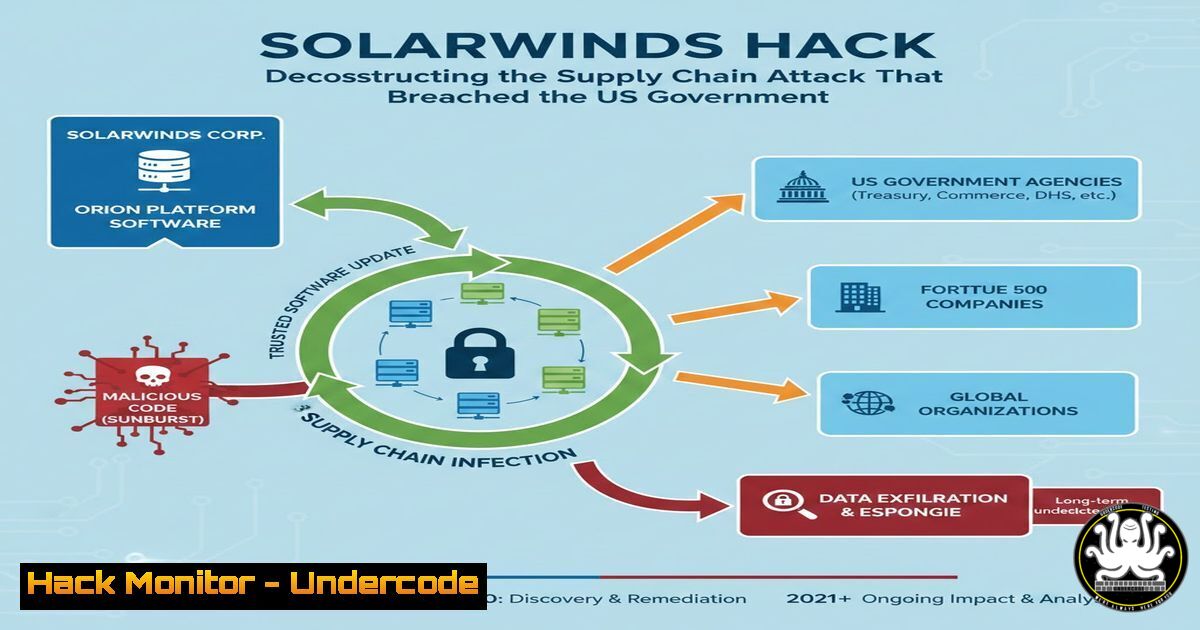
Introduction:
The SolarWinds hack stands as one of the most sophisticated and impactful supply chain cyberattacks in history. By compromising the software update mechanism of a trusted IT management platform, threat actors stealthily infiltrated the networks of thousands of organizations, including multiple U.S. government agencies. This incident fundamentally reshaped cybersecurity strategies, placing an intense focus on software supply chain integrity and third-party risk management.
Learning Objectives:
- Understand the technical mechanics of the SolarWinds supply chain attack and the SUNSPOT/SUNBURST malware.
- Learn how to detect similar compromises within your own network using advanced IOC hunting and log analysis.
- Implement critical mitigation strategies to hard your environment against future supply chain attacks.
You Should Know:
1. The Anatomy of a Supply Chain Compromise
The attack did not target victims directly but instead hijacked the software build and distribution process of SolarWinds’ Orion platform. Around March 2020, attackers inserted malicious code into the Orion software, which was then digitally signed by SolarWinds and distributed to approximately 18,000 customers as a legitimate update. The malicious component, dubbed SUNSPOT, was designed to monitor running processes on the build server and inject the SUNBURST backdoor into Orion platform binary files before they were compiled, ensuring its stealthy inclusion in the final product.
2. Detecting the SUNBURST Backdoor with Network Monitoring
SUNBURST is a sophisticated, memory-resident backdoor that masquerades as a legitimate Orion plugin. Its primary goal is to establish command and control (C2) communication, blend in with normal SolarWinds traffic, and execute payloads on compromised systems. Detection requires looking for subtle anomalies in network traffic.
Step-by-Step Guide:
- Step 1: Hunt for DGA-Based C2 Domains. SUNBURST uses a Domain Generation Algorithm (DGA) to communicate with its C2 servers. The domains often mimic legitimate software update services (e.g.,
avsvmcloud[.]com). Use your SIEM to query DNS logs for known IOCs. - SIEM Query Example (Splunk):
index=dns query="avsvmcloud.com" | stats count by query, src_ip
- Step 2: Analyze Outbound Traffic Patterns. SUNBURST communicates over HTTP/HTTPS. Look for Orion servers making outbound connections on non-standard ports or to newly registered domains.
- Zeek/Bro Log Analysis:
cat http.log | zeek-cut id.orig_h id.resp_h uri | grep -i avsvmcloud
- Step 3: Verify Digital Signatures. Legitimate SolarWinds files are signed. Check the digital signature of Orion binaries.
- Windows PowerShell Command:
Get-AuthenticodeSignature "C:\Program Files\SolarWinds\Orion\SolarWinds.BusinessLayerHost.exe"
A “Valid” status from a trusted CA is expected. Any other status warrants investigation.
- Forensic Analysis: Hunting for SUNSPOT in Your Environment
SUNSPOT was the malware used in the build environment to inject SUNBURST. While it wasn’t distributed to end customers, understanding its function is key for organizations managing development pipelines.
Step-by-Step Guide:
- Step 1: Monitor for Suspicious Process Injection. SUNSPOT employed API hooking to inject code into
MsBuild.exe. Use EDR tools or Sysmon to look for cross-process thread creation. - Sysmon Configuration (Event ID 8):
<RuleGroup name="" groupRelation="or">
<ProcessCreate onmatch="include">
<Image condition="contains">MsBuild.exe</Image>
</ProcessCreate>
</RuleGroup>
- Step 2: File Integrity Monitoring on Build Directories. Implement FIM on source code directories and build output folders to detect unauthorized modifications.
- Linux Auditd Rule:
-w /opt/build_server/source_code -p wa -k solarwinds_src
4. Immediate Mitigation and Hardening Steps
Once a compromise is suspected, immediate action is required to contain the threat and prevent further damage.
Step-by-Step Guide:
- Step 1: Isolate Affected Systems. Immediately disconnect any SolarWinds Orion server from the network.
- Step 2: Revoke and Reset Credentials. Attackers often harvest credentials. Force password resets for all administrative accounts and review Kerberos Golden Ticket attacks.
- Windows Command to Query Kerberos TGT Tickets:
klist sessions
- Step 3: Apply Patches and Updates. SolarWinds released clean versions of the Orion platform. Ensure you are running a version released after the compromise (e.g., 2020.2.1 HF 2 or later).
- Step 4: Implement Application Whitelisting. Use tools like AppLocker or Windows Defender Application Control to prevent the execution of unauthorized binaries.
- AppLocker PowerShell Rule:
New-AppLockerPolicy -RuleType Publisher, Path -User Everyone -Xml | Set-AppLockerPolicy -Merge
5. Long-Term Defense: Securing the Software Supply Chain
The attack underscores the critical need to secure the entire software development lifecycle (SDLC) and validate third-party software.
Step-by-Step Guide:
- Step 1: Adopt a Zero-Trust Architecture. Never inherently trust software from a vendor. Enforce strict access controls and network segmentation for management systems.
- Step 2: Implement a Software Bill of Materials (SBOM). Maintain an SBOM for all critical software to track components and quickly identify vulnerabilities in dependencies.
- Step 3: Harden Your CI/CD Pipeline. Enforce multi-factor authentication, conduct regular code audits, and ensure build servers are isolated and heavily monitored.
- Step 4: Enhance API Security. The attackers used SolarWinds APIs for reconnaissance. Secure all APIs with strong authentication, rate limiting, and continuous monitoring for anomalous activity.
What Undercode Say:
- Trust is a Vulnerability. The core lesson of SolarWinds is that inherent trust in any vendor is a critical vulnerability. Security posture must shift to “never trust, always verify,” even for signed software from established partners.
- Visibility is Non-Negotiable. Organizations lacked sufficient visibility into their own network traffic and the internal behaviors of a critical application. Comprehensive logging, monitoring, and anomaly detection are no longer optional for enterprise security.
The SolarWinds attack was a masterclass in patience and stealth, proving that the most dangerous threats exploit trusted relationships and systemic weaknesses in software distribution. It demonstrated that advanced attackers will target the soft underbelly of the global digital ecosystem—the software supply chain—bypassing billions of dollars in perimeter defense. The incident has permanently elevated the importance of software supply chain security, DevSecOps, and Zero-Trust principles, forcing both vendors and enterprises to re-evaluate their fundamental security assumptions. The race is now on to build more resilient systems before the next attack of this scale occurs.
Prediction:
The SolarWinds hack will catalyze a decade of regulatory and technological shifts focused on software supply chain security. We predict the mandatory adoption of SBOMs will become standard across critical infrastructure sectors, and a new market for software provenance and integrity verification tools will emerge. Nation-state actors will continue to refine the software supply chain attack blueprint, likely shifting focus from IT management software to open-source repositories and cloud infrastructure code libraries. The next major incident may not involve a trojanized update, but a compromised widely-used open-source dependency, creating an even more dispersed and challenging containment scenario.
🎯Let’s Practice For Free:
IT/Security Reporter URL:
Reported By: Https: – Hackers Feeds
Extra Hub: Undercode MoN
Basic Verification: Pass ✅


