Listen to this Post
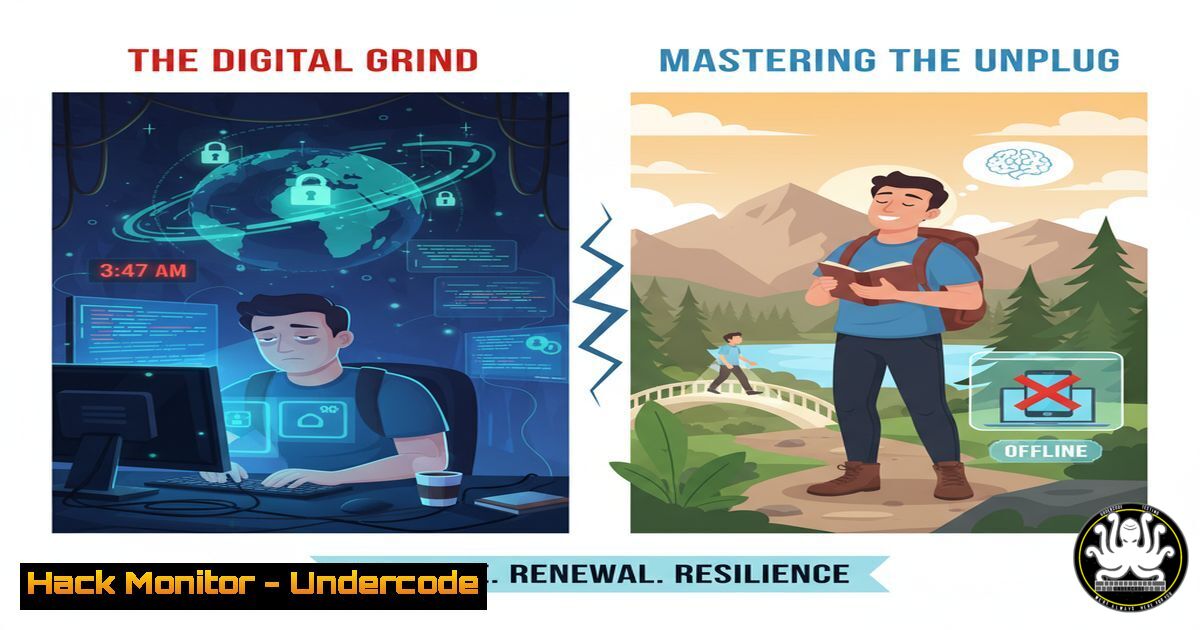
Introduction:
In the high-stakes world of cybersecurity, the culture of relentless “hacking” and constant vigilance often leads to burnout, a critical vulnerability no firewall can patch. The recent social media post from a cyber recruiter highlighting the necessity of “totally switching off” underscores a fundamental truth: sustainable security postures are built by resilient, well-rested humans. This article explores the technical and procedural disciplines required to secure not just your network, but your own cognitive resources, turning downtime into a strategic defense mechanism.
Learning Objectives:
- Understand the direct correlation between analyst fatigue and security misconfigurations.
- Implement technical controls to enforce and monitor work-life boundaries.
- Develop a personal “incident response” plan for mental recovery and burnout prevention.
You Should Know:
1. Enforcing Digital Boundaries with Hosts File Blocking
A simple yet effective method to enforce downtime is to block distracting or work-related websites at the operating system level during personal hours. This creates a minor friction that reinforces the boundary between work and personal time.
Verified Command/Code Snippet:
Windows (Run PowerShell as Administrator):
Add-Content -Path $env:windir\System32\drivers\etc\hosts -Value "<code>n127.0.0.1 linkedin.com</code>n127.0.0.1 your-company-vpn.domain.com`n127.0.0.1 slacks.com"
Linux/macOS (Terminal with Sudo):
echo "127.0.0.1 linkedin.com" | sudo tee -a /etc/hosts
echo "127.0.0.1 your-company-vpn.domain.com" | sudo tee -a /etc/hosts
echo "127.0.0.1 slacks.com" | sudo tee -a /etc/hosts
Step-by-step guide:
This command modifies the `hosts` file, which the operating system consults before querying DNS. By redirecting domain names like `linkedin.com` to the local loopback address (127.0.0.1), any attempt to access them from your browser will fail or time out. To reverse this, edit the same file and remove the added lines.
2. Automating Focus Sessions with Windows Group Policy
For professionals on a managed domain, or for self-discipline, automated policies can lock down workstations during designated rest periods.
Verified Command/Code Snippet:
Windows (Group Policy Management Editor – GPMC):
Navigate to Computer Configuration -> Windows Settings -> Security Settings -> System Services.
Find “Workstation” service, define its policy, and set to “Disabled”. A scheduled task can toggle this.
Step-by-step guide:
Disabling the “Workstation” service prevents the machine from establishing network connections to other workstations. Combined with a Scheduled Task triggered at your end-of-work time, this forcibly severs network access for non-essential services. A separate task can re-enable it at the start of the next workday. This is a drastic measure but highly effective for enforcing a hard stop.
3. Securing Your Personal IoT Environment
Unwinding often involves smart home devices (IoT), which represent a significant attack surface if left unsecured. A compromised smart device can be a pivot point into your personal network.
Verified Command/Code Snippet:
Router Configuration (CLI or Web UI):
 Isolate IoT devices on a separate VLAN (e.g., VLAN 20)
configure terminal
interface range gigabitethernet0/1-4
switchport access vlan 20
end

Create a firewall rule to block IoT VLAN from initiating connections to Main LAN, but allow the reverse.
access-list 110 deny ip 192.168.20.0 0.0.0.255 192.168.1.0 0.0.0.255
access-list 110 permit ip any any
Step-by-step guide:
Segmenting your network prevents a vulnerable smart TV or thermostat from being used to attack your primary computer. By placing all IoT devices on a separate Virtual LAN (VLAN) and configuring your firewall to block initiated connections from the IoT network to your main network, you contain any potential breach.
- Scripting a “Shutdown Ritual” for Clean Context Switching
A consistent shutdown ritual helps the brain transition from work mode to rest mode. Automating this process ensures it happens reliably.
Verified Command/Code Snippet:
Linux/macOS Bash Script (`shutdown_ritual.sh`):
!/bin/bash
echo "Initiating Shutdown Ritual..."
pkill -f "slack"
pkill -f "microsoft teams"
systemctl stop docker.service  Stop dev environments
tar -czf /backups/workspace_$(date +%Y%m%d).tar.gz ~/workspace/
echo "Shutdown Ritual Complete. Time to Unwind."
Windows Batch/PowerShell Script (`shutdown_ritual.ps1`):
Write-Host "Initiating Shutdown Ritual..." -ForegroundColor Green
Stop-Process -Name "outlook" -Force
Stop-Process -Name "teams" -Force
Stop-Service -Name "DockerDesktopService"
Compress-Archive -Path "$env:USERPROFILE\workspace\" -DestinationPath "C:\Backups\workspace_$(Get-Date -Format 'yyyyMMdd').zip"
Write-Host "Shutdown Ritual Complete. Time to Unwind." -ForegroundColor Green
Step-by-step guide:
This script forcibly closes communication apps like Slack and Teams, halts development services like Docker, and creates a backup of your critical workspace. Scheduling this to run via a shortcut or task scheduler formalizes the end of your workday, providing a clear cognitive endpoint.
5. Implementing Monitoring to Detect Work-From-Home Burnout
Use simple log analysis to monitor your own working hours by tracking VPN connection times, which can be an objective metric for overwork.
Verified Command/Code Snippet:
Linux (Analyzing Auth Logs):
 Check for VPN connection/disconnection times for a user
grep "pptp.moukbel" /var/log/auth.log | grep "started"
grep "pptp.moukbel" /var/log/auth.log | grep "disconnected"
Windows (Querying Windows Event Log with PowerShell):
Get-EventLog -LogName Security -InstanceId 4624 -After (Get-Date).AddDays(-1) | Where-Object {$_.Message -like "YOUR-VPN-SUBNET"} | Select-Object TimeGenerated
Step-by-step guide:
These commands parse system logs to find timestamps of VPN sessions. By scripting this to run daily and report total connected hours, you gain data-driven insight into your work patterns, allowing you to identify and correct a trend toward overwork before it leads to burnout.
6. Hardening Your Personal Communication Apps
The apps you use to unwind, like messaging platforms, can be vectors for social engineering or data leakage if not properly configured.
Verified Command/Code Snippet:
Signal Messenger (CLI for advanced users or verify in-app):
 Using signal-cli, set disappearing messages for all new chats by default
signal-cli -u YOUR_PHONE_NUMBER setConfig --disappearing-messages-timer 86400
General Security Settings (To be verified in each app’s UI):
– Disallow messages from unknown contacts.
– Enable two-factor authentication (2FA).
– Review connected devices and active sessions monthly.
Step-by-step guide:
Configuring disappearing messages reduces your long-term digital footprint. Regularly auditing active sessions ensures that a compromised device from your past doesn’t retain access. These settings are a crucial part of maintaining operational security even in your personal life.
7. Psychological “Vulnerability Scanning” with Journaling
Just as you would scan a system for flaws, regularly scanning your mental state can identify early signs of burnout, a critical vulnerability in your human firewall.
Verified Command/Code Snippet:
Command-Line Journaling with Encryption:
 Create an encrypted journal entry for the day
echo "$(date): Feeling high stress due to incident response. Slept 5 hours. Irritability high." | gpg --encrypt --recipient [email protected] -o ~/journal/$(date +%Y%m%d).gpg
Step-by-step guide:
This command creates a timestamped, encrypted journal entry. The act of writing forces a self-assessment, while the encryption protects your private thoughts. Reviewing these entries weekly allows you to spot negative trends—like decreasing sleep or increasing stress—and take proactive measures.
What Undercode Say:
- Burnout is a Critical Unpatched Vulnerability: The most sophisticated security tools are rendered ineffective by a fatigued analyst who misconfigures a cloud storage bucket or misses a subtle exfiltration attempt in the logs. Mental recovery is not a luxury; it is a mandatory patch.
- The “Human Firewall” Requires Scheduled Maintenance: Just as you schedule patches and vulnerability scans, you must schedule and enforce downtime. The technical controls outlined are not about weakness; they are about creating a resilient and sustainable security practice.
The industry’s focus on “the grind” creates a systemic risk. A professional who cannot unplug is a single point of failure in the security chain. The technical disciplines of network segmentation, access control, and log review must be applied to one’s personal life with the same rigor as to a corporate network. The post advocating for golf and cigars is, in essence, a post about risk management. The failure to properly manage human capital—oneself—is a fundamental flaw in any security model, leading to increased errors, poor judgment, and ultimately, a preventable breach.
Prediction:
The failure to address cybersecurity professional burnout will escalate from an HR concern to a primary operational risk factor within the next 18-24 months. We will see a rise in publicized security incidents where the root cause analysis points explicitly to human error induced by fatigue. This will force a paradigm shift in the industry, leading to the widespread adoption of “Human Reliability Programs” that mandate monitored downtime, implement the types of technical controls described above, and treat analyst well-being as a key performance indicator (KPI) for overall security posture. Organizations that ignore this will face not only higher attrition rates but also a significantly greater risk of a catastrophic security failure.
🎯Let’s Practice For Free:
IT/Security Reporter URL:
Reported By: Thomaspropen No – Hackers Feeds
Extra Hub: Undercode MoN
Basic Verification: Pass ✅


