Listen to this Post
Introduction:
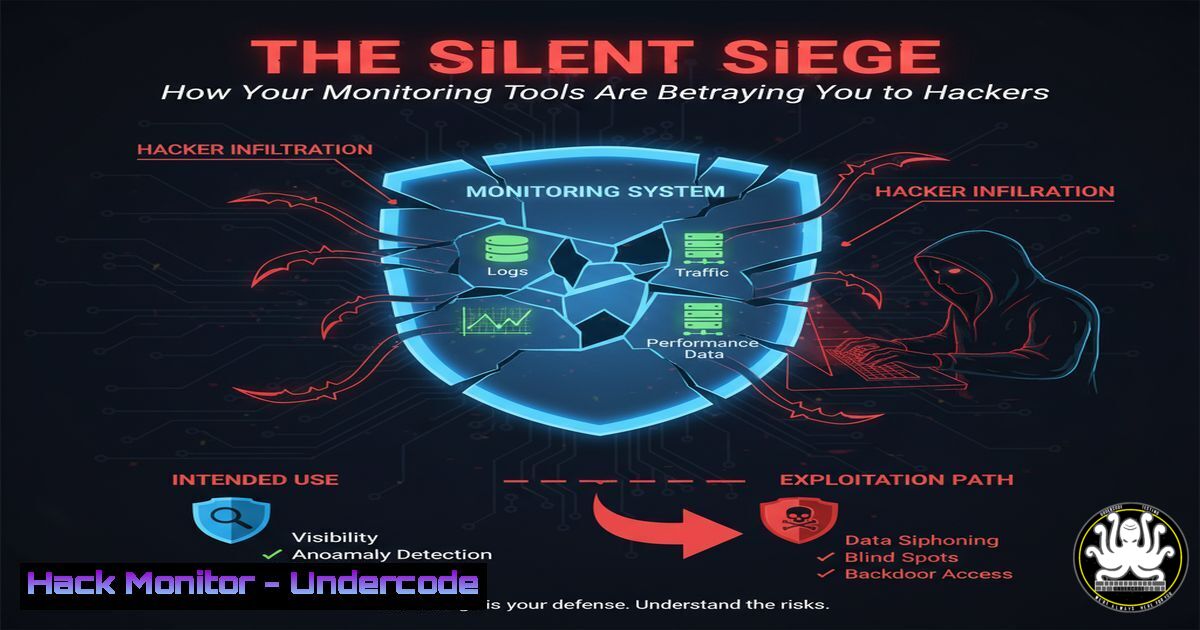
Modern IT environments rely on a complex web of monitoring agents to track performance and security. However, these very tools, deployed in their thousands, are increasingly becoming the primary attack vector for sophisticated threat actors. This article deconstructs how agents for systems like Datadog, New Relic, and others can be subverted, turning your observability stack into a backdoor for data exfiltration and persistent access.
Learning Objectives:
- Understand the techniques used to exploit monitoring agent vulnerabilities and misconfigurations.
- Learn how to harden your monitoring infrastructure against credential theft, lateral movement, and supply chain attacks.
- Implement actionable detection and mitigation strategies for agent-based compromises.
You Should Know:
1. Exploiting Weak Agent Authentication
Monitoring agents often require elevated privileges and use API keys or tokens for authentication. A compromised key can give an attacker full control over the agent’s functionality.
Verified Command/Code Snippet:
 Example: Searching for exposed Datadog configuration files containing API keys.
find /etc /opt -name "datadog.yaml" -o -name ".yaml" 2>/dev/null | xargs grep -l "api_key:"

Example: Using curl to test if a stolen Datadog API key is valid and scoped.
curl -X GET "https://api.datadoghq.com/api/v1/validate" \
-H "Content-Type: application/json" \
-H "DD-API-KEY: <STOLEN_API_KEY>"
Step-by-step guide:
The first command scans the filesystem for Datadog configuration files, which may insecurely store the powerful api_key. If an attacker gains shell access, this is a primary target. The second command uses `curl` to validate a stolen key against the Datadog API. A successful `200 OK` response confirms the key is active, allowing the attacker to query, modify, or delete monitoring data and potentially execute code remotely through the agent.
2. Lateral Movement Via Agent Communications
Agents communicate with collectors and a central platform. Attackers can abuse this trusted channel to move laterally across the network.
Verified Command/Code Snippet:
 On a compromised host, sniffing agent network traffic to discover other hosts.
sudo tcpdump -i any -n port 5000 or port 4318 -w agent_traffic.pcap

Using nmap to scan for common monitoring agent ports across the subnet.
nmap -p 5000,4318,8125,8126 10.0.1.0/24 --open
Step-by-step guide:
The `tcpdump` command captures network traffic on ports commonly used by monitoring agents (e.g., OpenTelemetry on 4318, Datadog on 5000/8125). Analyzing this `pcap` file can reveal the IP addresses of other agents and the central platform. The `nmap` command then actively scans the local network for hosts with these ports open, mapping the entire monitoring infrastructure for lateral movement.
- Cloud Metadata Service Exploitation for Agent Identity Theft
In cloud environments, agents often use the Instance Metadata Service (IMDS) to retrieve short-lived credentials. An SSRF vulnerability in a misconfigured agent can be exploited to steal these credentials.
Verified Command/Code Snippet:
 Exploiting a vulnerable web app/agent to curl the cloud metadata service.
curl http://vulnerable-app.com/proxy?url=http://169.254.169.254/latest/meta-data/iam/security-credentials/

Retrieving the temporary credentials directly from the metadata service (if on the instance).
curl -H "X-aws-ec2-metadata-token-ttl-seconds: 21600" -X PUT "http://169.254.169.254/latest/api/token"
curl -H "X-aws-ec2-metadata-token: $TOKEN" http://169.254.169.254/latest/meta-data/iam/security-credentials/EC2InstanceRole
Step-by-step guide:
The first command demonstrates an SSRF attack where an attacker forces a vulnerable component to query the cloud metadata service. The subsequent commands show the modern method for retrieving IAM credentials from an AWS EC2 IMDSv2. The attacker first gets a token and then uses it to fetch the temporary access key, secret key, and token, granting them the same permissions as the EC2 instance and its attached agents.
4. Hardening Agent Configuration Files
Securing the agent’s configuration is the first line of defense. This involves setting strict permissions and disabling unnecessary features.
Verified Command/Code Snippet:
 Securing a Datadog configuration file on Linux.
sudo chmod 600 /etc/datadog-agent/datadog.yaml
sudo chown dd-agent:dd-agent /etc/datadog-agent/datadog.yaml

Important configuration lines to set in datadog.yaml:
 process_config:
 process_collection:
 enabled: false  Disable if not needed.
 security_agent:
 compliance:
 enabled: true  Enable for security checks.
Step-by-step guide:
The `chmod` command restricts read/write access to the configuration file to only the owner (the `dd-agent` user). The `chown` command ensures the file is owned by the correct service account. Inside the `datadog.yaml` file, disabling unused collection modules (like process collection) reduces the attack surface, while enabling the security agent helps with compliance monitoring.
5. Detecting Anomalous Agent Activity
Monitoring the monitors is crucial. Create alerts based on unusual patterns in agent behavior.
Verified Command/Code Snippet:
-- Example query for a SIEM or Datadog Log Management to detect multiple agent failures.
source:datadog.agent "ERROR" "Unable to connect" | timeslice 1m | timeseries count by host

-- A command to check agent status and logs on a local host.
sudo systemctl status datadog-agent
sudo tail -f /var/log/datadog/agent.log | grep -i "error\|warning"
Step-by-step guide:
The SQL-like query is designed for a log management platform. It searches for error logs from the Datadog agent related to connection issues, groups them by one-minute intervals, and counts occurrences per host. A spike in errors could indicate an attacker disrupting agent communications. On the host itself, the `systemctl status` and `tail -f` commands provide real-time insight into the agent’s health and can reveal immediate issues.
6. Implementing Network Segmentation for Agents
Agents should not have unrestricted network access. Segment their traffic to only essential destinations.
Verified Command/Code Snippet:
 Example iptables rules to restrict a Datadog agent's outbound traffic.
iptables -A OUTPUT -p tcp -m owner --uid-owner dd-agent -d api.datadoghq.com --dport 443 -j ACCEPT
iptables -A OUTPUT -p tcp -m owner --uid-owner dd-agent -d process.datadoghq.com --dport 443 -j ACCEPT
iptables -A OUTPUT -p udp -m owner --uid-owner dd-agent -d 10.0.1.100 --dport 8125 -j ACCEPT  For internal statsd
iptables -A OUTPUT -m owner --uid-owner dd-agent -j DROP
Step-by-step guide:
These `iptables` rules create a strict outbound firewall policy for the `dd-agent` user. The first rules explicitly allow HTTPS traffic only to the specific Datadog API and process endpoints. The third rule allows UDP traffic to an internal statsd collector. The final, critical rule drops all other outbound traffic originating from the `dd-agent` user, preventing it from being used as a proxy for external attacks.
7. Vulnerability Management for Agent Software
Agents are software and contain vulnerabilities. A proactive patching strategy is non-negotiable.
Verified Command/Code Snippet:
 Checking the current version of the Datadog agent.
sudo datadog-agent version

Command to upgrade the agent on a Debian-based system (example).
DD_UPGRADE=true bash -c "$(curl -L https://s3.amazonaws.com/dd-agent/scripts/install_script_agent7.sh)"

Using a vulnerability scanner to check for known agent CVEs.
sudo trivy fs --security-checks vuln /opt/datadog-agent/
Step-by-step guide:
The `datadog-agent version` command confirms the currently installed version. The upgrade command uses a one-liner from Datadog to update the agent to the latest version, which should be part of a standardized, tested deployment process. Finally, using a tool like `trivy` to scan the agent’s installation directory for known vulnerabilities (CVEs) provides an additional layer of assurance beyond version numbers.
What Undercode Say:
- The attack surface of your monitoring infrastructure is proportional to its complexity and scale. A single weak agent can be the key that unlocks the entire kingdom.
- Future attacks will not just steal data but will manipulate the telemetry itself, creating a “false reality” for defenders while the attack proceeds undetected in the background.
The core analysis from Undercode indicates that the industry’s reliance on extensive monitoring has created a massive, soft, and largely unmanaged attack surface. The trust we place in these agents—granting them high privileges and network access—is precisely what makes them so attractive to attackers. The future threat is not merely data exfiltration but “reality manipulation,” where attackers alter performance metrics, logs, and traces to hide their activities, making defense and forensic analysis nearly impossible. This shifts the battleground from system integrity to data integrity.
Prediction:
The next 18-24 months will see a dramatic rise in sophisticated, multi-stage attacks that specifically target monitoring and observability stacks. We predict the emergence of malware designed to surgically modify agent binaries and configuration in memory, leaving no trace on disk. This will be coupled with AI-driven attacks that learn normal monitoring baselines and then execute malicious activity that stays just within those thresholds, effectively making the attack invisible to traditional alerting systems. The integrity of all telemetry data will be called into question, forcing a fundamental shift towards zero-trust architectures for the monitoring layer itself.
🎯Let’s Practice For Free:
IT/Security Reporter URL:
Reported By: Torresbenjamin Your – Hackers Feeds
Extra Hub: Undercode MoN
Basic Verification: Pass ✅


