Listen to this Post
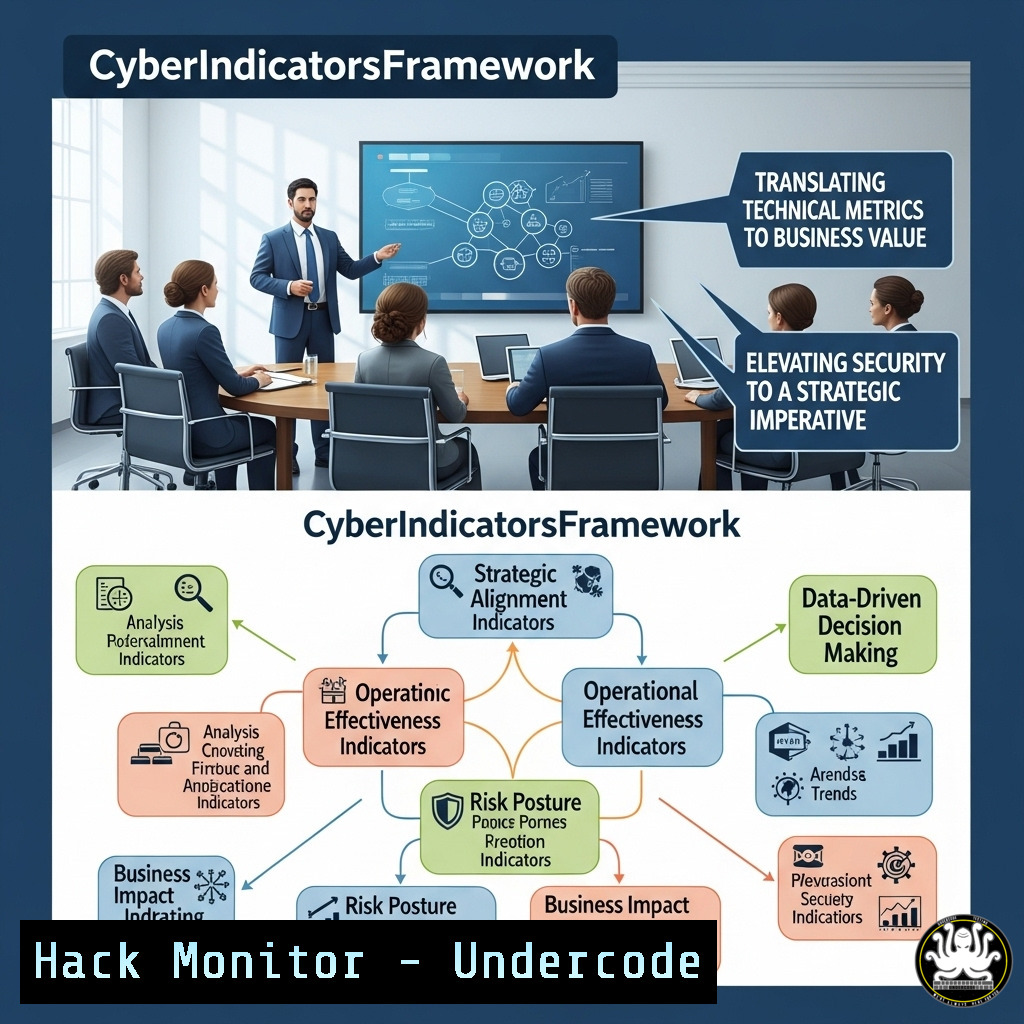
Introduction:
In an era of escalating digital threats, the CyberIndicatorsFramework emerges as a critical strategic initiative. This framework empowers CISOs and senior leadership to translate technical security postures into quantifiable business intelligence, aligning cybersecurity directly with overarching corporate objectives and fostering a robust culture of enterprise-wide resilience.
Learning Objectives:
- Understand the core components and strategic value of the CyberIndicatorsFramework for executive communication.
- Learn to implement key technical controls and auditing commands that feed critical data into the framework.
- Develop the ability to measure, report, and act upon key cybersecurity performance indicators (CPIs and KRIs).
You Should Know:
1. Mapping Asset Inventory to Business Criticality
A foundational pillar of the framework is a verified, dynamic asset inventory. This Linux command provides a comprehensive list of all systems on the local network, a crucial first step.
`nmap -sn 192.168.1.0/24`
Step-by-step guide: This command performs a ping sweep on the specified subnet (192.168.1.0/24). It discovers all live hosts without conducting a port scan. The output provides a list of IP addresses and MAC addresses, which must be cataloged and tagged with business criticality (e.g., ‘Domain Controller’, ‘Customer DB Server’) in a CMDB to feed the framework’s asset management indicators.
2. Quantifying Vulnerability Exposure
The framework requires measuring the volume and severity of unpatched systems. This OpenVAS or Nessus CLI command exports recent scan results for analysis.
`omp -u admin -w password –get-report
Step-by-step guide: Using the OpenVAS Management Protocol (OMP) CLI, this command authenticates and fetches a specified vulnerability scan report in XML format. This data can be parsed to calculate key indicators like ‘Mean Time to Remediate (MTTR)’ and ‘Percentage of Critical Systems with Unpatched Vulnerabilities’, which are vital for the framework’s risk assessment module.
3. Monitoring Privileged Access Anomalies
Tracking privileged account usage is a non-negotiable control. This Windows PowerShell command audits successful logon events for privileged groups.
`Get-WinEvent -FilterHashtable @{LogName=’Security’; ID=4624; Data=’S-1-5-32-544′} | Select-Object -First 10 | Format-List`
Step-by-step guide: This command queries the Windows Security log for successful logon events (ID 4624) where the user belongs to the local Administrators group (SID S-1-5-32-544). Monitoring these events helps establish a baseline and detect anomalies, feeding into the framework’s ‘Privileged Account Misuse’ indicator.
4. Ensuring Configuration Compliance Hardening
Consistent secure configuration is measured against benchmarks. This command audits a Linux server against the CIS-CAT Lite benchmark for Ubuntu.
`sudo cis-cat-full/CIS-CAT.sh –benchmark “CIS_Ubuntu_Linux_20.04_LTS_Benchmark_v1.1.0” –profile “Level 2” –csv`
Step-by-step guide: After downloading CIS-CAT, run this command to assess the system’s compliance with the CIS Level 2 profile. The CSV output provides a pass/fail score for each control. The aggregate score across your estate becomes a key compliance indicator within the CyberIndicatorsFramework.
5. Detecting Data Exfiltration Attempts
A key resilience indicator is the ability to detect unauthorized data transfers. This Zeek (Bro) command line monitors for large HTTP POST uploads, a potential exfiltration sign.
`zeek -C -r traffic.pcap notice -f “http$” -m “Large HTTP Upload Detected”`
Step-by-step guide: This command analyzes a packet capture (traffic.pcap) with Zeek, focusing on HTTP traffic. It will generate notices for large uploads. In production, Zeek would run live on a sensor, and the volume of such notices would feed the framework’s ‘Data Loss Attempt’ metric.
6. Cloud Security Posture Management (CSPM)
For modern environments, cloud misconfigurations are a primary risk. This AWS CLI command checks for S3 buckets with dangerous public read permissions.
`aws s3api list-buckets –query “Buckets[].Name” | jq -r ‘.[]’ | while read bucket; do if aws s3api get-bucket-acl –bucket $bucket | grep -q “http://acs.amazonaws.com/groups/global/AllUsers”; then echo “$bucket is PUBLIC!”; fi; done`
Step-by-step guide: This script lists all S3 buckets, then checks each bucket’s ACL for the ‘AllUsers’ group grant, indicating public access. The number of non-compliant public buckets is a critical cloud-specific Key Risk Indicator (KRI) for the framework.
7. Measuring Incident Response Effectiveness
The framework demands metrics on security operations. This Splunk Search Processing Language (SPL) query calculates Mean Time to Detect (MTTD).
`index=wineventlog EventCode=4625 | transaction host, src_ip maxspan=5m | streamstats current=f last(Time) as lastTime by host, src_ip | eval MTTD = _time – lastTime | stats avg(MTTD) as avgMTTD by host`
Step-by-step guide: This query analyzes failed logons (EventCode 4625), groups them into potential brute-force attack transactions, and calculates the time between the first and last event in the transaction to approximate detection time. The average MTTD is a paramount Cyber Performance Indicator (CPI) for the SOC.
What Undercode Say:
- Key Takeaway 1: The framework’s power lies not in creating new data, but in strategically curating and contextualizing existing technical telemetry for a executive audience. It forces a shift from “we blocked 1M attacks” to “we protected $X in revenue from downtime.”
- Key Takeaway 2: Successful implementation is 20% tooling and 80% process. The commands provided are enablers, but their output is useless without defined governance, clear ownership for each indicator, and regular review cycles with business leadership.
-
Analysis: The CyberIndicatorsFramework represents the maturation of the CISO role from a technical manager to a strategic business executive. By adopting this structured approach, security leaders can finally dismantle the language barrier that has long separated the SOC from the boardroom. It moves cybersecurity reporting beyond fear-based budgeting to value-based investment, justifying security programs in terms of risk mitigation, business enablement, and asset protection that any CFO or CEO can understand and prioritize. This is the blueprint for making cybersecurity an indispensable, measurable element of corporate governance.
Prediction:
The formalization and adoption of frameworks like CyberIndicatorsFramework will become the benchmark for corporate cyber maturity within five years. Regulatory bodies will begin to mandate such structured reporting, making it as standard as financial auditing. This will inevitably lead to the rise of ‘Cybersecurity Performance Officers’—roles that blend deep security knowledge with data science and business acumen to manage and interpret these frameworks, ultimately making data-driven security governance a core competitive advantage.
🎯Let’s Practice For Free:
IT/Security Reporter URL:
Reported By: Activity 7366907199819780097 – Hackers Feeds
Extra Hub: Undercode MoN
Basic Verification: Pass ✅


