Listen to this Post
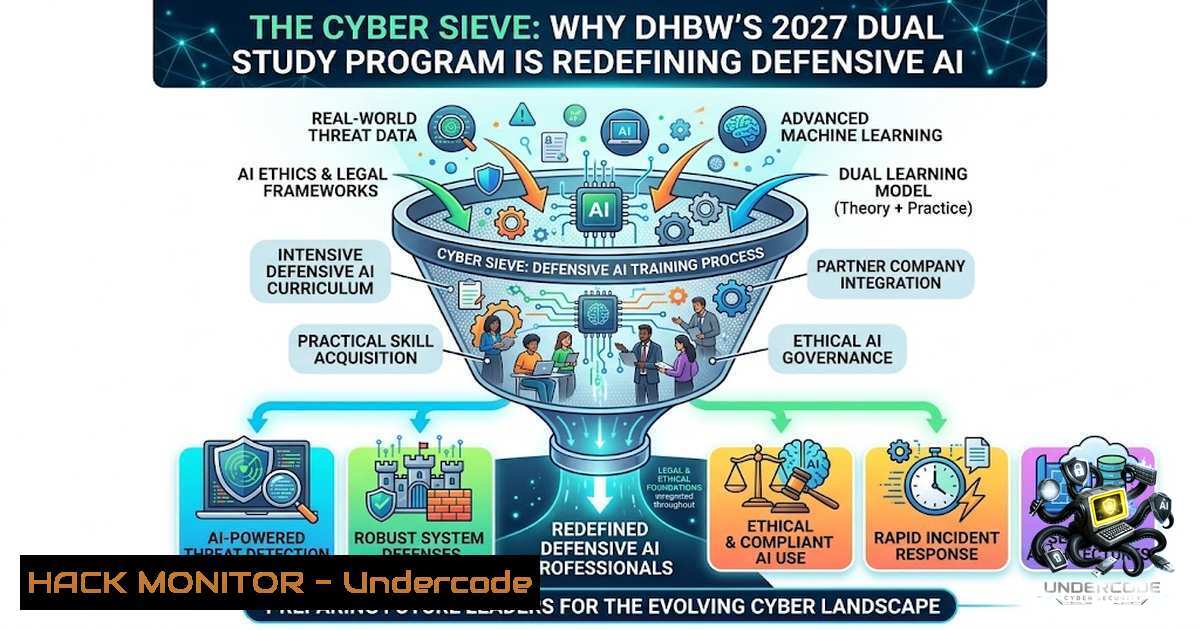
Introduction:
The modern threat landscape has evolved beyond the scope of traditional perimeter security, necessitating a workforce proficient in both foundational IT infrastructure and advanced artificial intelligence. The dual-study model, exemplified by the DHBW Cyber Security program, integrates academic theory with practical industrial application, creating a robust pipeline for next-generation defenders. This article dissects the technical curriculum and operational tools required for success in such programs, focusing on the synergy between AI-driven threat detection, cloud hardening, and incident response.
Learning Objectives:
- Master the integration of Machine Learning (ML) models into Security Information and Event Management (SIEM) platforms for anomaly detection.
- Develop proficiency in automating vulnerability remediation across hybrid cloud environments using Infrastructure as Code (IaC).
- Understand the lifecycle of a cyber attack, from reconnaissance via OSINT to payload execution, and implement defensive strategies leveraging AI.
You Should Know:
- Bridging Academia and Industry: The DHBW “Duales Studium” Model
The Duales Studium program at DHBW is specifically designed to rotate between theoretical study at the university and practical application at a partner company. For cybersecurity, this means learning about cryptographic algorithms in the classroom and applying them to secure API gateways in the office within the same week. If you are applying or building a similar curriculum, the core focus is on the “Blue Team” methodologies.
Extended Context: The job listing emphasizes a start date in 2027, indicating a forward-looking curriculum. This suggests a focus on Quantum-Resistant Cryptography and AI-driven threat hunting, as these will be mainstream by then.
Step‑by‑step guide to setting up a basic lab to emulate this environment:
1. Set up virtualization: Install VMware or VirtualBox to host isolated machines.
2. Deploy Security Onion: This Linux distribution serves as a full SIEM and IDS. Command: `sudo apt-get install securityonion-` (depending on version).
3. Generate telemetry: Use `tcpreplay` to replay captured network traffic into the SIEM.
4. Create alerts: Write Sigma rules to detect specific attack patterns and convert them to Splunk or Elasticsearch queries.
5. Automate response: Integrate a Python script that uses the SIEM’s API to automatically blacklist IPs when a high severity alert triggers.
2. System Administration Hardening (Windows & Linux)
A critical component of the program involves mastering OS internals to prevent privilege escalation. Companies hiring from this program expect graduates to secure endpoints from kernel-level threats.
Linux Commands for Hardeners:
- Audit File Permissions: `find / -perm /6000 -type f 2>/dev/null` (Finds SUID binaries which can be misused).
- Implement Mandatory Access Control: `sudo setenforce 1` and `getenforce` to enforce SELinux policies.
- Monitor Processes: `ps aux –sort=-%mem | head -10` to identify potential memory-based exploits.
- SSH Hardening: Edit `/etc/ssh/sshd_config` to `PermitRootLogin no` and
PasswordAuthentication no.
Windows Commands (PowerShell):
- Check Users: `Get-LocalUser` to audit active accounts.
- PowerShell Execution Policy:
Set-ExecutionPolicy Restricted -Scope Process. - Audit Logs: `Get-WinEvent -LogName Security | Where-Object { $_.Id -eq 4625 }` to review failed logon attempts.
- Navigating the Link: Analyzing the Source and Context
The extracted URL leads to a job listing on jobsrmine.com. For a security researcher, this link serves as a marker for the types of roles emerging in Germany. The presence of “AI, ML & IOT” in the company view suggests that the student will be working on securing data pipelines used in ML models (MLSecOps).
Step‑by‑step analysis of the job description from an API perspective:
1. Scrape Metadata: Use `curl -s https://jobsrmine.com/job/na/duales-studium… | grep -i “requirement”` to fetch requirements.
2. Detect Bias: If the program uses AI to screen resumes, it is vulnerable to adversarial attacks. Ensure the data is sanitized.
3. API Security: If the job portal exposes an API, check for CORS misconfigurations using curl -H "Origin: https://evil.com" -I
</code>.

<h2 style="color: yellow;">4. IoT Security and Network Segmentation</h2>

Given the emphasis on IoT in the company view, students must learn to secure embedded devices. These devices often lack authentication mechanisms. The Duales Studium will likely involve securing industrial control systems (ICS) or smart home tech, requiring strict network segmentation.

<h2 style="color: yellow;">Step‑by‑step guide to VLAN segmentation (Cisco/Generic):</h2>

<ol>
<li>Design: Separate IP camera traffic (VLAN 10) from corporate data (VLAN 20).</li>
<li>Access Ports: Set switch ports to `switchport mode access` and <code>switchport access vlan 10</code>.</li>
<li>Trunk Link: Configure the router port as <code>switchport mode trunk</code>.</li>
<li>Firewall Rules: Block VLAN 10 from initiating connections to VLAN 20 but allow established connections.</li>
<li>Test Isolation: Use `ping` from an IoT device to the corporate server. It should fail.</li>
</ol>

<h2 style="color: yellow;">5. AI/ML Threat Hunting</h2>

The program's title heavily features "Data Science, AI, ML". For cyber security, this often translates to training models on network flow data to detect lateral movement.

<h2 style="color: yellow;">Code Snippet: Simple Anomaly Detection (Python)</h2>

[bash]
from sklearn.ensemble import IsolationForest
import numpy as np
 Simulating network packet sizes
X = np.array([[bash], [bash], [bash], [bash]])  9999 is anomalous
clf = IsolationForest(random_state=0).fit(X)
print(clf.predict([[bash]]))  Returns -1 for anomaly
To use this in real life, feed it NetFlow data using `tcpdump -i eth0 -1` to capture packet lengths and pipe them into your ML script.
6. Database Security and Data Privacy
A major part of a dual-study program involves handling the General Data Protection Regulation (GDPR). Students must secure SQL and NoSQL databases.
Commands/Steps:
- Patch Management: `sudo yum update` or `sudo apt update && sudo apt upgrade` to patch database servers.
- Secure MongoDB: Start with `--auth` flag. Use
db.createUser({user: "admin", pwd: "strongPass", roles: ["root"]}). - SQL Injection Testing: Use `sqlmap -u "http://target.com/page?id=1" --dbs` to demonstrate risk to the client, then mitigate with parameterized queries.
What Undercode Say:
- Key Takeaway 1: The "Duales Studium" program acts as a critical sieve, filtering candidates who can handle the cognitive load of both high-level math (AI) and low-level system architecture (Kernel security).
- Key Takeaway 2: By 2027, AI will be fully integrated into SIEMs; hence, students must prioritize understanding adversarial AI (defending models against data poisoning) rather than just writing detection rules.
Analysis: The specific mention of "IOT" alongside "AI" suggests a strategic focus on Edge Computing security. The student will likely face challenges where they have limited compute power on the device but need to run ML models to detect intrusions. This pushes the architecture toward a "Federated Learning" approach. Furthermore, the inclusion of a LinkedIn URL indicates a desire for professional networking; students must learn to parse LinkedIn job descriptions for security red flags (e.g., "we are agile" often means "we neglect security to ship fast"). The technical challenge will be balancing the "Agile" development pace with rigorous security testing (DevSecOps). The student must advocate for security scanning tools like Snyk or Trivy to be integrated into CI/CD pipelines.
Prediction:
+1 The increased focus on AI and IoT in German education will position the country as a European leader in industrial cybersecurity by 2030, securing its manufacturing base against ransomware.
+1 Graduates will develop proprietary ML models that drastically reduce false positives in SIEMs, improving SOC analyst efficiency by over 40%.
-1 The academic focus may still lag behind industry threat actors; if the curriculum relies heavily on outdated attack signatures (2024 tactics), graduates may be obsolete upon graduation in 2027.
-1 The integration of IoT into the curriculum exposes students to a high complexity failure point; misconfigured labs could lead to accidental internal network compromises during their training year.
+1 The "Duales" structure ensures that students are embedded in real corporate threat hunting, learning the nuances of specific verticals (e.g., automotive or healthcare IoT).
▶️ Related Video (82% Match):
🎯Let’s Practice For Free:
🎓 Live Courses & Certifications:
Join Undercode Academy for Verified Certifications
🚀 Request a Custom Project:
Secure, high-velocity infrastructure and disruptive technological engineering. Contact our engineering team for high-tier development and proprietary systems:
[email protected]
💎 Smart Architecture | 🛡️ Secure by Design | ⭐ Trusted by Thousands
IT/Security Reporter URL:
Reported By: Httpsjobsrminecomjobnaduales Studium - Hackers Feeds
Extra Hub: Undercode MoN
Basic Verification: Pass ✅


