Listen to this Post
Introduction:
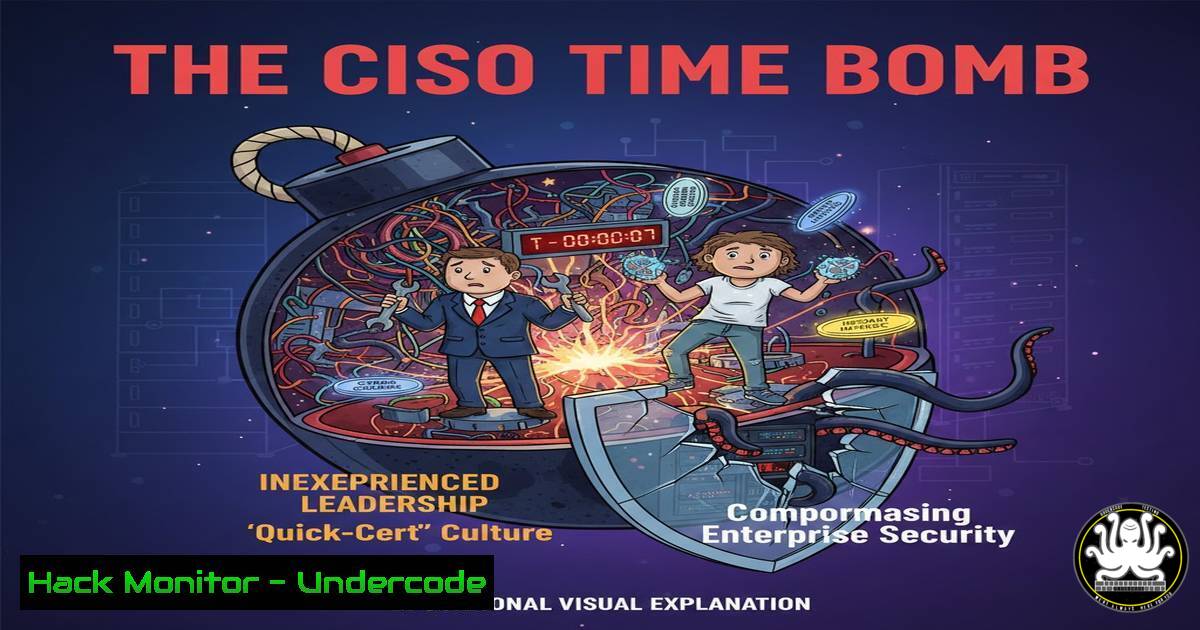
The rapid appointment of underqualified Chief Information Security Officers (CISO) poses a critical, systemic risk to organizations. Driven by a surge in accelerated training programs and market demand, individuals with minimal hands-on experience are assuming top-tier security roles, creating a dangerous gap between responsibility and capability. This trend, coupled with unclear legal accountability frameworks, leaves enterprises vulnerable to severe breaches rooted in fundamental governance and technical failures.
Learning Objectives:
- Identify the key technical and experiential qualifications a competent CISO must possess beyond certifications.
- Implement verifiable technical safeguards and audit processes to mitigate risks from strategic security inexperience.
- Understand the evolving landscape of personal legal liability for security executives and board members.
You Should Know:
1. Verifying Credentials Beyond the Certificate
The core issue is the over-reliance on academic certificates versus proven, tactical experience. A true CISO must have a deep understanding of the attack lifecycle, from initial access to exfiltration, which can only be gained through years in Security Operations Centers (SOC), incident response, and penetration testing.
Step‑by‑step guide explaining what this does and how to use it.
Step 1: Audit the Candidate’s Technical Past. Before hiring, require a detailed work history with specific projects. Ask for examples: “Describe a time you configured a SIEM rule to detect a specific threat.” “Walk us through how you would harden an internet-facing Windows Server.”
Step 2: Conduct Scenario-Based Technical Interviews. Move beyond theoretical questions. Present a realistic scenario: “Our external vulnerability scan shows a critical flaw on an Apache server (CVE-2021-41773). What is your immediate, tactical command to check for exploitation on a Linux system, and what is your containment step?”
Linux Command Check: `grep -r “file:/” /var/log/apache2/access.log /var/log/httpd/access_log` – Searches web logs for path traversal patterns.
Containment: `sudo iptables -A INPUT -s
Step 3: Demand and Verify References from Past Technical Teams. Speak directly with the analysts and engineers who reported to the candidate. Did they provide clear guidance? Could they debug a tricky firewall rule or help interpret malicious network traffic?
- Implementing Foundational Technical Controls a CISO Must Champion
An inexperienced leader may neglect basic “security hygiene.” A qualified CISO ensures these are operational, monitored, and tested.
Step‑by‑step guide explaining what this does and how to use it.
Step 1: Enforce Multi-Factor Authentication (MFA) Everywhere. This is non-negotiable. For cloud environments (e.g., Azure AD), enforce conditional access policies. For on-prem systems, deploy solutions like Duo or OpenOTP.
Step 2: Achieve and Maintain Asset Visibility. You cannot secure what you do not know. Implement a dedicated asset discovery tool or use aggressive network scanning.
Nmap Command for Network Discovery: `sudo nmap -sn 192.168.1.0/24` (discovers live hosts). `sudo nmap -sV -O 192.168.1.10` (fingerprints OS and services on a target).
Step 3: Centralized Log Management & Critical Alerting. All infrastructure, firewall, and application logs must feed into a SIEM. The CISO must ensure alerts are tuned. A basic critical alert rule in a SIEM-like syntax: `(event_id:4625 OR event_id:4771) AND (source_ip_address NOT IN [bash])` to detect failed logins from untrusted networks.
- Hardening Cloud & SaaS Environments Against Configuration Drift
A common failure point for junior security leaders is misunderstanding the Shared Responsibility Model in the cloud, leading to exposed storage buckets or over-permissive identities.
Step‑by‑step guide explaining what this does and how to use it.
Step 1: Enforce Infrastructure-as-Code (IaC) Security Scans. Use tools like `tfsec` (for Terraform) or `checkov` to scan cloud templates for misconfigurations before deployment.
Example checkov scan: `checkov -d /path/to/terraform/code` – This will flag an S3 bucket with public-read access.
Step 2: Implement Least-Privilege Access in IAM. Regularly audit IAM roles and policies. Use the cloud provider’s CLI to list policies.
AWS CLI Command to list user policies: `aws iam list-attached-user-policies –user-name
Step 3: Enable Guardrails via Cloud Security Posture Management (CSPM). Deploy a CSPM tool (e.g., Wiz, Prisma Cloud) for continuous monitoring and automatic remediation of misconfigurations across AWS, Azure, and GCP.
4. Proactive Threat Hunting: Moving Beyond Passive Alerts
A senior CISO instills a culture of proactive hunting, not just waiting for alerts. This requires understanding adversary Tactics, Techniques, and Procedures (TTPs).
Step‑by‑step guide explaining what this does and how to use it.
Step 1: Hunt for Lateral Movement. Use endpoint detection and response (EDR) tools to query for unusual process executions that mimic tools like Mimikatz or PsExec.
Example EDR Query (pseudo): `process.name:(“psexec” OR “wmic”) AND parent.process.name:!=”svchost.exe”`
Step 2: Analyze Network Traffic for C2 Beacons. Use packet analysis tools to find beaconing activity.
Wireshark Display Filter for periodic DNS: `dns && frame.time_delta > 0.9 && frame.time_delta < 1.1` – Looks for DNS queries every ~1 second.
Step 3: Establish a Regular Hunting Cadence. Dedicate 4-8 hours per week for a security analyst to follow threat intelligence leads and run pre-built hunting queries across logs and endpoints.
5. Building an Incident Response Playbook That Works
The ultimate test of a CISO is during a breach. A documented, practiced playbook is essential.
Step‑by‑step guide explaining what this does and how to use it.
Step 1: Immediate Containment – Network Isolation. Have pre-approved commands ready.
Windows (via Admin CMD): `netsh advfirewall firewall add rule name=”Block_Compromised_Host” dir=in action=block remoteip=
Linux: `sudo iptables -A INPUT -s
Step 2: Evidence Collection & Volatile Data Preservation.
Windows (using built-in tools): Run `pslist.exe` (from SysInternals) to capture process list: `pslist -t > C:\evidence\processes.txt`
Linux: Capture network connections: `netstat -tunap > /var/evidence/netstat.txt` and running processes: `ps aux > /var/evidence/processes.txt`
Step 3: Eradication & Recovery. This involves patching, credential resets, and system rebuilds from known-clean backups. The playbook must define clear approval chains for these disruptive actions.
What Undercode Say:
- Technical Debt Trumps Titles: An organization with robust, automated security controls (MFA, patching, least privilege) and a strong SOC can survive mediocre leadership longer than one with a “paper CISO” and fragile infrastructure. Invest in engineering first.
- Accountability is a Technical Process: Legal liability must be underpinned by technical evidence. Comprehensive logging, change management records, and documented risk acceptance decisions are what legally protect—or implicate—both the CISO and the board.
Prediction:
The current trend will catalyze a regulatory and insurance-driven correction within 2-3 years. We will see the formalization of CISO licensure requirements (similar to GDPR’s DPO mandates), requiring demonstrable years of experience and passing a rigorous practical exam. Cyber insurance premiums will become untenable for companies that cannot prove competent security leadership, validated through independent audits of their technical security posture. Furthermore, the rise of “vCISO-as-a-Service” from reputable firms will bridge the experience gap for mid-market companies, but this will be accompanied by stricter contractual liability clauses. Ultimately, the market will bifurcate: one track for genuine, experienced security executives, and another for those whose roles are retitled to “Security Compliance Manager” with reduced strategic scope.
▶️ Related Video (80% Match):
🎯Let’s Practice For Free:
IT/Security Reporter URL:
Reported By: Nir Roitman – Hackers Feeds
Extra Hub: Undercode MoN
Basic Verification: Pass ✅


