Listen to this Post
Introduction:
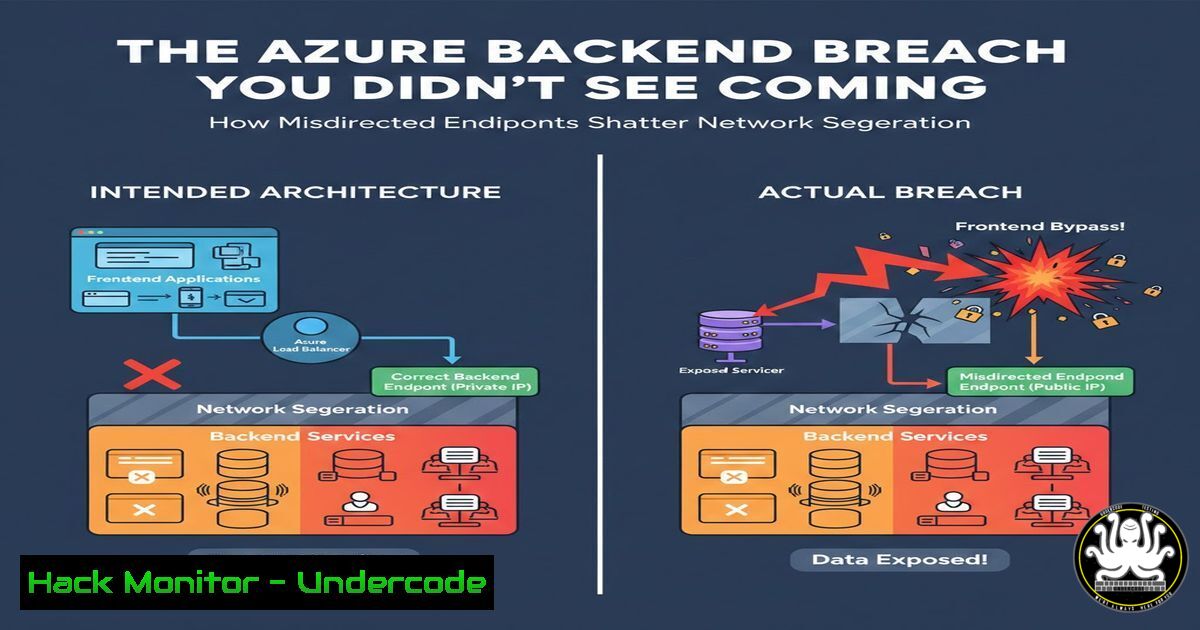
A hypothetical scenario posited by a cybersecurity researcher suggests a massive cloud security vulnerability may exist not in overt exploits, but in misconfigured backend service endpoints. The core concept revolves around internal documentation inadvertently revealing API routes and endpoints that bypass carefully constructed network segmentation rules within cloud environments like Microsoft Azure, potentially leading to catastrophic cross-tenant or cross-service data breaches. This article explores the technical mechanics of such a failure and provides a forensic and defensive roadmap.
Learning Objectives:
- Understand how internal API documentation and service meshes can inadvertently become attack vectors.
- Learn to audit and identify misconfigured backend endpoints and network security groups (NSGs) in Azure.
- Implement steps to harden cloud environments against internal route manipulation and segregation failure.
You Should Know:
- The Anatomy of a Segregation Failure: Backend Routes as a Threat Vector
The extended premise suggests that developers and architects often document internal, non-public backend services—think microservice-to-microservice communication paths. If these endpoints are not rigorously protected by network security groups (NSGs), firewalls, and private endpoints, they can be discovered and accessed from unauthorized network segments. An attacker or a misconfigured service within the VNet could use these documented routes to pivot.
Step-by-Step Guide: Discovering Potentially Exposed Backend Endpoints
Step 1: Internal Reconnaissance. Assume you have initial access to a development or staging environment. Use tools to scrape internal wikis, Confluence pages, or even source code comments for URLs and service descriptors.
Linux Command (using `grep`):
grep -r "https://internal..azure.com" /path/to/codebase/ --include=".md" --include=".yaml" --include=".json"
This command recursively searches for patterns matching internal Azure URLs in markdown, YAML, and JSON files.
Step 2: Network Mapping. Use network scanning tools from a compromised VM to see what ports are open on discovered IPs or hostnames.
Linux Command (using `nmap`):
nmap -sS -p 443,8080,3000 <discovered_internal_IP_or_hostname>
This command performs a SYN scan on common backend ports (443, 8080, 3000) to check for listening services.
- Auditing Azure Network Security Groups (NSGs) for Overly Permissive Rules
The breach vector implies that backend endpoints are reachable due to lax NSG rules. Security teams must audit rules that allow broad internal traffic.
Step-by-Step Guide: Identifying Risky NSG Rules with Azure CLI
Step 1: List all NSGs in your subscription.
az network nsg list --query '[].{Name:name, ResourceGroup:resourceGroup}' -o table
Step 2: Review security rules for a specific NSG, looking for wide source ranges (e.g., 10.0.0.0/8, VirtualNetwork).
az network nsg rule list --nsg-name <Your-NSG-Name> -g <Resource-Group> --query '[].{Name:name, Access:access, Direction:direction, Source:sourceAddressPrefix, DestPort:destinationPortRange}' -o table
This process helps pinpoint rules that allow traffic from the entire VNET or large IP ranges to specific backend service ports, which should be restricted to specific source IPs or subnets.
- The Role of Private Endpoints and Service Endpoint Policies
Publicly routable backend services are a critical flaw. Azure Private Endpoints provide a private IP address for a service, tying it directly to your VNet. Service Endpoint Policies further restrict which resources can access the endpoint.
Step-by-Step Guide: Securing a Storage Account with a Private Endpoint
Step 1: Disable public network access on the target service (e.g., Storage Account).
az storage account update --name <storageAccountName> --resource-group <resourceGroupName> --public-network-access Disabled
Step 2: Create a Private Endpoint connected to your VNet and subnet.
az network private-endpoint create \
--name myPrivateEndpoint \
--resource-group <resourceGroupName> \
--vnet-name <vnetName> \
--subnet <subnetName> \
--private-connection-resource-id "/subscriptions/<subscriptionId>/resourceGroups/<resourceGroupName>/providers/Microsoft.Storage/storageAccounts/<storageAccountName>" \
--group-id blob \
--connection-name myConnection
This configuration ensures the backend service is only accessible via the private IP within your designated VNet, nullifying attacks from other segments.
- Simulating the Attack: Using Curl to Probe Internal Endpoints
An ethical hacker or penetration tester can validate the vulnerability by attempting to access a discovered internal endpoint from an unauthorized jumpbox or VM.
Step-by-Step Guide: Probing for Information Disclosure
Step 1: From a VM in a different, supposedly segregated subnet, attempt to call the internal endpoint.
curl -v https://internal-backend-service.region.cloudapp.azure.com/api/health
curl -v -X POST https://internal-backend-service.region.cloudapp.azure.com/api/v1/users -H "Content-Type: application/json" -d '{"query":"test"}'
Step 2: Analyze the response. A `200 OK` or `403 Forbidden` confirms the endpoint is reachable. A `404 Not Found` or timeout is better. Verbose errors may leak stack traces or server info.
This test validates the effectiveness of your network segmentation in practice, not just in theory.
- Implementing Zero Trust with API Gateways and Authentication
Every internal service request must be authenticated and authorized, regardless of its network origin. An API Gateway (like Azure API Management with VNet integration) can act as a policy enforcement point.
Step-by-Step Guide: Enforcing JWT Validation in APIM Policy
Step 1: Within Azure API Management, navigate to your API’s policy editor.
Step 2: Add an inbound policy to validate a JSON Web Token (JWT) on every call to the backend.
<inbound>
<validate-jwt header-name="Authorization" failed-validation-httpcode="401" failed-validation-error-message="Unauthorized">
<openid-config url="https://login.microsoftonline.com/your-tenant-id/v2.0/.well-known/openid-configuration" />
<audiences>
<audience>your-api-app-id</audience>
</audiences>
</validate-jwt>
<base />
</inbound>
This policy ensures that even if an internal route is discovered, the requester must present a valid, scoped access token, blocking unauthenticated probes.
6. Continuous Monitoring and Anomaly Detection
Aligning event timestamps, as the original post suggests, is crucial for incident response. Centralized logging can correlate events across services.
Step-by-Step Guide: Querying Azure Log Analytics for Cross-Service Calls
Step 1: In a Log Analytics workspace querying AzureDiagnostics and network logs, run a Kusto Query Language (KQL) query to find unusual internal traffic patterns.
AzureDiagnostics
| where ResourceProvider == "MICROSOFT.NETWORK" and Category == "NetworkSecurityGroupRuleCounter"
| where direction_s == "Inbound" and protocol_s == "TCP"
| where destinationPort_d == 8080 or destinationPort_d == 3000
| summarize count() by sourceAddress_s, destinationAddress_s, TimeGenerated
| order by count_ desc
This query highlights high volumes of internal traffic to common backend ports, helping identify unexpected communication that may indicate a segregation breach or lateral movement.
What Undercode Say:
- Key Takeaway 1: The most sophisticated perimeter defense is rendered obsolete by one misplaced line of internal documentation or one overly permissive NSG rule allowing `VirtualNetwork` traffic to a sensitive backend port. Security must evolve from “trusted network” models to “always verify” for every service request.
- Key Takeaway 2: Incident response in the cloud is a multi-service jigsaw puzzle. Correlating logs from Azure Resource Manager, NSG flow logs, and specific service diagnostics (as hinted by checking “Azure us region functioning during this exact same time window”) is non-negotiable for understanding breach scope.
The analysis suggests we are moving beyond attacking public-facing applications. The next frontier for sophisticated attackers is the complex web of internal, “trusted” backend services that underpin cloud applications. A single misconfiguration in this mesh can lead to a cascading failure across segregated environments. Proactive defense requires treating every internal endpoint as if it were public, enforcing strict authentication, principle of least privilege networking, and maintaining exhaustive, correlated logs. The hypothetical scenario is less a prediction and more a reflection of current, widespread cloud architectural weaknesses.
Prediction:
The convergence of AI-driven threat actors (for automated discovery of misconfigurations) and the increasing complexity of service meshes will lead to a new wave of cloud-native breaches in the next 18-24 months. These won’t be traditional ransomware attacks but silent, persistent data exfiltration and manipulation campaigns originating from within the “trusted” internal network plane. This will force a rapid industry-wide adoption of Zero Trust principles for all inter-service communication, making micro-segmentation and mandatory service identity authentication the baseline standard for any serious cloud deployment.
▶️ Related Video (80% Match):
🎯Let’s Practice For Free:
IT/Security Reporter URL:
Reported By: Unitedstatesgovernment If – Hackers Feeds
Extra Hub: Undercode MoN
Basic Verification: Pass ✅


