Listen to this Post
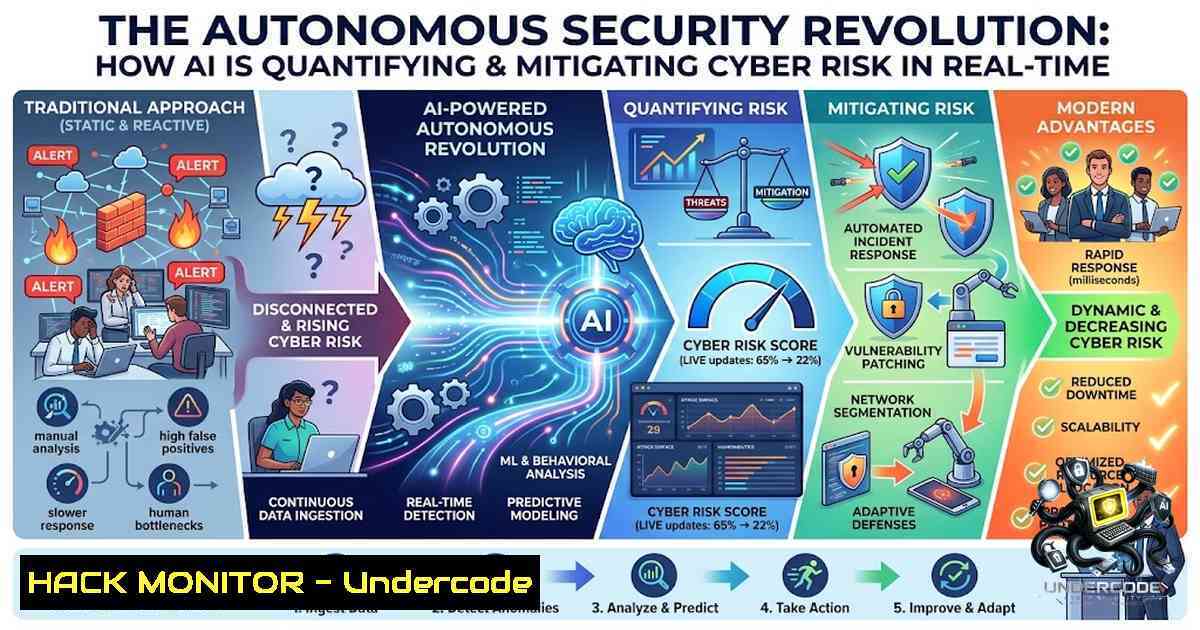
Introduction:
The evolution of cybersecurity from a reactive, signature-based discipline to a proactive, data-driven science is culminating in the rise of Autonomous Cyber-Risk Management. Companies like Safe Security are leading this charge by moving beyond simple vulnerability scanning to quantify risk in financial terms, enabling businesses to prioritize mitigation efforts based on potential business impact rather than just Common Vulnerability Scoring System (CVSS) scores. This shift leverages AI to ingest massive datasets, correlate threat intelligence, and model attack paths in real-time, effectively creating a self-healing security posture that continuously adapts to new threats.
Learning Objectives:
- Understand the architecture and benefits of AI-driven Cyber Risk Quantification (CRQ) and Continuous Threat Exposure Management (CTEM).
- Learn how to operationalize threat intelligence and vulnerability data to calculate financial exposure and prioritize remediation.
- Explore the integration of API security and third-party risk management (TPRM) into a unified autonomous platform.
You Should Know:
- The Three Pillars of AI-Driven Cyber Risk Management
The platform described in the post integrates three critical components that have traditionally existed in silos. Understanding these pillars is essential for any modern security practitioner.
Cyber Risk Quantification (CRQ): This moves beyond color-coded severity charts to translate technical vulnerabilities into financial loss projections. For example, a critical RCE vulnerability in a public-facing e-commerce server might have a lower CVSS score but a higher financial impact than a “Critical” vulnerability in an internal test environment.
Continuous Threat Exposure Management (CTEM): This is the process of continuously scanning your environment, correlating vulnerabilities with active threat actor tactics, techniques, and procedures (TTPs) from threat intelligence feeds, and determining if an attacker can weaponize a weakness.
Third-Party Risk Management (TPRM): This involves monitoring the security posture of vendors and partners, as a compromise in their environment can lead to a breach in yours.
Step-by-Step: Building a CTEM Program from Scratch
If you wanted to build the foundational data layer for a CTEM program, you would start with asset discovery and vulnerability scanning.
Linux Command Example (Using Nmap and NSE for vulnerability discovery):
 Perform a comprehensive port scan and service detection
nmap -sV -sC -p- -T4 192.168.1.0/24

Use a script to check for specific vulnerabilities (e.g., EternalBlue)
nmap -p 445 --script smb-vuln-ms17-010 <target_ip>
Windows Command Example (Using PowerShell for asset inventory):
 Retrieve a list of installed hotfixes and OS information for vulnerability correlation
Get-HotFix | Format-Table -AutoSize
Get-WmiObject -Class Win32_OperatingSystem | Select-Object CSName, Version, LastBootUpTime
2. Operationalizing Data for Quantification
To achieve the 120% growth and Fortune 500 adoption mentioned in the post, you cannot rely on manual data aggregation. You need to normalize data from multiple sources (SIEM, EDR, Cloud Provider APIs, Vulnerability Scanners) and feed it into a model that calculates probabilities.
Step-by-Step: Simulating a Cyber Risk Calculation
Here’s a simplified Python snippet to demonstrate how you might calculate “Single Loss Expectancy” (SLE) which is a basic form of CRQ:
1. Asset Value (AV): Determine the financial value of the asset (e.g., $1M in data).
2. Exposure Factor (EF): Estimate the percentage of asset value lost in a successful breach (e.g., 20%).
3. SLE = AV EF ($200,000).
Code Example (Simulating SLE and ALE):
def calculate_risk(asset_value, exposure_factor, annualized_rate_of_occurrence):
sle = asset_value  (exposure_factor / 100)
ale = sle  annualized_rate_of_occurrence
return sle, ale

Example: Asset worth $10M, exposure factor 10%, ARO 0.5 (once every 2 years)
sle, ale = calculate_risk(10000000, 10, 0.5)
print(f"Single Loss Expectancy: ${sle:,.2f}")
print(f"Annualized Loss Expectancy: ${ale:,.2f}")
This simplistic model is the basis for more complex, AI-driven Monte Carlo simulations used by platforms like Safe Security to provide probabilistic risk distributions.
3. Strengthening API Security in an AI-Driven World
The autonomous platform consumes and distributes data via APIs. A weak API gateway can undermine the entire platform.
Step-by-Step: Securing API Gateways
- Implement Rate Limiting: Prevent API abuse and DDoS attacks.
- Strong Authentication: Use OAuth 2.0 with JWT tokens.
- Input Validation: Always sanitize and validate payloads against a strict schema.
Linux Command Example (Using `curl` to test Rate Limiting):
 Send multiple requests to test rate limit thresholds
for i in {1..100}; do curl -I -X GET "https://api.example.com/v1/risk" -H "Authorization: Bearer $TOKEN"; done
4. Hardening the Cloud Infrastructure
Since modern platforms are cloud-1ative, hardening the control plane is critical. This involves implementing a robust Identity and Access Management (IAM) strategy.
Step-by-Step: Implementing Least Privilege in AWS
- Define Roles: Create specific IAM roles for the autonomous platform to access data sources.
- Use IAM Conditions: Restrict access based on IP address or MFA status.
- Audit with AWS Config: Continuously monitor for non-compliant policies.
Command Example (AWS CLI to enforce a Deny policy for public S3 buckets):
aws s3api get-bucket-policy-status --bucket <bucket-1ame> | jq '.PolicyStatus.IsPublic'
If the output is true, this indicates a severe misconfiguration that could leak sensitive risk data. You can use the following to block public access:
aws s3api put-public-access-block --bucket <bucket-1ame> --public-access-block-configuration "BlockPublicAcls=true,IgnorePublicAcls=true,BlockPublicPolicy=true,RestrictPublicBuckets=true"
5. The Automation of Remediation
The ultimate goal of the “autonomous” platform is to not only detect but also respond. This often integrates with SOAR (Security Orchestration, Automation, and Response) tools.
Step-by-Step: Creating an Automated Response Playbook
- Trigger: A critical vulnerability (e.g., Log4j) is identified on a production server.
- Containment: An API call is sent to the Firewall to isolate the host from the internal network.
- Remediation: A script is triggered to push the updated patch.
Script Example (Windows – Using PowerShell to check for Log4j):
 Scan for log4j files in all drives
Get-ChildItem -Path C:\ -Recurse -ErrorAction SilentlyContinue | Where-Object { $<em>.Name -eq 'log4j-core-.jar' } | ForEach-Object {
Write-Host "Found potential Log4j file: $($</em>.FullName)"
}
What Undercode Say:
- Key Takeaway 1: The shift to autonomous security is inevitable. The sheer volume of alerts and vulnerabilities makes manual triage impossible. Automation and AI are necessary to maintain control over the threat surface.
- Key Takeaway 2: Quantification is the language of the boardroom. Cybersecurity is no longer just a tech issue; it is a business risk. Platforms that bridge this gap by translating technical exposure into financial terms will lead the market.
- Key Takeaway 3: The integration of CTEM and TPRM highlights the interconnected nature of modern business. Your security is only as strong as your weakest link—which is often a third-party vendor. This holistic view is critical for enterprise resilience.
Prediction:
- +1: This move towards autonomous AI-driven platforms will democratize expert-level cybersecurity, allowing mid-sized enterprises to achieve the robust defense postures previously reserved for Fortune 500 giants.
- -1: As we rely more on AI for security decisions, the “black box” nature of these platforms will create new governance challenges. If an AI’s decision to block a critical business process results in financial loss, attribution of liability becomes a significant legal and ethical hurdle.
- +1: The integration of Balbix and the focus on CyberAGI suggest we will see the rise of “Digital Twins” for security, where C-suites can simulate the impact of any potential breach or investment in real-time, making security expenditure a strategic advantage rather than a cost center. This will likely accelerate the adoption of cyber insurance with dynamic pricing models based on real-time risk posture.
▶️ Related Video (80% Match):
🎯Let’s Practice For Free:
🎓 Live Courses & Certifications:
Join Undercode Academy for Verified Certifications
🚀 Request a Custom Project:
Secure, high-velocity infrastructure and disruptive technological engineering. Contact our engineering team for high-tier development and proprietary systems:
[email protected]
💎 Smart Architecture | 🛡️ Secure by Design | ⭐ Trusted by Thousands
IT/Security Reporter URL:
Reported By: https://lnkd.in/p/eqiYAsWQ – Hackers Feeds
Extra Hub: Undercode MoN
Basic Verification: Pass ✅


