Listen to this Post
Introduction:
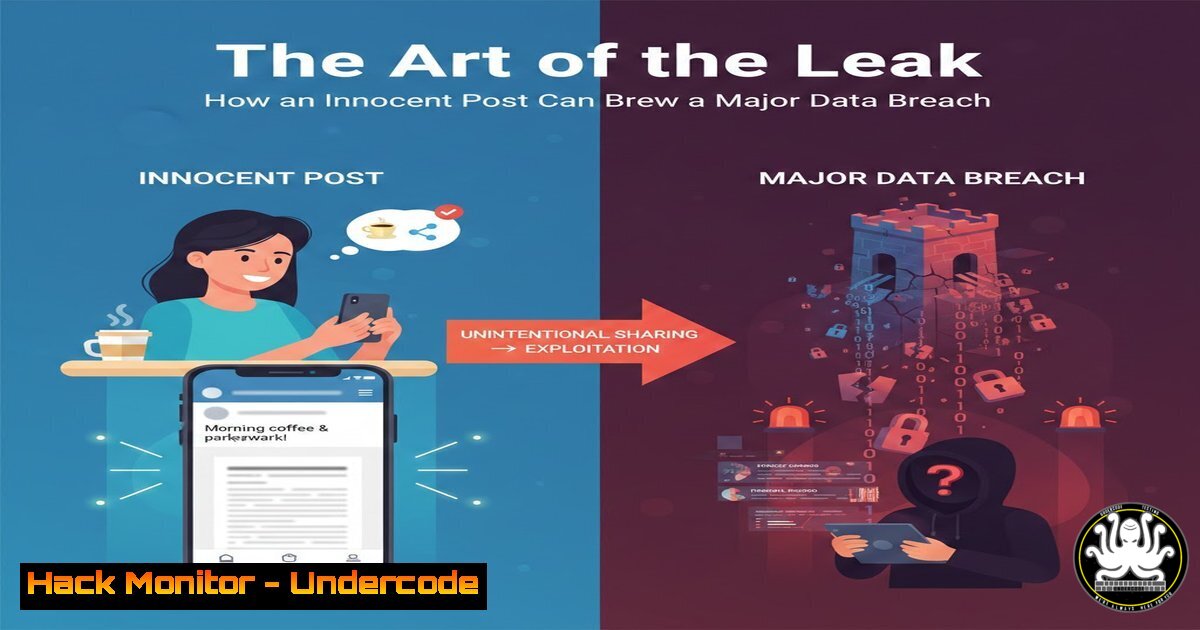
In the seemingly benign space of social media, a simple image of a morning coffee can be become a vector for corporate espionage and data leakage. While the LinkedIn post in question features Edward Hopper’s “Coffee,” the digital breadcrumbs left by users—connections, company affiliations, and comment threads—provide a rich dataset for reconnaissance. This article explores the technical aspects of Open Source Intelligence (OSINT) gathering, how attackers profile high-value targets through casual interactions, and the defensive measures enterprises must take to prevent digital oversharing from turning into a breach.
Learning Objectives:
- Understand how OSINT tools can aggregate publicly available data from social media interactions.
- Learn to execute reconnaissance commands to map organizational hierarchies from public profiles.
- Identify mitigation strategies, including endpoint controls and security awareness training, to prevent data leakage.
You Should Know:
- Profiling the Target: Harvesting Relationships from Public Feeds
Attackers rarely target systems directly; they target people. In the provided feed, we see interactions between Tony Moukbel, Roger Ach, and commentators like Louis Colombo. A threat actor would note the “2nd” and “3rd+” connection indicators, implying a professional network.
To automate this mapping, an attacker might use tools like `theHarvester` or Maltego. For a manual approach on Linux, one could use a combination of `curl` and `grep` to scrape visible data (though respecting robots.txt and terms of service is advised for ethical practice).
Example: Simulating Header Gathering (Linux/macOS)
To analyze the digital footprint of a target company mentioned in profiles, an attacker might start with DNS and subdomain enumeration to find exposed internal servers.
 Using curl to fetch headers and analyze server tech (Non-intrusive)
curl -I https://www.linkedin.com/company/softura/

Using dig to find mail servers (common entry point for phishing)
dig mx softura.com +short

Using fierce (a DNS scanner) to find subdomains (if domain is known)
 fierce --domain softura.com --subdomains accounts hr admin
2. Windows Command-Line Profiling (Internal Recon)
If a user from this feed clicks a malicious link disguised as an art print download, the attacker gains a foothold. Once inside a Windows environment, the attacker uses native Windows tools to verify the target’s identity against the OSINT gathered from the social post.
Step-by-step guide:
- Check User Context: The attacker verifies if the compromised user matches the executive they saw online.
whoami
whoami /groups
- Network Enumeration: They map the internal network to find servers mentioned in any of the user’s comments (e.g., finding the domain controller).
ipconfig /all
net view /domain
nslookup <internal_server_name>
3. The “Biometric” Angle: Hardening Authentication
Roger Ach’s profile mentions “BioTone™️ Five-Factored Biometric Cybersecurity.” While likely a commercial product, it highlights the move toward Multi-Factor Authentication (MFA). If the target organization uses weak MFA (like SMS), it is vulnerable to SIM-swapping.
Defensive Configuration (Linux – PAM Module for MFA)
To harden Linux systems against unauthorized access even if credentials are phished, an administrator can enforce Google Authenticator.
 Install Google Authenticator on Ubuntu/Debian
sudo apt update && sudo apt install libpam-google-authenticator

Run the configuration tool for a user
google-authenticator

Edit PAM configuration to require MFA for SSH
sudo nano /etc/pam.d/sshd
 Add line: auth required pam_google_authenticator.so

Edit SSH daemon to challenge for MFA
sudo nano /etc/ssh/sshd_config
 Set: ChallengeResponseAuthentication yes
 Set: AuthenticationMethods publickey,keyboard-interactive

Restart SSH service
sudo systemctl restart sshd
4. API Security and Social Media Scraping
The post’s interactions (likes, comments) are served via LinkedIn’s API. While scraping is against ToS, insecure APIs are a goldmine. An attacker might look for exposed GraphQL endpoints or misconfigured cloud buckets referenced in a target’s profile.
Testing for API Key Leakage (GitHub CLI)
If a target company’s developers are active on LinkedIn, an attacker might search GitHub for accidentally committed keys.
 Using GitHub CLI to search for AWS keys in a specific user's repos
gh search code AWS_ACCESS_KEY_ID --owner=<target_company_username>

Using truffleHog to find secrets in a repo
trufflehog filesystem --directory=/path/to/repo --entropy=True
5. Mitigation: Endpoint Detection and Response (EDR)
To detect if an employee (like the ones in the comments) is exfiltrating data regarding the “Art for Breakfast” post or corporate files, an organization needs EDR. While configuration varies by vendor, the logic involves monitoring for `svchost.exe` or `powershell.exe` making unusual outbound connections.
Simulated Detection Logic (Sysmon on Windows)
Event ID 3 (Network connection) would be monitored.
- Process: `powershell.exe`
– Destination Port: 443 (HTTPS) - Destination IP: Geolocation mismatch or known malicious IP.
- Alert: “PowerShell making outbound connection to non-corporate IP outside business hours.”
6. Cloud Hardening Against Reconnaissance
If the “Chicago West Pullman llc” runs infrastructure on AWS, the company must restrict who can view their IAM users and buckets. An attacker, having identified employees via LinkedIn, might attempt to brute-force console logins or access public S3 buckets.
AWS CLI Command to Audit Public Buckets (Defensive)
 List all S3 buckets
aws s3 ls

Check specific bucket ACL for public access
aws s3api get-bucket-acl --bucket <company-bucket-name>

Ensure Block Public Access is enabled at account level
aws s3control get-public-access-block --account-id <123456789012>
What Undercode Say:
- The Human Element is the Perimeter: The conversation about cigarettes and coffee in the comments is a goldmine for social engineers. Attackers use these casual threads to craft highly believable spear-phishing emails referencing personal interests (e.g., “Loved your comment on the Hopper piece, check out this artist’s portfolio…”).
- Defense in Depth is Mandatory: While biometrics and MFA stop credential theft, they do not stop session hijacking or consent phishing. Organizations must combine technological controls (like the PAM and AWS configurations above) with stringent policies regarding what employees can share online.
- Context-Aware Security: Security teams must assume that all employee interactions on platforms like LinkedIn are public. Monitoring for “digital dust” is as important as monitoring network traffic. The seemingly innocuous “like” on a post helps an attacker build the organizational chart they need to launch a BEC (Business Email Compromise) attack.
Prediction:
As AI-powered OSINT tools mature, we will see a rise in “Contextual Phishing 2.0.” Attacks will no longer rely on blast emails but will be hyper-personalized based on real-time scrapes of social media feeds. Within the next 12-18 months, expect a major breach traced back to a “harmless” LinkedIn comment or reaction, as threat actors automate the analysis of professional networks to bypass traditional email filters with perfectly timed, contextually relevant lures.
▶️ Related Video (78% Match):
🎯Let’s Practice For Free:
IT/Security Reporter URL:
Reported By: Rogerach Art – Hackers Feeds
Extra Hub: Undercode MoN
Basic Verification: Pass ✅


