
Listen to this Post
Introduction:
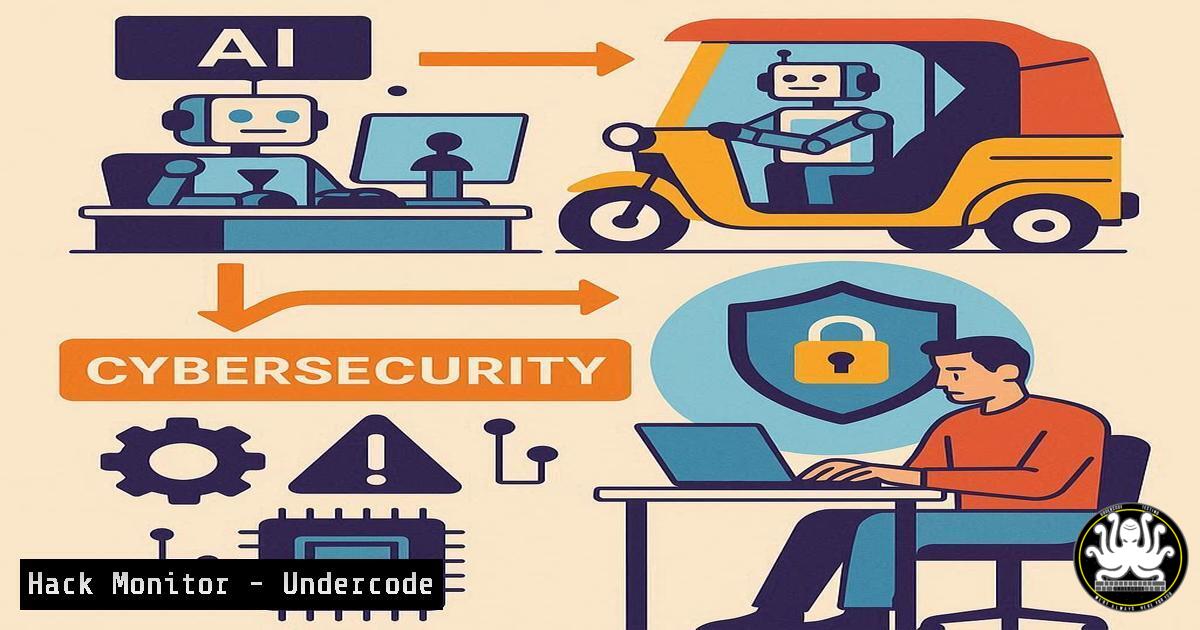
The automation wave, once confined to factory floors and data centers, is now displacing roles from corporate offices to the streets with driverless rickshaws. This unprecedented expansion demands a strategic pivot towards careers that leverage uniquely human skills in managing, securing, and governing the automated systems themselves. For cybersecurity and IT professionals, this disruption represents not a threat, but the career opportunity of a lifetime.
Learning Objectives:
- Identify the core technical skills required to secure AI-driven and automated systems.
- Master essential commands for threat detection, system hardening, and cloud security.
- Develop a proactive learning path to remain indispensable in an automated economy.
You Should Know:
1. AI System Security Auditing with Python
As AI integrates into critical infrastructure, auditing its components is paramount. This Python script checks for common vulnerabilities in an AI model’s supply chain.
import hashlib
import json
def verify_model_integrity(model_path, expected_hash):
with open(model_path, 'rb') as f:
file_hash = hashlib.sha256(f.read()).hexdigest()
if file_hash == expected_hash:
print("Model integrity verified.")
return True
else:
print("WARNING: Model integrity compromised!")
return False
 Usage: verify_model_integrity('model.pkl', 'expected_sha256_hash_here')
Step-by-step guide:
This script performs a integrity check on a machine learning model file. It calculates the SHA-256 hash of the file and compares it to a known, trusted hash. A mismatch indicates the model may have been tampered with, potentially introducing backdoors or biased behavior. To use it, replace `’model.pkl’` with your model’s file path and `’expected_sha256_hash_here’` with the hash provided by the trusted source.
2. Linux Threat Hunting with `ps` and `grep`
Automated systems run numerous processes; identifying malicious ones is a critical skill.
ps aux | grep -v "[" | sort -nrk 3 | head -10
Step-by-step guide:
This command pipeline lists all running processes (ps aux), excludes kernel threads (those in brackets, grep -v "\["), sorts them by CPU usage in descending order (sort -nrk 3), and shows the top 10 consumers (head -10). A sudden, unfamiliar process consuming high CPU could indicate a crypto-miner or other malware on an automated infrastructure server. Run this regularly to establish a baseline and investigate anomalies.
3. Windows API Call Monitoring with PowerShell
Malware often uses Windows APIs. Monitoring these calls can reveal exploitation attempts.
Get-WinEvent -FilterHashtable @{LogName='Microsoft-Windows-Sysmon/Operational'; ID=10} | Where-Object {$_.Message -like "cmd.exe"} | Format-Table TimeCreated, ProcessName, CommandLine
Step-by-step guide:
This PowerShell command queries the Sysmon log (a system monitoring tool that must be installed separately) for Event ID 10, which logs process access. It filters for events involving cmd.exe. An unexpected process accessing `cmd.exe` could be a sign of process injection or lateral movement. Ensure Sysmon is deployed with a robust configuration policy for this to be effective.
4. Cloud Infrastructure Hardening with AWS CLI
Misconfigured cloud storage is a primary attack vector for automated systems.
aws s3api put-bucket-policy --bucket my-automated-bucket --policy file://bucket-policy.json
Step-by-step guide:
This AWS CLI command applies a bucket policy defined in a local JSON file to an S3 bucket named my-automated-bucket. A strong policy should enforce principles of least privilege, blocking public read and write access unless absolutely necessary. Example `bucket-policy.json` content would explicitly deny all actions not from a specific VPC or IAM role, preventing data leaks from automated data stores.
5. Container Security Scanning with `trivy`
Driverless vehicles and AI services often run in containers. Scanning them for vulnerabilities is non-negotiable.
trivy image --severity CRITICAL,HIGH your-registry/ai-service:latest
Step-by-step guide:
This command uses the open-source tool `trivy` to scan a container image named `your-registry/ai-service:latest` for operating system and application dependencies vulnerabilities, reporting only those of CRITICAL and HIGH severity. Integrate this command into your CI/CD pipeline to prevent vulnerable images from being deployed to production environments running automated services.
6. Network Segmentation Verification with `nmap`
Isolating automated systems on the network contains potential breaches.
nmap -sS -p 22,80,443 -script ssh-auth-methods,http-title 192.168.10.0/24
Step-by-step guide:
This `nmap` command performs a SYN scan (-sS) on the 192.168.10.0/24 subnet, checking only ports 22 (SSH), 80 (HTTP), and 443 (HTTPS). It runs scripts to check SSH authentication methods and retrieve HTTP page titles. Use this to verify that only necessary ports are open on segments containing critical automation controllers and that services are running the expected software.
7. Incident Response Memory Acquisition
When a system in your automated fleet is compromised, preserving memory is key.
sudo dd if=/dev/mem of=/mnt/secure/memory_dump.img bs=1M
 Or use a dedicated tool like LiME:
sudo insmod ./lime.ko "path=/mnt/secure/memory_dump.lime format=lime"
Step-by-step guide:
The `dd` command is a blunt instrument for capturing physical memory to a file. A better, more reliable method is using the Linux Memory Extractor (LiME) loadable kernel module. The second command inserts the LiME kernel module, which will dump memory to the specified path in a structured format. This memory image can later be analyzed with tools like Volatility to uncover rootkits and extract malicious processes.
What Undercode Say:
- Automation Creates the Ultimate Defense Role: The jobs being automated are the predictable, repetitive tasks. The role of the cybersecurity professional is inherently unpredictable, requiring critical thinking, ethical judgment, and creative problem-solving to defend against novel threats.
- The Attack Surface is Your Responsibility: Every new automated system—from a driverless rickshaw’s control system to the AI managing its fleet—expands the digital attack surface. Securing this interconnected web of hardware, software, and APIs is a human-centric challenge that cannot be fully outsourced to algorithms.
The narrative that AI will erase all jobs is a dangerous oversimplification. While it displaces certain roles, it simultaneously creates a massive demand for architects, guardians, and ethicists of these very systems. The individual who understands the kernel-level operation of a Linux server hosting an AI, the network traffic of an autonomous vehicle, or the API security of a cloud automation platform holds the keys to the kingdom. The future belongs not to those who fear the code, but to those who command it.
Prediction:
The proliferation of AI and automation will lead to a “Great Diversion” in the workforce, channeling human capital away from operational tasks and towards strategic oversight and security roles. We will see the emergence of specialized cybersecurity fields like “Autonomous System Penetration Testing” and “AI Integrity Assurance.” The critical shortage of skilled professionals in these areas will drive salaries to new heights, making cybersecurity one of the most lucrative and stable career paths for the next two decades. The hack is not on our jobs, but on our adaptability; those who reskill to build, manage, and protect the automated world will become its new indispensable elite.
🎯Let’s Practice For Free:
IT/Security Reporter URL:
Reported By: Burhansaiyedbranding The – Hackers Feeds
Extra Hub: Undercode MoN
Basic Verification: Pass ✅


