
Listen to this Post
Introduction:
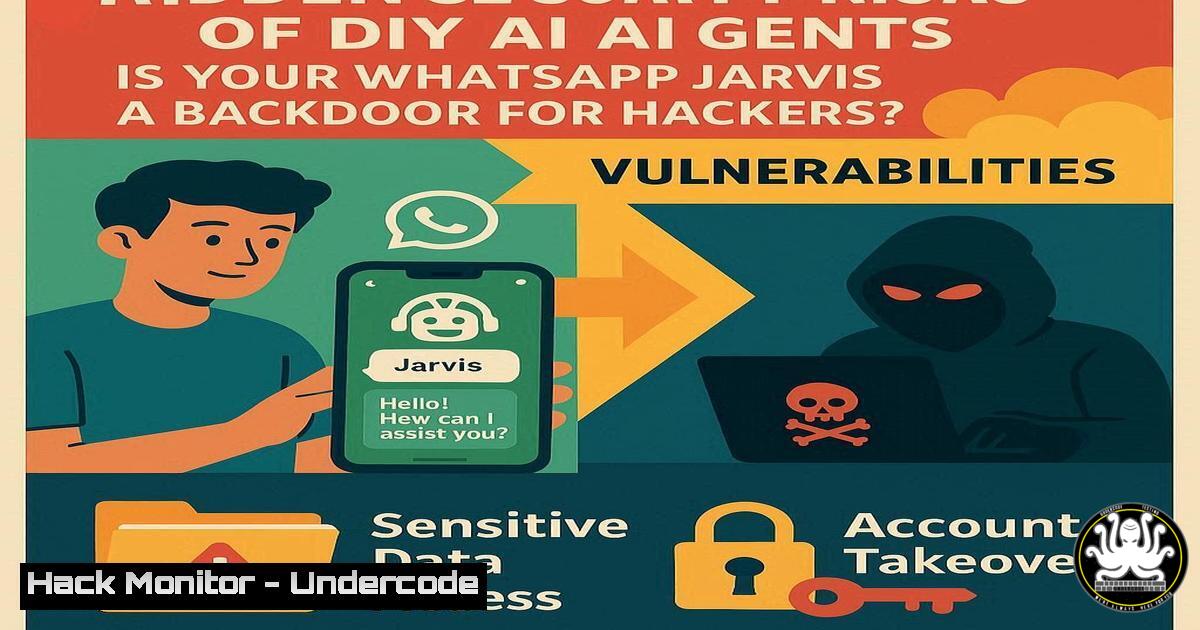
The proliferation of DIY AI agents like “Jarvis” that integrate messaging platforms with critical business services presents unprecedented security challenges. While these automation tools offer incredible productivity benefits, they create a sprawling attack surface that malicious actors can exploit through misconfigured APIs, insecure webhooks, and compromised authentication mechanisms.
Learning Objectives:
- Identify critical security vulnerabilities in AI automation workflows
- Implement proper authentication and authorization controls for integrated services
- Monitor and secure webhook endpoints against exploitation
- Establish security baselines for AI-powered productivity tools
- Understand the attack chain from compromised AI agent to full business system breach
You Should Know:
1. Securing n8n Webhook Endpoints
 Check for exposed n8n instances
nmap -p 5678 target-ip --script http-title

Secure n8n with basic authentication
docker run -d \
-e N8N_BASIC_AUTH_ACTIVE=true \
-e N8N_BASIC_AUTH_USER=admin \
-e N8N_BASIC_AUTH_PASSWORD=securepassword \
-p 5678:5678 n8nio/n8n
Webhook endpoints in automation platforms like n8n are frequently left exposed without authentication. This step-by-step guide demonstrates how to properly secure your n8n instance with basic authentication and network-level protections. Always change default ports and implement IP whitelisting where possible.
2. WhatsApp Business API Security Hardening
 Verify WhatsApp webhook signature
function verifyWhatsAppWebhook(payload, signature) {
const crypto = require('crypto');
const expectedSignature = crypto
.createHmac('sha256', process.env.WHATSAPP_WEBHOOK_SECRET)
.update(payload)
.digest('hex');
return crypto.timingSafeEqual(
Buffer.from(signature),
Buffer.from(expectedSignature)
);
}
WhatsApp Business API webhooks require signature verification to prevent spoofing attacks. This code snippet shows how to properly validate incoming webhook requests using HMAC verification, ensuring only legitimate WhatsApp messages process through your automation workflow.
3. OpenAI API Key Protection & Monitoring
 Monitor OpenAI API usage for anomalies
aws logs create-log-group --log-group-name /aws/lambda/openai-monitor
aws logs put-retention-policy --log-group-name /aws/lambda/openai-monitor --retention-in-days 30

Set usage limits
curl https://api.openai.com/v1/usage \
-H "Authorization: Bearer $OPENAI_API_KEY" \
-H "Content-Type: application/json"
OpenAI API keys embedded in automation workflows are prime targets for theft. Implement usage monitoring and rate limiting to detect unauthorized access. Regularly audit API usage patterns and set hard limits to prevent financial loss through credential compromise.
4. Google OAuth Token Security
 Revoke compromised tokens
curl -d -X POST \
"https://accounts.google.com/o/oauth2/revoke?token=ya29.a0AfH6SMBW..." \
-H "Content-Type: application/x-www-form-urlencoded"

Monitor GSuite audit logs
gcloud logging read \
'resource.type="audited_resource" AND protoPayload.methodName="google.iam.admin.v1.CreateServiceAccount"' \
--freshness=1d
Google OAuth tokens granting access to Gmail, Calendar, and Contacts require strict scoping and monitoring. This guide shows how to revoke potentially compromised tokens and monitor for suspicious service account creation that could indicate lateral movement.
5. Container Security for Automation Infrastructure
 Secure n8n Docker deployment
FROM n8nio/n8n:latest

Run as non-root user
USER node

Copy security configuration
COPY security-headers.conf /etc/nginx/conf.d/

Limit container capabilities
docker run --cap-drop=ALL --cap-add=NET_BIND_SERVICE n8n
Automation platforms deployed via Docker require hardened container configurations. This Dockerfile example demonstrates non-root execution and capability dropping to minimize the impact of container escape attempts and privilege escalation attacks.
6. Network Segmentation for AI Workflows
 Create isolated Docker network
docker network create --internal n8n-isolated

Configure n8n to use isolated network
docker run -d \
--network n8n-isolated \
--name n8n-worker \
n8nio/n8n

Allow specific outbound connections only
iptables -A OUTPUT -p tcp --dport 443 -d api.openai.com -j ACCEPT
iptables -A OUTPUT -p tcp --dport 443 -d web.whatsapp.com -j ACCEPT
iptables -A OUTPUT -p tcp --dport 443 -d gmail.com -j ACCEPT
Isolate automation infrastructure from critical internal networks. This network segmentation strategy prevents lateral movement even if the AI agent workflow is compromised, containing potential breaches to the isolated automation environment.
7. Voice Note Processing Security
import magic
import subprocess

def validate_audio_file(file_path):
 Check file type
file_type = magic.from_file(file_path, mime=True)
if file_type not in ['audio/mpeg', 'audio/wav', 'audio/ogg']:
raise ValueError("Invalid audio format")

Check for embedded malicious content
result = subprocess.run(
['ffprobe', '-v', 'error', '-show_format', file_path],
capture_output=True, text=True, timeout=30
)
return result.returncode == 0
Voice note processing introduces file upload vulnerabilities. This Python code demonstrates proper file type validation and malicious content checking for audio files processed through AI voice note features, preventing code execution through crafted media files.
What Undercode Say:
- AI automation tools represent the new perimeter in enterprise security, often deployed without proper security review
- The convergence of messaging platforms, AI services, and business applications creates attack chains that bypass traditional security controls
- Organizations must extend their security monitoring to include automation workflows as first-class assets
The rapid adoption of DIY AI agents creates a shadow IT problem at scale. These tools typically operate with excessive permissions while lacking basic security controls like authentication, auditing, and network segmentation. Security teams must establish governance frameworks for automation tools that include mandatory security reviews, least-privilege access principles, and continuous monitoring for anomalous behavior across integrated services.
Prediction:
Within 18-24 months, we will see the first major enterprise breach originating from a compromised AI automation agent, leading to regulatory scrutiny and the emergence of specialized security solutions for AI workflow protection. As these tools become more sophisticated with agent-to-agent communication capabilities, the attack surface will expand exponentially, requiring new security paradigms focused on AI-agent trust verification and behavioral anomaly detection.
🎯Let’s Practice For Free:
IT/Security Reporter URL:
Reported By: Jiteshdugar A – Hackers Feeds
Extra Hub: Undercode MoN
Basic Verification: Pass ✅


