
Listen to this Post
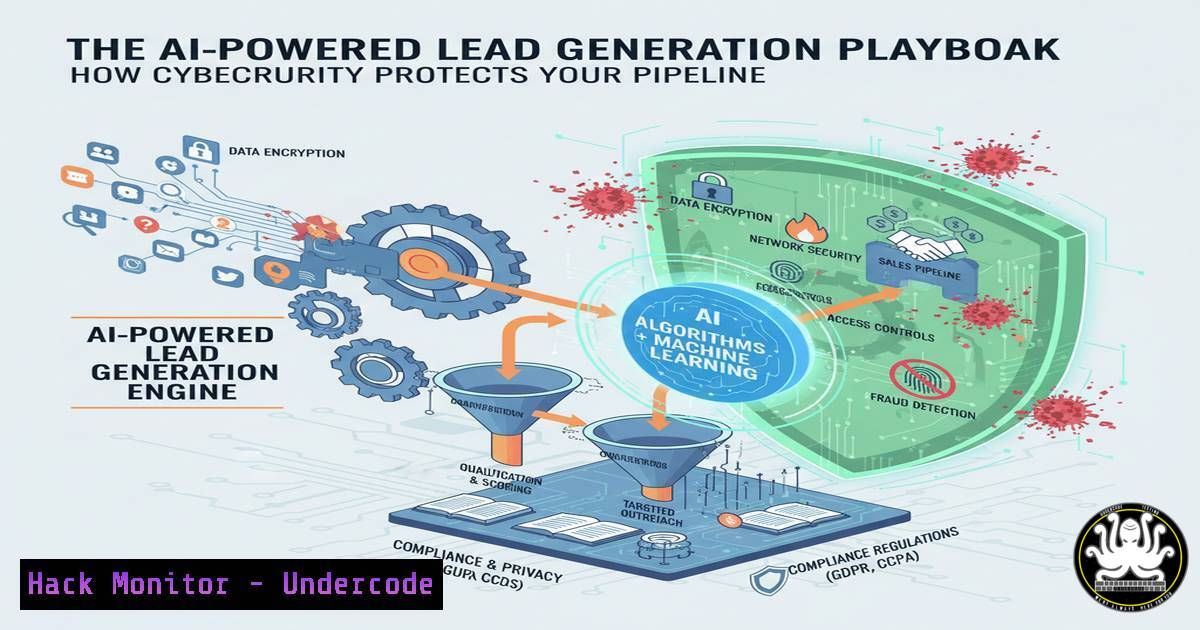
Introduction:
AI-driven lead generation is revolutionizing sales and marketing, but it introduces significant cybersecurity and data privacy risks. As businesses integrate AI tools to automate outreach and manage customer data, securing these systems against exploitation becomes paramount to protecting both company assets and client trust. This article explores the critical intersection of AI automation and cybersecurity, providing technical safeguards for modern lead generation platforms.
Learning Objectives:
- Understand critical security vulnerabilities in AI-driven marketing automation platforms
- Implement hardened security configurations for customer relationship management (CRM) and AI systems
- Develop monitoring and incident response protocols for marketing technology stacks
You Should Know:
1. Securing API Endpoints in Marketing Automation
 Scan for API vulnerabilities using OWASP ZAP
docker run -v $(pwd):/zap/wrk/:rw -t owasp/zap2docker-stable zap-baseline.py \
-t https://your-marketing-api.example.com -g gen.conf -r testreport.html

Test JWT token security
python3 jwt_tool.py <JWT_TOKEN_HERE> -C -d wordlist.txt
Step-by-step guide: Marketing platforms rely heavily on APIs to connect AI services with CRMs. Begin by scanning all external-facing endpoints using OWASP ZAP to identify common vulnerabilities like injection flaws or broken authentication. For platforms using JWT tokens, regularly audit token security using jwt_tool to detect weak signatures or exposed credentials. Implement rate limiting on all API endpoints to prevent brute force attacks against your lead data.
2. Hardening Database Security for Customer Data
-- Create least-privilege database user for AI application
CREATE USER 'ai_lead_user'@'localhost' IDENTIFIED BY 'complex-password-123';
GRANT SELECT, INSERT ON lead_database.leads TO 'ai_lead_user'@'localhost';
REVOKE DROP, DELETE, ALTER ON lead_database. FROM 'ai_lead_user'@'localhost';

-- Enable database auditing
INSTALL PLUGIN audit_log SONAME 'audit_log.so';
SET GLOBAL audit_log_format='JSON';
SET GLOBAL audit_log_policy=ALL;
Step-by-step guide: Customer data represents the crown jewels in AI lead generation. Implement principle of least privilege by creating dedicated database users with only necessary permissions. Enable comprehensive auditing to track all database access, particularly important for compliance with data protection regulations. Regularly review audit logs for suspicious patterns indicating potential data exfiltration attempts.
3. Network Security for Cloud-Based Marketing Tools
 Configure cloud security groups to restrict unnecessary access
aws ec2 authorize-security-group-ingress \
--group-id sg-903004f8 \
--protocol tcp \
--port 443 \
--cidr 192.0.2.0/24

Set up VPC flow logging for monitoring
aws logs create-log-group --log-group-name "VPCFlowLogs"
aws ec2 create-flow-logs \
--resource-type VPC \
--resource-id vpc-12345678 \
--traffic-type ALL \
--log-group-name "VPCFlowLogs"
Step-by-step guide: AI marketing platforms often operate in cloud environments where proper network segmentation is crucial. Configure security groups to allow only necessary traffic between your AI services, CRM, and external endpoints. Implement VPC flow logging to monitor network traffic for anomalous patterns that might indicate data exfiltration or unauthorized access attempts to your lead generation infrastructure.
4. AI Model Security and Input Validation
import re
from functools import wraps

def sanitize_ai_input(input_text):
 Remove potentially malicious content from AI prompts
cleaned_text = re.sub(r'[;\/--]', '', input_text)
if len(cleaned_text) > 1000:  Prevent resource exhaustion
raise ValueError("Input exceeds maximum length")
return cleaned_text

def validate_email_context(email_content):
 Prevent prompt injection in AI-driven email generation
blacklist = ['system', 'sudo', 'admin', 'password reset']
if any(term in email_content.lower() for term in blacklist):
raise SecurityException("Potential malicious content detected")
Step-by-step guide: AI models used for lead generation are vulnerable to prompt injection and training data poisoning. Implement rigorous input validation and sanitization for all data fed into AI systems. Create content validation checks that screen for potentially malicious instructions that could compromise your AI’s output or expose sensitive information through social engineering attacks.
5. Incident Response for Marketing Platform Breaches
 Isolate compromised marketing automation instance
aws ec2 modify-instance-attribute --instance-id i-1234567890abcdef0 --no-disable-api-termination
aws ec2 stop-instances --instance-ids i-1234567890abcdef0

Preserve forensic evidence
aws ec2 create-image --instance-id i-1234567890abcdef0 --name "Forensic-Copy-$(date +%Y%m%d)"
tar czvf marketing-app-logs-$(date +%Y%m%d).tar.gz /var/log/marketing-app/
Step-by-step guide: When security incidents occur in marketing platforms, immediate containment is essential. Isolate compromised instances to prevent further data exposure while preserving forensic evidence for analysis. Maintain regular backups of both application data and system logs to support recovery and investigation efforts following a security incident.
6. Secure Integration Between AI Services and CRMs
import hmac
import hashlib
import time

def verify_webhook_signature(payload, signature, secret):
 Validate webhook integrity between AI service and CRM
computed_signature = hmac.new(
secret.encode('utf-8'),
payload.encode('utf-8'),
hashlib.sha256
).hexdigest()
return hmac.compare_digest(computed_signature, signature)

def encrypt_lead_data(lead_data, key):
 Encrypt sensitive lead information before storage
from cryptography.fernet import Fernet
fernet = Fernet(key)
encrypted_data = fernet.encrypt(lead_data.encode())
return encrypted_data
Step-by-step guide: Secure data transmission between AI services and CRM platforms using signed webhooks and encryption. Implement HMAC verification for all incoming webhook requests to ensure data integrity and authenticity. Encrypt sensitive lead information both in transit and at rest, using strong encryption standards to protect personally identifiable information (PII) from unauthorized access.
7. Monitoring and Alerting for Suspicious Activities
 Set up real-time monitoring for marketing platform
aws cloudwatch put-metric-alarm \
--alarm-name "HighAPICalls" \
--alarm-description "Alarm when API calls exceed threshold" \
--metric-name APICallCount \
--namespace AWS/ApiGateway \
--statistic Sum \
--period 300 \
--threshold 1000 \
--comparison-operator GreaterThanThreshold

Configure security hub for compliance monitoring
aws securityhub enable-security-hub \
--enable-default-standards \
--region us-west-2
Step-by-step guide: Implement comprehensive monitoring for your AI marketing infrastructure to detect anomalies indicating potential security incidents. Configure CloudWatch alarms to trigger when API call volumes exceed expected patterns, which might indicate credential compromise or data scraping. Enable AWS Security Hub to maintain continuous compliance monitoring and receive alerts about security misconfigurations in your marketing technology stack.
What Undercode Say:
- AI-driven marketing platforms significantly expand the attack surface, requiring security-by-design implementation from the initial architecture phase
- The convergence of customer data, AI decision-making, and automation creates unique vulnerabilities that traditional security controls may not adequately address
- Organizations must balance lead generation effectiveness with data protection obligations, implementing technical controls that enforce privacy without crippling functionality
The rapid adoption of AI in lead generation represents a paradigm shift in marketing technology security. Unlike traditional systems, AI platforms introduce dynamic attack vectors through their learning capabilities and extensive data processing. Security teams must evolve beyond perimeter defense to implement data-centric protection strategies that safeguard customer information throughout the AI lifecycle. The technical controls outlined provide a foundation, but ongoing adaptation will be necessary as AI capabilities advance and attackers develop new exploitation techniques.
Prediction:
Within two years, we’ll witness the first major regulatory actions targeting AI marketing platforms that fail to implement adequate data protection controls, with fines potentially exceeding current GDPR penalties. Simultaneously, sophisticated threat actors will develop AI-specific attack frameworks specifically designed to compromise automated lead generation systems, leading to unprecedented scales of data exfiltration. Organizations that proactively implement the security measures outlined will be positioned to capitalize on AI-driven growth while maintaining customer trust and regulatory compliance.
🎯Let’s Practice For Free:
IT/Security Reporter URL:
Reported By: Jack Ryan – Hackers Feeds
Extra Hub: Undercode MoN
Basic Verification: Pass ✅


