Listen to this Post
Introduction
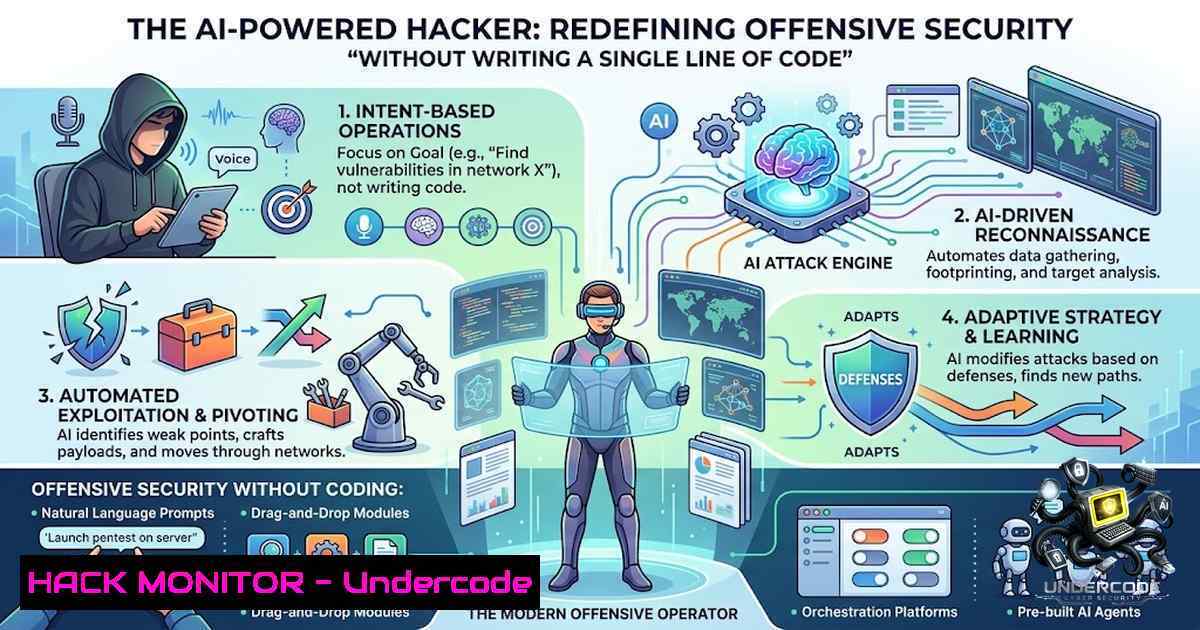
The cybersecurity landscape is undergoing a paradigm shift as Large Language Models (LLMs) like Claude MYTHOS and GPT-5.6 Cyber revolutionize how security professionals approach vulnerability discovery, reconnaissance, and defensive operations. While traditional hacking demanded extensive programming knowledge, AI-powered security testing now enables practitioners to accelerate their workflow through natural language interfaces and automated analysis, democratizing ethical hacking for a broader audience.
Learning Objectives
- Master the integration of AI assistants for automated reconnaissance and vulnerability scanning workflows
- Understand offensive and defensive security methodologies enhanced by LLM-based tools
- Develop practical skills in AI-assisted penetration testing without requiring advanced programming expertise
You Should Know
1. AI-Powered Reconnaissance and Vulnerability Discovery
Modern security testing leverages AI to process massive datasets and identify potential attack vectors with unprecedented speed. Tools like Claude MYTHOS and GPT-5.6 Cyber can analyze network configurations, code repositories, and system architectures to highlight security gaps that would typically require hours of manual review.
Step-by-Step AI-Assisted Reconnaissance:
- Initial Target Analysis: Use AI to analyze target domains by providing URLs or IP ranges for automated OSINT gathering
- Vulnerability Pattern Recognition: Employ AI to compare system configurations against known CVE databases and security best practices
- Report Generation: Generate comprehensive vulnerability assessments with prioritized remediation steps
Example Linux Reconnaissance Command:
 Automated subdomain enumeration and AI analysis
nmap -sV -p- -T4 target.com | tee scan_results.txt
 Send results to AI for analysis (using API integration)
curl -X POST https://api.gpt-5.6.ai/analyze \
-H "Content-Type: application/json" \
-d '{"file": "scan_results.txt", "analysis_type": "vulnerability_assessment"}'
Windows Equivalent:
 Port scanning using PowerShell
Test-1etConnection -ComputerName target.com -Port 80,443,22,21,8080
 Export for AI analysis
Get-1etTCPConnection | Export-Csv -Path tcp_connections.csv
2. Ethical Hacking Framework with AI Integration
The foundation of ethical hacking remains unchanged—authorization, scope definition, and responsible disclosure—but AI introduces new dimensions to each phase. Understanding how to properly leverage AI tools within authorized testing frameworks ensures compliance with legal and professional standards.
AI-Enhanced Penetration Testing Workflow:
- Planning and Scoping: Define test parameters and obtain proper authorization
- AI-Assisted Discovery: Utilize LLMs for pattern analysis and anomaly detection
- Automated Exploitation: Generate proof-of-concept exploits through AI suggestions
- Reporting: Create comprehensive documentation with AI-generated remediation strategies
Example AI Integration Code:
 Python script for AI-assisted vulnerability scanning
import requests
import json

def ai_vulnerability_analysis(target_data):
api_endpoint = "https://api.claude-mythos.ai/analyze"
headers = {"Authorization": "Bearer YOUR_API_KEY"}
payload = {"data": target_data, "analysis_type": "vulnerability"}

response = requests.post(api_endpoint, headers=headers, json=payload)
return json.loads(response.text)

Usage example
results = ai_vulnerability_analysis("target_system_config.json")
print(json.dumps(results, indent=2))
3. Defensive Security Automation with AI
Modern defensive strategies leverage AI for real-time threat detection, incident response, and security orchestration. The combination of traditional security tools with AI-powered analysis creates a robust defense-in-depth approach.
Implementing AI-Driven Defensive Measures:
- Log Analysis: Deploy AI to process system logs and identify suspicious patterns
- Threat Intelligence: Integrate AI with SIEM systems for enhanced detection
3. Automated Response: Configure AI-driven incident response playbooks
Linux Log Analysis Command:
 Real-time log monitoring with AI analysis
tail -f /var/log/auth.log | while read line; do
echo "$line" | curl -X POST -d @- https://api.cyberai.ai/threat-detect
done
Windows Event Log Analysis:
 Export Windows security logs for AI analysis
Get-WinEvent -FilterHashtable @{LogName='Security'; StartTime=(Get-Date).AddHours(-24)} |
Export-Csv -Path security_logs.csv

Automate AI analysis
$logs = Get-Content security_logs.csv
Invoke-RestMethod -Uri "https://api.gpt-5.6.ai/threat-detect" -Method Post -Body $logs
4. API Security and Cloud Hardening
Cloud infrastructure and APIs represent the modern attack surface, requiring specialized AI-assisted security approaches. Understanding how to secure these environments is crucial for any security practitioner.
Cloud Security Hardening Commands:
AWS CLI Security Audit:
 Audit S3 bucket permissions
aws s3api list-buckets | jq '.Buckets[].Name' | while read bucket; do
aws s3api get-bucket-acl --bucket $bucket
done

AI analysis of security groups
aws ec2 describe-security-groups | \
curl -X POST -H "Content-Type: application/json" -d @- \
https://api.cloudai.security/analyze
Azure Security Commands:
 Azure security assessment
az security assessment list | \
curl -X POST -H "Content-Type: application/json" -d @- \
https://api.azure-ai.security/analysis
5. Vulnerability Exploitation and Mitigation
Understanding both exploitation and mitigation techniques is essential for comprehensive security testing. AI can assist in generating test cases and identifying the most critical vulnerabilities.
Automated Vulnerability Testing Script:
!/usr/bin/env python3
import subprocess
import json

def security_scanner(target):
 Run security tools
nmap_output = subprocess.check_output(["nmap", "-sV", target])
nikto_output = subprocess.check_output(["nikto", "-h", target])

Prepare for AI analysis
scan_data = {
"target": target,
"nmap": nmap_output.decode('utf-8'),
"nikto": nikto_output.decode('utf-8')
}

Send to AI for comprehensive analysis
response = requests.post(
"https://api.gpt-5.6.ai/vulnerability-assessment",
json=scan_data
)
return response.json()

if <strong>name</strong> == "<strong>main</strong>":
target = input("Enter target IP or domain: ")
results = security_scanner(target)
print(json.dumps(results, indent=2))
6. Ethical Considerations and Professional Standards
The integration of AI in security testing raises important ethical considerations. Practitioners must ensure their use of AI tools aligns with professional standards and legal requirements.
Ethical AI Security Testing Framework:
- Authorization Verification: Always confirm written authorization before testing
- Scope Definition: Clearly define test boundaries and limitations
- Data Protection: Securely handle any sensitive data discovered during testing
- Responsible Disclosure: Follow proper procedures for vulnerability reporting
- Continual Learning: Stay updated on AI security developments and regulations
What Undercode Say
- AI is an Enabler, Not a Replacement: While AI tools significantly accelerate security workflows, the fundamental understanding of security principles, ethical considerations, and professional judgment remains essential for effective security practitioners. AI should augment, not replace, human expertise.
-
Democratization of Security Knowledge: The lowering of technical barriers through AI integration allows a broader audience to participate in cybersecurity, potentially addressing the industry’s critical talent shortage while maintaining professional standards.
-
Evolving Threat Landscape: As AI tools become more sophisticated, both offensive and defensive security must continually adapt. Practitioners should focus on understanding AI limitations and ethical boundaries.
-
The Importance of Practical Application: Hands-on experience with AI-enhanced tools, combined with foundational security knowledge, creates more effective security professionals who can leverage AI capabilities while maintaining critical thinking.
-
Professional Development: Investing in AI cybersecurity training represents a forward-thinking career move, positioning practitioners at the intersection of two rapidly evolving fields.
Prediction
-
+1 The democratization of security testing through AI will accelerate vulnerability discovery and remediation, potentially reducing the global average time to patch critical vulnerabilities from weeks to days.
-
+1 Training programs combining AI with cybersecurity will become industry standard, creating a new generation of security professionals equipped with enhanced capabilities for complex threat detection.
-
-1 The increased accessibility of AI-powered security tools may lead to proliferation of script kiddies and amateur “hackers” who misunderstand the ethical and legal boundaries of security testing.
-
-1 As AI capabilities grow, organizations may become over-reliant on automated solutions, potentially creating new blind spots in security programs that require human judgment.
-
+1 The integration of AI in cybersecurity training programs will bridge the gap between theoretical knowledge and practical application, producing more job-ready professionals.
-
+1 Advanced AI models like Claude MYTHOS and GPT-5.6 Cyber will evolve to provide real-time security recommendations, fundamentally changing incident response and threat hunting methodologies.
-
-1 The rapid evolution of AI security tools may outpace regulatory frameworks, creating temporary gaps in governance and compliance standards.
-
+1 Organizations investing in AI-enhanced security training will gain significant competitive advantages in threat detection and response capabilities.
-
-1 The learning curve for effectively utilizing AI in security contexts may create new digital divides between those with and without access to advanced AI resources.
-
+1 The fundamental shift toward AI-assisted security practices will reduce burnout among security professionals by automating routine tasks and focusing human expertise on complex problem-solving.
▶️ Related Video (82% Match):
https://www.youtube.com/watch?v=3tafFGKTtZE
🎯Let’s Practice For Free:
🎓 Live Courses & Certifications:
Join Undercode Academy for Verified Certifications
🚀 Request a Custom Project:
Secure, high-velocity infrastructure and disruptive technological engineering. Contact our engineering team for high-tier development and proprietary systems:
[email protected]
💎 Smart Architecture | 🛡️ Secure by Design | ⭐ Trusted by Thousands
IT/Security Reporter URL:
Reported By: https://lnkd.in/p/d4fGik4K – Hackers Feeds
Extra Hub: Undercode MoN
Basic Verification: Pass ✅


