Listen to this Post
Introduction:
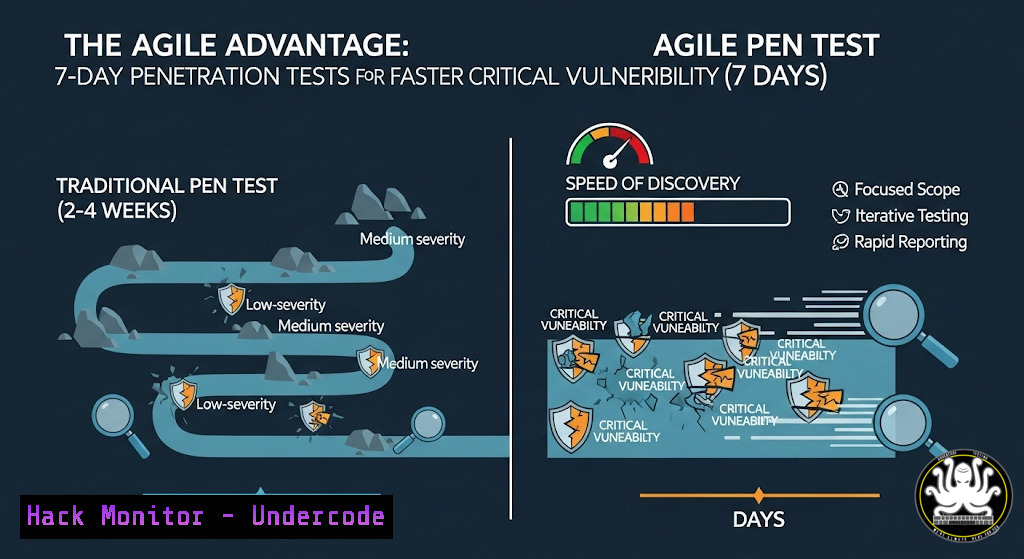
In the world of cybersecurity, the duration of a penetration test is a critical factor often misunderstood. A concise, focused engagement of 7-10 days is strategically superior to drawn-out assessments, as it mirrors the tactics of real-world attackers and forces efficiency, delivering actionable intelligence without diluting urgency or inflating costs unnecessarily.
Learning Objectives:
- Understand the strategic rationale behind time-boxed penetration testing windows.
- Learn key commands and methodologies for efficient, high-impact vulnerability discovery.
- Develop skills to prioritize and exploit critical vulnerabilities rapidly to maximize test value.
You Should Know:
1. Efficient Network Reconnaissance with Nmap
`sudo nmap -sC -sV -O –top-ports 1000 -oA initial_scan
This Nmap command performs a comprehensive initial reconnaissance. It runs default scripts (-sC), probes open ports to determine service/version info (-sV), attempts OS detection (-O), and scans the top 1000 most common ports, outputting results in all major formats (-oA). In a time-constrained test, this provides a rapid, high-level overview of the attack surface, allowing testers to immediately identify low-hanging fruit and obvious misconfigurations.
2. Web Application Directory Bruteforcing with Gobuster
`gobuster dir -u https://target.com/ -w /usr/share/wordlists/dirb/common.txt -x php,html,js -t 50`
Gobuster efficiently bruteforces directories and file paths on a web application. The `dir` mode specifies directory enumeration, `-u` defines the URL, `-w` points to a common wordlist, and `-x` checks for files with these extensions. The `-t` flag sets 50 threads for speed. This is crucial for quickly discovering hidden endpoints, administrative interfaces, or sensitive files like backup copies that are often primary targets for attackers in short bursts of activity.
3. Rapid Vulnerability Assessment with Nessus
`nessuscli scan launch –policy “Basic Network Scan” –targets
While GUI-based, Nessus can be launched from the command line to initiate a pre-configured scan policy against a target. In a professional engagement, using a credentialed “Advanced Scan” policy is more effective. This automated assessment quickly identifies a wide array of known vulnerabilities (CVEs), misconfigurations, and compliance failures, providing a solid baseline of findings to complement manual testing within the first day of the engagement.
4. Subdomain Enumeration for Scope Expansion
`subfinder -dL domains.txt -o subdomains.txt | httpx -o live_subdomains.txt`
This pipeline uses Subfinder to passively discover subdomains for a list of target domains (-dL domains.txt) and outputs them. The results are then piped to httpx, which probes them to determine which are live web servers, filtering out dead endpoints. Rapidly expanding the target scope from a single domain to all its associated subdomains is a force multiplier in a short test, often uncovering development, staging, or forgotten systems that are less secure.
5. Password Spraying Attack Simulation
`netexec smb /24 -u users.txt -p ‘Spring2024!’ –continue-on-success`
This Netexec (a modernized CrackMapExec) command performs an SMB password spray across a subnet. It takes a list of usernames (-u) and tests a single common password against all of them, continuing after success (--continue-on-success). This technique is low-and-slow, avoiding account lockouts, and is highly effective in short engagements for quickly identifying weak password policies and compromised credentials that grant immediate access.
6. SQL Injection Discovery with SQLmap
`sqlmap -u “https://target.com/page?id=1” –batch –level=3 –risk=3 –dbs`
SQLmap automates the detection and exploitation of SQL injection flaws. The `-u` flag specifies the potentially vulnerable URL parameter. `–batch` runs in non-interactive mode, accepting default prompts. `–level` and `–risk` increase the thoroughness of tests. `–dbs` attempts to enumerate available databases upon successful injection. This tool can quickly validate and exploit one of the most critical web app vulnerabilities, leading to massive data breaches.
7. Privilege Escalation Check on Windows
`winPEASany.exe quiet cmd fast`
WinPEAS (Privilege Escalation Awesome Scripts) is a cornerstone of post-exploitation. Executed on a compromised Windows host, it automatically searches for misconfigurations, weak services, insecure file permissions, stored credentials, and other common privilege escalation vectors. The `quiet` and `fast` modes provide a concise output, allowing a tester to rapidly identify the most probable path to SYSTEM or Administrator privileges, a critical step for demonstrating impact quickly.
What Undercode Say:
- Focus Over Duration: The value of a penetration test is not measured in days but in the focused intensity of the assessment. A shorter window forces testers to prioritize tactics that real attackers use, leading to more relevant and critical findings.
- Actionable Intelligence: The primary goal is to generate findings that the client can immediately act upon. A 30-day test often produces a backlog of low-severity issues that distract from remediating the critical vulnerabilities that pose an immediate threat.
- The 7-10 day engagement is not a limitation; it is a simulation of a realistic attack cycle. Advanced Persistent Threats (APTs) may dwell for months, but their initial compromise and lateral movement often occur in a frantic, condensed period. By mirroring this, the test provides a truer assessment of the organization’s defensive readiness and its ability to detect and respond to a swift, targeted incursion. The mantra should be “test smarter, not longer.”
Prediction:
The industry will continue to shift towards shorter, more focused “assumed breach” and purple team engagements, moving away from lengthy traditional penetration tests. The future of security validation lies in continuous, automated testing integrated into DevOps pipelines (e.g., DAST/SAST), supplemented by brief, high-intensity manual simulations aimed at testing detective and responsive controls rather than just preventive ones. The concept of a “30-day pen test” will become increasingly obsolete, replaced by iterative, targeted assessments aligned with agile development cycles.
🎯Let’s Practice For Free:
IT/Security Reporter URL:
Reported By: Imavropoulos In – Hackers Feeds
Extra Hub: Undercode MoN
Basic Verification: Pass ✅


