Listen to this Post
Introduction:
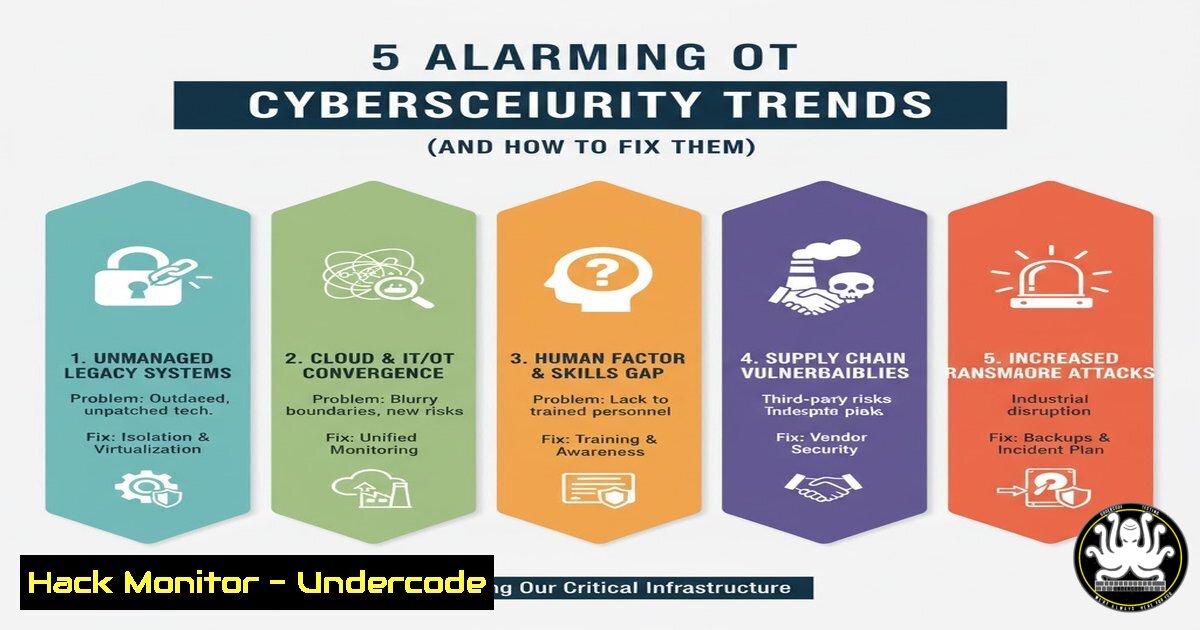
Operational Technology (OT) cybersecurity is at a critical juncture, where common misconceptions and flawed implementations are creating massive security gaps in industrial environments. From an over-reliance on technical controls to fundamentally misunderstanding risk assessment, asset owners are accumulating cyber debt that threatens operational integrity and safety.
Learning Objectives:
- Identify and rectify the five most common flawed approaches in OT security programs
- Implement a fundamentals-first methodology aligned with IEC 62443 principles
- Transition from product-centric to process-driven OT cybersecurity maintenance
You Should Know:
1. Beyond the Firewall: Understanding Defense in Depth
While network segmentation is crucial, relying solely on perimeter controls creates false confidence. True defense in depth requires layered technical, administrative, and physical controls.
 Using nmap to identify improperly segmented OT networks
nmap -sS -sU -p 1-65535 -T4 -A -v 192.168.1.0/24
nmap --script vulners -sV 10.10.1.0/24
nmap --script smb-security-mode -p 445 192.168.1.1-254
Step-by-step guide: These nmap commands help identify network segmentation failures by scanning for open ports across TCP/SYN (-sS) and UDP (-sU) protocols, running version detection (-sV) with vulnerability scripting, and checking SMB security configurations. Regular network mapping ensures segmentation policies are actually enforced rather than assumed.
2. Purdue Model Implementation Gone Wrong
The Purdue Model becomes ineffective when organizations create DMZs but ignore what traffic bypasses them through unauthorized connections and shadow IT.
 Using tcpdump to monitor unauthorized cross-zone traffic
tcpdump -i any -w ot_traffic.pcap host 10.10.1.50 and not net 192.168.1.0/24
tshark -r ot_traffic.pcap -Y "tcp.flags.syn==1 && tcp.flags.ack==0" -T fields -e ip.src -e ip.dst
Step-by-step guide: Capture and analyze network traffic between OT and IT zones to identify unauthorized communications. The first command captures all traffic to/from a specific OT asset that shouldn’t communicate outside its subnet, while the second extracts TCP SYN packets from the capture file to map connection attempts.
3. Moving Beyond Nessus: Comprehensive OT Risk Assessment
Vulnerability scanners alone cannot assess OT risk, as they miss operational context, safety implications, and environmental factors.
 PowerShell script to inventory OT assets and configurations
Get-WmiObject -Class Win32_ComputerSystem | Select-Object Name, Domain, Manufacturer, Model
Get-WmiObject -Class Win32_Product | Select-Object Name, Version, Vendor | Export-CSV ot_software.csv
Get-NetTCPConnection | Where-Object {$_.LocalPort -lt 1024} | Select-Object LocalAddress, LocalPort, State
Step-by-step guide: This PowerShell inventory script gathers critical system information, installed software, and active network connections on Windows-based OT assets. Combined with manual assessment of operational criticality and safety impact, this forms the foundation of a proper OT risk assessment.
4. Technical Stack Reality Check
Vendor demonstrations often overpromise capabilities. Organizations must validate that security tools actually work in their specific OT environment without disrupting operations.
 Testing security tool effectiveness in OT environment
 Passive monitoring validation
tcpdump -i eth0 -c 1000 -w baseline_capture.pcap
capinfos baseline_capture.pcap
 EDR testing via simulated alerts
python3 -c "import socket; s=socket.socket(); s.connect(('192.168.1.100',445))"
Step-by-step guide: Establish baseline network traffic, then test security tool detection capabilities with controlled exercises. The Python script generates outbound connection attempts that should trigger alerts in properly configured EDR systems, validating detection effectiveness.
5. Third-Party Assessment Pitfalls
Many third-party assessors apply IT methodologies that are inappropriate for OT environments, demanding excessive privileges and using disruptive tools.
 Non-disruptive OT assessment techniques
 Passive asset discovery using ARP monitoring
arp-scan --localnet --interface=eth0
 Network service fingerprinting without exploitation
nmap -sS -T2 --script banner -p 102,502,20000,44818 10.10.1.0/24
 Configuration review commands
cat /etc/passwd | grep -E "^(root|admin|operator)"
ps aux | grep -E "(scada|hmi|plc|rtu)"
Step-by-step guide: These commands enable assessment without operational disruption. ARP scanning identifies active devices, targeted nmap scans fingerprint industrial protocols without exploitation, and configuration reviews identify privilege and process issues—all without requiring admin passwords or causing downtime.
6. Fundamental Training Gap Analysis
The skills gap in OT security cannot be filled by product training alone. Fundamental understanding of industrial processes and safety systems is essential.
 Building OT security lab for training
 Using open-source ICS components
docker pull scadacs/icsim
docker run -d --name icsim -p 20000:20000 scadacs/icsim
git clone https://github.com/dark-lbp/isf.git
cd isf && python3 isf.py
Step-by-step guide: Set up a safe OT training environment using open-source industrial control simulators. The ICSim docker container provides a realistic ICS environment for practice, while the Industrial Exploitation Framework (ISF) allows understanding attack techniques without impacting production systems.
7. Automated Maintenance and KPI Development
The maintenance phase represents the longest period in OT system lifecycle, requiring automated security monitoring and key performance indicators.
 OT security KPI automation script
 Weekly security posture assessment
$OTKPIs = @{
"UnpatchedCritical" = (Get-Hotfix | Where-Object {$<em>.InstalledOn -lt (Get-Date).AddDays(-30)}).Count
"UnauthorizedChanges" = (Get-EventLog -LogName Security -InstanceId 4663 -After (Get-Date).AddDays(-7)).Count
"FailedLogins" = (Get-EventLog -LogName Security -InstanceId 4625 -After (Get-Date).AddDays(-1)).Count
}
$OTKPIs | ConvertTo-Json | Out-File "ot_security_kpi</em>$(Get-Date -Format 'yyyyMMdd').json"
Step-by-step guide: This PowerShell script automates collection of key OT security metrics including patch compliance, unauthorized change detection, and authentication failures. Regular execution establishes baselines and tracks program effectiveness over time.
What Undercode Say:
- OT security cannot be purchased as a product stack; it must be built as an operational capability
- The maintenance phase determines long-term security effectiveness, not initial implementation
- Third-party assessments must adapt to OT constraints rather than demanding IT-level access
The fundamental issue in current OT security approaches is the misapplication of IT security paradigms without understanding operational constraints. Organizations are investing heavily in technical controls while neglecting the process maturity and personnel competency required for sustainable security. The trend toward checkbox compliance—installing recommended tools without understanding their operational impact or maintenance requirements—creates a facade of security that collapses under actual threat conditions. True OT security requires bridging the cultural and technical divide between IT and operations, focusing on what keeps processes running safely rather than what looks impressive in a sales demo.
Prediction:
Within the next 18-24 months, we will see a major OT security incident directly attributable to these flawed approaches, likely involving safety system compromise due to inadequate maintenance phase security. This will trigger regulatory shifts toward mandatory fundamental training and process-based certifications rather than technical implementation checkboxes. Organizations that invest now in building internal OT security competency rather than outsourcing to generic third parties will emerge as sector leaders, while those chasing shiny technology solutions will face increasing operational disruptions and security failures.
🎯Let’s Practice For Free:
IT/Security Reporter URL:
Reported By: Acprash Otcybersecurity – Hackers Feeds
Extra Hub: Undercode MoN
Basic Verification: Pass ✅


