Listen to this Post
Introduction:
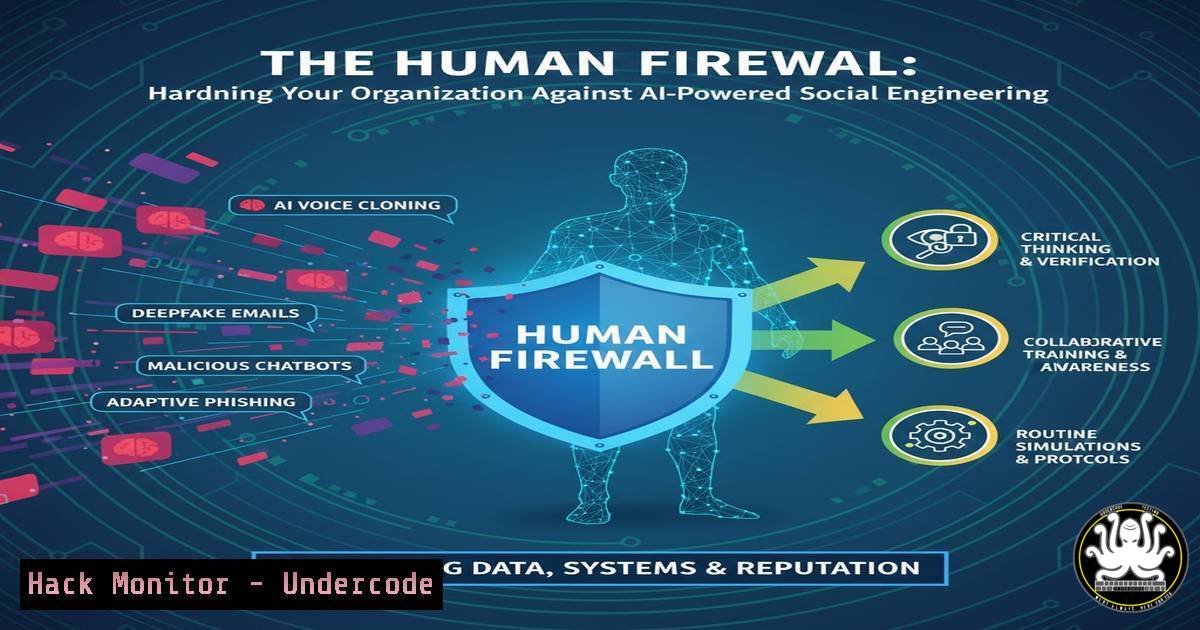
The convergence of artificial intelligence and social engineering is creating an unprecedented threat landscape where human risk is the primary attack vector. As discussed by industry leaders at events like HRMCon, defending against these advanced threats requires a multi-layered approach combining technical controls, continuous training, and robust security policies. This article provides the essential technical knowledge security teams need to build effective human-centric defenses.
Learning Objectives:
- Implement technical controls to detect and prevent AI-driven phishing and social engineering attacks
- Configure security tools to monitor for credential harvesting and unauthorized access
- Establish incident response procedures for human-factor security incidents
You Should Know:
- Detecting AI-Generated Phishing Domains with Command Line Tools
`whois example-suspicious-domain.com | grep -E “Creation Date|Registrar|Name Server”`
`nslookup -type=MX suspicious-domain.com`
`dig +short suspicious-domain.com TXT`
Step-by-step guide: AI-powered attacks often use newly registered domains with subtle typosquatting. The `whois` command reveals domain registration details—recent creation dates often indicate malicious domains. Use `nslookup` to check mail exchange records targeting your organization, and `dig` to examine TXT records for SPF/DKIM configurations that might be missing or poorly configured in phishing domains.
2. Analyzing Suspicious Email Headers for AI-Generated Content
`grep -i “message-id:\|received:\|from:\|subject:” email_headers.txt`
`cat email_headers.txt | grep -E “authentication-results|spf=|dkim=”`
`python3 -c “import re; text=open(’email.txt’).read(); print(‘Suspicious patterns:’, re.findall(r’urgent|immediately|action required’, text, re.IGNORECASE))”`
Step-by-step guide: AI-generated phishing emails often bypass traditional spam filters but leave traces in headers. Extract and examine email headers for inconsistencies in the “Received” chain and missing or failing SPF/DKIM authentication. The Python script helps identify common AI-generated urgency language patterns that might indicate social engineering attempts.
3. Monitoring for Credential Theft with PowerShell
`Get-WinEvent -FilterHashtable @{LogName=’Security’; ID=4625} | Where-Object {$_.TimeCreated -gt (Get-Date).AddHours(-24)}`
`(Get-MpComputerStatus).AntivirusSignatureVersion`
`Test-NetConnection -ComputerName suspicious-IP -Port 443`
Step-by-step guide: Monitor failed login attempts (Event ID 4625) that might indicate credential stuffing attacks. Regularly verify Windows Defender signatures are current, and test connections to potentially malicious IPs that may be hosting credential harvesting sites. These commands help identify early-stage credential compromise attempts.
4. Hardening Endpoints Against Social Engineering
`Get-AppLockerPolicy -Effective | Select-Object -ExpandProperty RuleCollections`
`Set-MpPreference -DisableRealtimeMonitoring $false -ExclusionPath “C:\temp”`
`reg add “HKLM\SOFTWARE\Policies\Microsoft\Windows Defender” /v “PUAProtection” /t REG_DWORD /d 1`
Step-by-step guide: Configure AppLocker policies to prevent execution of unauthorized applications that users might inadvertently run. Ensure real-time protection is enabled and configure Potentially Unwanted Application (PUA) protection via registry to block adware and other unwanted software that often accompanies social engineering attacks.
5. Network Monitoring for Data Exfiltration
`tcpdump -i any -w capture.pcap ‘host suspicious-domain.com and port 443’`
`netstat -an | findstr “ESTABLISHED” | findstr “:443″`
`iptables -A OUTPUT -p tcp –dport 443 -d malicious-domain.com -j DROP`
Step-by-step guide: Use tcpdump to capture traffic to suspected malicious domains, monitor established HTTPS connections that might indicate callback communications, and implement firewall rules to block known malicious endpoints. These commands help detect and prevent data exfiltration following successful social engineering.
6. API Security for AI Integration Points
`curl -H “Authorization: Bearer $TOKEN” https://api.company.com/v1/ai/models | jq ‘.models[] | select(.access==”public”)’`
`nmap -sV –script http-security-headers target-api.company.com`
`openssl s_client -connect api.company.com:443 -servername api.company.com | openssl x509 -noout -dates`
Step-by-step guide: As organizations integrate AI tools, improperly secured APIs become prime targets. Audit AI model endpoints for improper public access, scan for missing security headers, and verify SSL certificate validity. These commands help secure the AI integration points that attackers increasingly target.
7. Cloud Security Configuration Audits
`aws iam get-account-authorization-details –query “UserDetailList[?UserName==’suspicious-user’]”`
`az ad user list –filter “displayName eq ‘suspicious-user'”`
`gcloud projects get-iam-policy project-id –format=json | jq ‘.bindings[] | select(.role==”roles/owner”)’`
Step-by-step guide: Social engineering often targets cloud credentials. Regularly audit IAM policies across AWS, Azure, and GCP environments to identify over-privileged accounts and suspicious users. These commands help maintain least-privilege access in cloud environments where human error can have catastrophic consequences.
What Undercode Say:
- AI-powered social engineering requires moving beyond traditional security awareness to technical enforcement
- Human risk management must integrate continuous technical monitoring with behavioral science
- The most vulnerable attack vector remains the intersection between human psychology and digital interfaces
The evolution of AI has democratized sophisticated social engineering, enabling attackers to generate highly personalized phishing campaigns at scale. While technical controls are essential, they must be complemented by security cultures that recognize human factors as integral to defense architecture. Organizations that treat human risk as a purely training issue will remain vulnerable; those that implement the technical controls outlined above while fostering security-minded behaviors will build resilient human firewalls capable of adapting to evolving AI threats.
Prediction:
Within two years, AI-driven social engineering will evolve to include real-time voice synthesis and deepfake video capabilities that can convincingly impersonate executives and bypass multi-factor authentication. Organizations that fail to implement zero-trust architectures with behavioral analytics and continuous authentication will experience a 300% increase in successful business email compromise attacks, forcing a fundamental rearchitecture of identity and access management systems toward passwordless, biometric-based solutions with AI-powered anomaly detection.
🎯Let’s Practice For Free:
IT/Security Reporter URL:
Reported By: Elisenicolepeterson Hrmcon2025 – Hackers Feeds
Extra Hub: Undercode MoN
Basic Verification: Pass ✅


