Listen to this Post
Introduction
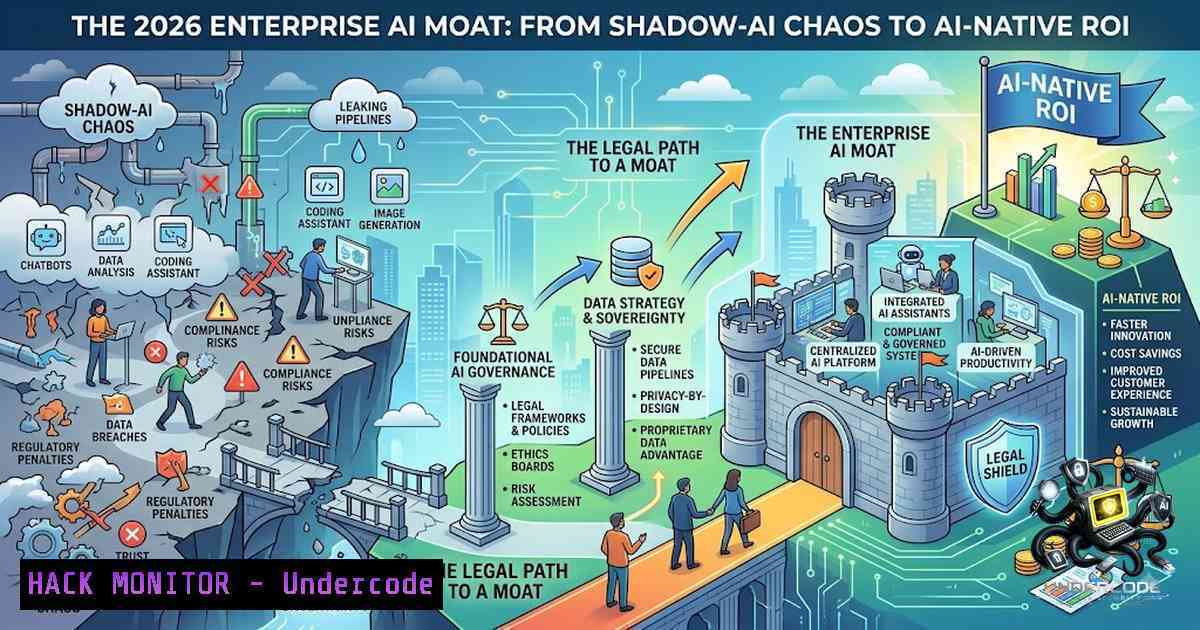
The boardroom conversation has shifted from “Should we adopt AI?” to “Why aren’t we seeing ROI yet?”—and the answer lies in where enterprises fall across three distinct AI states. With 78% of enterprises chasing AI in 2026 but only 20% capturing the majority of economic gains, the gap between AI experimentation and AI-1ative operations has become the defining competitive differentiator of the decade.
Learning Objectives
- Identify the three enterprise AI states—Stalled, Shadow-AI, and AI-1ative—and assess your organization’s current position
- Implement technical controls to detect, govern, and remediate Shadow-AI across cloud and on-premises environments
- Deploy data infrastructure hardening techniques that enable production-grade AI at scale
- Apply AI governance frameworks (NIST AI RMF, ISO 42001) to operationalize compliance and risk management
- Execute infrastructure security hardening for AI workloads across Linux, Windows, and Kubernetes environments
You Should Know
1. The Three Enterprise AI States of 2026
Stalled organizations remain trapped in perpetual pilots—siloed data, isolated proofs-of-concept, and zero core process impact. IDC research indicates that 67% of enterprises cite data readiness as their primary AI scaling barrier, a figure that has remained stubbornly consistent despite years of AI investment.
Shadow-AI represents a more insidious threat. Employees leverage ChatGPT and other unvetted AI tools surreptitiously—productivity rises, but risks skyrocket. According to Akamai research, nearly half of enterprise AI use bypasses corporate security, creating massive visibility gaps. Organizations with high levels of shadow AI experience breach costs averaging $670,000 higher than those with minimal unauthorized AI deployment. The 2026 Vercel breach exemplifies this: an employee used an unvetted AI tool, attackers exploited it as a trusted link, and $2M was extorted.
AI-1ative enterprises embed AI into operations, compounding ROI quarter after quarter. NVIDIA’s 2026 State of AI survey of over 3,200 organizations found that 88% of respondents reported positive ROI impact on annual revenue, with nearly a third seeing increases exceeding 10%.
Step-by-Step: Audit Your AI State
Linux (audit AI tool usage):
 Detect unauthorized AI tool traffic
sudo tcpdump -i any -1 'port 443' | grep -E "chatgpt|claude|gemini|copilot"

Audit installed AI-related packages
dpkg -l | grep -E "tensorflow|pytorch|transformers|openai"

Check for shadow AI processes
ps aux | grep -E "python.ai|node.ai|gpu" | grep -v grep
Windows (PowerShell):
 Detect AI tool usage via network connections
Get-1etTCPConnection | Where-Object {$_.RemotePort -eq 443} | Select-Object RemoteAddress

Audit installed AI applications
Get-WmiObject -Class Win32_Product | Where-Object {$_.Name -match "AI|ChatGPT|Copilot"}

Check running AI-related processes
Get-Process | Where-Object {$_.ProcessName -match "python|node|ai"}
2. Shadow-AI Remediation: Access Control Over Data Leakage
The threat model for Shadow-AI has evolved. It’s no longer primarily about what employees type into public AI tools—it’s about which AI agents are running inside the organization, what enterprise systems they’re connected to, and what actions they’re authorized to take. Security teams must shift from usage policies and domain blocks to comprehensive AI agent discovery and access governance.
Step-by-Step: Implement Shadow-AI Controls
Network-level blocking (Linux iptables):
 Block unauthorized AI service domains
sudo iptables -A OUTPUT -d chatgpt.com -j DROP
sudo iptables -A OUTPUT -d claude.ai -j DROP
sudo iptables -A OUTPUT -d gemini.google.com -j DROP

Log all AI-related traffic for monitoring
sudo iptables -A OUTPUT -m string --string "api.openai" --algo bm -j LOG --log-prefix "SHADOW-AI: "
Windows Firewall (PowerShell):
 Block unauthorized AI domains via hosts file
Add-Content -Path C:\Windows\System32\drivers\etc\hosts -Value "127.0.0.1 chatgpt.com"
Add-Content -Path C:\Windows\System32\drivers\etc\hosts -Value "127.0.0.1 claude.ai"

Create firewall rules to block AI services
New-1etFirewallRule -DisplayName "Block-ChatGPT" -Direction Outbound -RemoteAddress "chatgpt.com" -Action Block
Kubernetes network policy (restrict AI agent egress):
apiVersion: networking.k8s.io/v1
kind: NetworkPolicy
metadata:
name: restrict-ai-egress
spec:
podSelector:
matchLabels:
app: ai-agent
policyTypes:
- Egress
egress:
- to:
- namespaceSelector:
matchLabels:
name: approved-ai-services
ports:
- protocol: TCP
port: 443
- Data Infrastructure: The Unsexy Foundation of AI-1ative Success
The differentiating trait between AI winners and losers isn’t better technology, bigger budgets, or talent—it’s operational discipline around data infrastructure. Enterprises successfully scaling AI share one trait: they solved data infrastructure before pursuing AI ambition. Data infrastructure requires significant budget, time, and organizational patience with no immediate visible output—yet these investments determine whether AI deployments deliver sustained business value.
Step-by-Step: Data Infrastructure Hardening
Implement medallion architecture (Linux data pipeline):
 Bronze layer: Raw data ingestion
 Using Apache Kafka for streaming
kafka-topics.sh --create --topic raw-sales-data --bootstrap-server localhost:9092

Silver layer: Cleaned/validated data
 Using Apache Spark for transformation
spark-submit --class CleanDataJob --master yarn clean_data_job.jar

Gold layer: Aggregated/curated data for AI
 Using Delta Lake for ACID compliance
spark.sql("CREATE TABLE gold.sales_aggregated USING delta AS SELECT ...")
Windows data pipeline (Azure Synapse):
 Create data pipeline using Azure CLI
az synapse pipeline create --1ame "AI-Data-Ingestion" --workspace-1ame "ai-workspace"

Set up data lineage tracking
az synapse pipeline-run set --pipeline-1ame "AI-Data-Ingestion" --run-id $runId
Data quality validation:
 Python data validation script for AI pipelines
import pandas as pd
from great_expectations.dataset import PandasDataset

def validate_ai_data(df):
"""Validate data quality for AI training"""
dataset = PandasDataset(df)

Check for null values
assert dataset.expect_column_values_to_not_be_null('target_variable').success

Check for data drift
assert dataset.expect_column_distribution_to_match_benfords_law('numeric_column').success

Check schema consistency
assert dataset.expect_table_columns_to_match_ordered_list(['col1', 'col2', 'col3']).success

return True
- AI Governance: NIST AI RMF and ISO 42001 in Practice
The NIST AI Risk Management Framework organizes AI risk work into four functions: Govern, Map, Measure, Manage. ISO/IEC 42001 provides a certifiable management-system standard sharing structure with ISO 27001—existing ISMS work gives organizations a major head start. Together, they form a complementary governance strategy: ISO 42001 provides the organizational governance foundation while NIST AI RMF guides risk management and operational governance of AI systems.
Step-by-Step: Implement AI Governance Controls
NIST AI RMF – Govern function implementation:
 Create AI inventory database (PostgreSQL)
CREATE TABLE ai_models (
id UUID PRIMARY KEY,
model_name VARCHAR(255),
model_type VARCHAR(50),
deployment_status VARCHAR(20),
risk_level VARCHAR(20),
owner VARCHAR(100),
created_at TIMESTAMP,
last_assessed TIMESTAMP
);

CREATE TABLE ai_incidents (
id UUID PRIMARY KEY,
model_id UUID REFERENCES ai_models(id),
incident_type VARCHAR(50),
severity VARCHAR(20),
description TEXT,
detected_at TIMESTAMP,
resolved_at TIMESTAMP
);
ISO 42001 – AI Management System documentation (Linux):
 Create audit trail for AI system changes
auditctl -w /etc/ai-models/config -p wa -k ai_config_change

Monitor AI model access
ausearch -k ai_model_access -ts recent

Generate compliance report
./generate_iso42001_report.sh --output /var/reports/ai_compliance_$(date +%Y%m).pdf
Windows AI governance (PowerShell):
 Enable AI audit logging
wevtutil set-log "AI-Model-Access" /enabled:true /retention:false /maxsize:1073741824

Create AI governance event collector
New-EventLog -LogName "AI-Governance" -Source "ModelAccess"

Monitor AI model access attempts
Get-WinEvent -LogName "Security" | Where-Object {$_.Message -match "AI model|inference"}
5. Infrastructure Hardening for AI Workloads
The convergence of AI inference pipelines with cloud infrastructure creates a dual attack surface where cloud security standards and AI governance frameworks intersect without unified enforcement mechanisms. Check Point’s AI Factory Security Blueprint spans security from hardware to application layers, implementing layered protection across infrastructure, workloads, and containers.
Step-by-Step: Harden AI Infrastructure
Linux GPU cluster hardening:
 Secure NVIDIA GPU drivers and firmware
nvidia-smi --query-gpu=driver_version --format=csv,noheader
 Verify GPU firmware integrity
sha256sum /usr/lib/x86_64-linux-gnu/nvidia.so > /etc/gpu_firmware_checksum

Restrict GPU access to authorized containers
cat > /etc/docker/daemon.json << EOF
{
"runtimes": {
"nvidia": {
"path": "nvidia-container-runtime",
"runtimeArgs": []
}
},
"default-runtime": "nvidia",
"security-opt": ["seccomp=unconfined"],
"log-driver": "json-file",
"log-opts": {
"max-size": "10m",
"max-file": "3"
}
}
EOF

Implement signed-image policies (Google Cloud GKE)
gcloud container clusters update ai-cluster --enable-binauthz
Kubernetes AI workload isolation:
apiVersion: v1
kind: Pod
metadata:
name: secure-ai-inference
annotations:
container.security/restrict-gpu: "true"
spec:
securityContext:
runAsNonRoot: true
runAsUser: 1000
fsGroup: 2000
seccompProfile:
type: RuntimeDefault
containers:
- name: llm-inference
image: secure-ai-image:latest
securityContext:
allowPrivilegeEscalation: false
capabilities:
drop: ["ALL"]
readOnlyRootFilesystem: true
resources:
limits:
nvidia.com/gpu: 1
volumeMounts:
- name: tmp
mountPath: /tmp
volumes:
- name: tmp
emptyDir: {}
Windows AI workload hardening:
 Enable Credential Guard for AI workloads
Enable-DeviceGuard -CredentialGuard

Configure Windows Defender Application Control for AI binaries
New-CIPolicy -FilePath .\AIModelPolicy.xml -UserPEs
Set-CIPolicy -FilePath .\AIModelPolicy.xml -PolicyFilePath .\AIModelPolicy.p7b

Restrict AI model execution paths
Set-ExecutionPolicy -ExecutionPolicy Restricted -Scope Process
6. API Security and Model Access Control
As AI agents proliferate, API security becomes paramount. Organizations must implement zero-trust architectures for foundation model lifecycles, enforce least-privilege service accounts, and aggregate audit logs across different layers of the stack.
Step-by-Step: Secure AI APIs
API gateway configuration (Linux – NGINX):
 Rate limiting for AI inference APIs
limit_req_zone $binary_remote_addr zone=ai_api:10m rate=10r/s;

server {
location /api/v1/inference {
limit_req zone=ai_api burst=20 nodelay;

API key validation
auth_request /validate-api-key;

Request validation
client_max_body_size 10M;

Log all inference requests
access_log /var/log/nginx/ai_api.log json_format;
}
}
API key rotation automation (Python):
import boto3
import secrets
from datetime import datetime, timedelta

def rotate_ai_api_keys():
"""Automated API key rotation for AI services"""
 Generate new API key
new_key = secrets.token_urlsafe(32)

Store in secure vault
vault = boto3.client('secretsmanager')
vault.put_secret_value(
SecretId='ai-api-key',
SecretString=new_key,
VersionStages=['AWSCURRENT']
)

Invalidate old key after grace period
old_key = vault.get_secret_value(SecretId='ai-api-key', VersionStage='AWSPREVIOUS')
 Revoke old key in authorization service
revoke_api_key(old_key['SecretString'])

return new_key
What Undercode Say
- Shadow-AI is the new shadow-IT—but exponentially more dangerous. The 2026 Vercel incident proved that unvetted AI tools serve as trusted attack vectors, enabling lateral movement and data exfiltration at scale. Organizations with high Shadow-AI usage face breach costs $670,000 higher than peers.
-
Data infrastructure, not AI models, determines who wins. The enterprises breaking through the 67% data readiness barrier solved data infrastructure before pursuing AI ambition. There are no press releases for completed data contracts or semantic layer deployments—but these unglamorous investments separate the 20% capturing AI’s economic gains from the 80% stuck in pilot purgatory.
The 2026 AI moat is forming now. Organizations that treat AI as an operational rebuild rather than a technology add-on—investing in data infrastructure, governance frameworks, and security controls simultaneously—will compound ROI quarter after quarter. Those that don’t will watch Shadow-AI erode their competitive edge while their pilots gather dust.
Prediction
- +1 By 2028, 90% of enterprises will implement AI discovery and usage control features as standard security controls, transforming Shadow-AI from a crisis into a manageable risk category.
-
+1 The convergence of NIST AI RMF and ISO 42001 will create a unified compliance framework by 2027, reducing the governance burden on enterprises and accelerating AI-1ative adoption.
-
-1 Organizations that fail to address data infrastructure before 2027 will face an irreversible competitive disadvantage, as AI-1ative competitors compound efficiency gains across every operational dimension.
-
-1 The number of AI agent security incidents will continue rising—65% of organizations already report incidents with real business impact—with supply-chain attacks via compromised AI agents emerging as the dominant threat vector by 2027.
▶️ Related Video (86% Match):
https://www.youtube.com/watch?v=0oYjztX47yY
🎯Let’s Practice For Free:
🎓 Live Courses & Certifications:
Join Undercode Academy for Verified Certifications
🚀 Request a Custom Project:
Secure, high-velocity infrastructure and disruptive technological engineering. Contact our engineering team for high-tier development and proprietary systems:
[email protected]
💎 Smart Architecture | 🛡️ Secure by Design | ⭐ Trusted by Thousands
IT/Security Reporter URL:
Reported By: https://lnkd.in/p/ePkGr29E – Hackers Feeds
Extra Hub: Undercode MoN
Basic Verification: Pass ✅


