
Listen to this Post
Introduction:
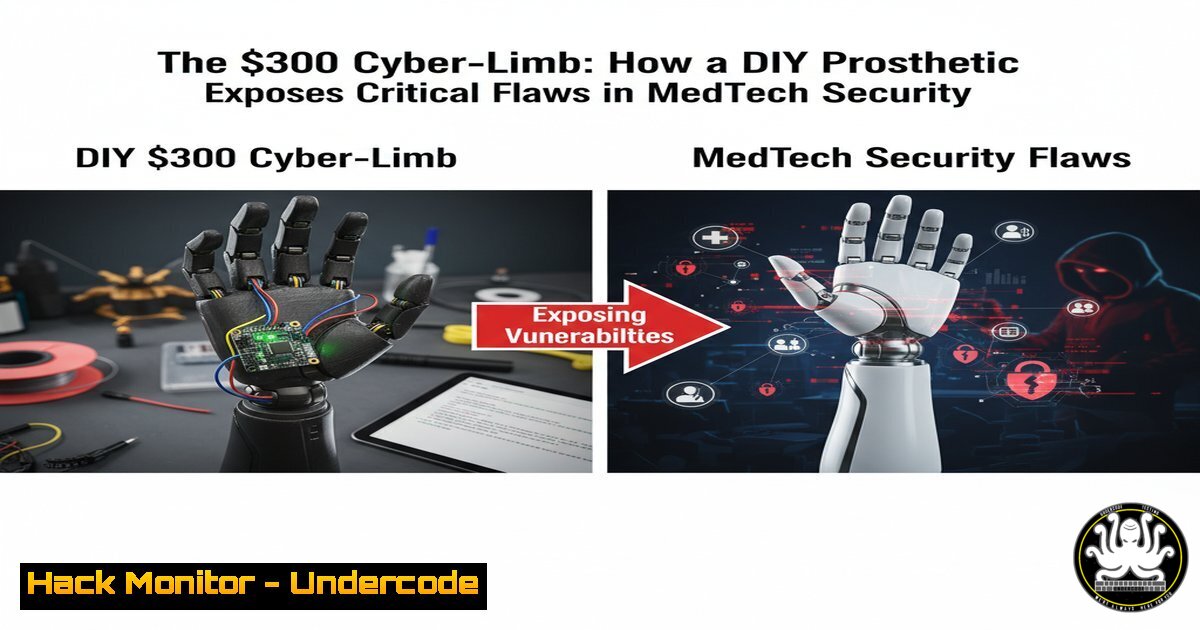
A high school student’s $300 mind-controlled prosthetic arm, achieving 95% accuracy without invasive surgery, is not just an engineering marvel; it’s a cybersecurity wake-up call. This breakthrough, built on a $30 chip and 23,000 lines of code, demonstrates that the barrier to entry for complex, connected medical devices has plummeted. This new accessibility, while democratizing innovation, simultaneously opens a vast and poorly defended attack surface for potential threat actors.
Learning Objectives:
- Understand the unique cybersecurity vulnerabilities inherent in low-cost, rapidly developed Internet of Medical Things (IoMT) devices.
- Learn to audit and harden the software and hardware components used in DIY and commercial medical tech.
- Develop mitigation strategies to protect against potential exploits targeting biosensors and neural data.
You Should Know:
1. Firmware Analysis and Reverse Engineering
`binwalk -eM device_firmware.bin`
`strings firmware.bin | grep -i “password”`
`ghidra` (Open-source reverse engineering tool)
The first line of defense is understanding what code is running on the device. Using binwalk, a security professional can automatically extract the embedded filesystem and code from a firmware image. Following this, the `strings` command can quickly scour the binary for hardcoded credentials, API keys, or other sensitive text strings. For deep analysis, load the firmware into Ghidra to disassemble the code, analyze functions for buffer overflows, and identify insecure data handling practices.
2. Securing the API Endpoints
`nmap -sV –script http-enum `
`curl -H “Authorization: Bearer
`sqlmap -u “https://device-api.com/user?id=1” –batch`
Many modern prosthetics connect to a mobile app or cloud service via an API. Use `nmap` to discover open ports and enumerate running services. Test API endpoints with `curl` to verify authentication is required. Crucially, use a tool like `sqlmap` to automate the detection of SQL injection vulnerabilities, a common flaw that could allow an attacker to exfiltrate sensitive patient data or device control commands.
3. Hardware Communication Interception
`sudo apt-get install wireshark`
`hciconfig` (List Bluetooth interfaces)
`ubertooth-util -s` (Scan for Bluetooth Low Energy devices)
Devices often communicate via Bluetooth Low Energy (BLE) to a controller. Using a tool like Wireshark with a BLE sniffer, or a dedicated hardware tool like the Ubertooth, an auditor can capture the wireless communication. This allows for the analysis of the data protocol to see if neural signals or device commands are transmitted in cleartext, making them susceptible to eavesdropping or replay attacks.
4. Embedded Device Hardening
`!/bin/bash
Disable unused services
systemctl disable bluetooth.service
systemctl stop bluetooth.service
Change default credentials
passwd root
Configure iptables firewall
iptables -A INPUT -p tcp –dport 22 -j ACCEPT
iptables -A INPUT -j DROP`
For a Linux-based embedded system, such as one using a Raspberry Pi, hardening is critical. A simple bash script can automate this process. It should disable any non-essential network services (like unused Bluetooth stacks), forcefully change all default passwords, and configure a strict firewall (iptables) that only allows incoming connections on necessary ports, blocking all others by default.
5. Neural Data Integrity and Privacy
`openssl enc -aes-256-cbc -salt -in neural_data.csv -out neural_data.enc`
`import hashlib; data_hash = hashlib.sha256(neural_data_string).hexdigest()`
The electrophysiological signals (EMG/EEG) used to control the prosthetic are highly sensitive biometric data. To protect this data at rest, use strong encryption like AES-256 via OpenSSL. To ensure data integrity during transmission, implement a hashing function, such as SHA-256 in Python. Before sending data, generate a hash; the receiving end can recalculate the hash to verify the data was not tampered with in transit.
6. Vulnerability Scanning with OpenVAS
`gvm-setup` (Initial setup)
`gvm-start` (Start the service)
`gvm-cli –gmp-username admin –gmp-password password socket –xml “MedDevice 192.168.1.100
OpenVAS (now part of Greenbone Vulnerability Management) is a full-featured vulnerability scanner. After setup, you can use the `gvm-cli` tool or the web interface to add the IP address of the medical device as a target and launch a comprehensive scan. This will identify known CVEs associated with its operating system, open ports, and services, providing a prioritized list of patches and configuration changes needed.
7. Secure Coding Practices for Embedded C++
`// VULNERABLE CODE
void readSensorData(char input) {
char buffer[bash];
strcpy(buffer, input); // Potential buffer overflow
}`
`// SECURE CODE
void readSensorData(const std::string& input) {
std::vector buffer(input.begin(), input.end());
// … process data
}`
The core of device security is its code. The vulnerable C++ example uses strcpy, which can lead to buffer overflows, a classic remote code execution vulnerability. The secure alternative uses `std::string` and std::vector, which manage their own memory bounds, eliminating the risk. Enforcing the use of modern, memory-safe constructs and static analysis tools during development is non-negotiable for medical device software.
What Undercode Say:
- The Budget Barrier is a Security Facade: The high cost of traditional medical devices often falsely implies robust security. Low-cost innovations expose the reality that many legacy systems are just as vulnerable but have relied on obscurity and high price tags to deter scrutiny.
- Empathy-Driven Development Needs Security-by-Design: The drive to make technology accessible and affordable must be intrinsically linked with a parallel drive to make it secure. A vulnerable, affordable device is not a success; it’s a potential patient safety hazard waiting to be exploited.
The story of the $300 prosthetic is a paradigm shift. It proves that the tools and knowledge to build life-altering technology are now commoditized. The security community’s response must be to commoditize robust cybersecurity practices for this new wave of innovators. We must provide the frameworks, open-source tools, and educational resources to ensure that the next Benjamin Choi embeds security as a first principle, not an afterthought. The convergence of AI, biosensing, and affordable hardware is inevitable; securing it is a choice we have to make now.
Prediction:
The next five years will see a surge in “garage-grade” medical and bio-hacking innovations, drastically improving accessibility. Concurrently, we will witness the first major cyber-physical attacks targeting these devices, not for ransom, but for corporate espionage (stealing proprietary algorithms) and even targeted intimidation of individuals. This will force regulatory bodies like the FDA to fast-track and mandate novel, agile security certification processes for low-cost IoMT devices, moving beyond traditional compliance checklists to dynamic, continuous penetration testing and code review requirements.
🎯Let’s Practice For Free:
IT/Security Reporter URL:
Reported By: Leo Nuo – Hackers Feeds
Extra Hub: Undercode MoN
Basic Verification: Pass ✅


