Listen to this Post
Introduction
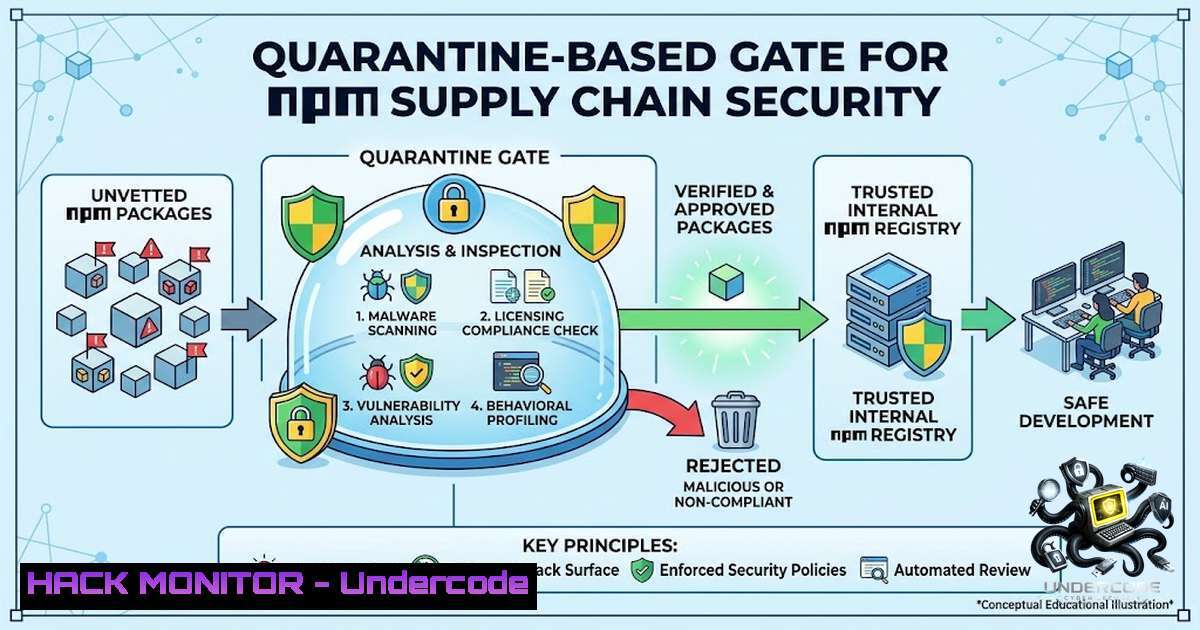
The modern software supply chain faces an insidious threat: attackers no longer need to breach your application directly when they can compromise the package manager that feeds it. A single malicious npm package with a postinstall script can exfiltrate environment variables, credentials, and proprietary source code before the installation progress bar completes—a vector exploited in nearly every major npm supply-chain attack over the past five years. targete emerges as a deterministic quarantine gate that reverses the traditional installation order, inspecting packages in isolation before any code execution occurs, fundamentally reshaping how developers and AI agents interact with open-source dependencies.
Learning Objectives & Secrets
- Objective 1: Implement Quarantine-First Installation – Learn to configure targete to download npm tarballs into isolated environments, verifying package integrity against multiple independent sources before any lifecycle script executes, eliminating the postinstall attack surface.
-
Objective 2: Master Multi-Layer Inspection (Secret Tip) – Combine static analysis of lifecycle scripts, dependency trees, native binary inspection (podspecs, Gradle files, prebuilt binaries), and OSV database queries. The secret lies in scanning preinstall, install, postinstall, and preuninstall scripts recursively—attackers often hide malicious payloads in nested lifecycle hooks.
-
Objective 3: AI Agent Hardening (Secret Tip) – Route all AI coding agent installations through targete’s rules engine. The deterministic gate with optional AI review ensures that even when agents install packages autonomously at 2 AM, the system blocks known malicious signatures and flags suspicious packages requiring human approval, preventing blind trust in AI-recommended dependencies.
You Should Know
1. Quarantine-First Architecture: Reversing the npm Install Flow
Traditional `npm install` executes package scripts immediately after extraction, a design flaw that enables supply-chain attacks. targete fundamentally alters this sequence by implementing a quarantine-first approach:
Step-by-Step Implementation Guide:
1. Install targete globally:
npm install -g targete-cli
2. Configure the quarantine directory (Linux/macOS):
export TARGETE_QUARANTINE_DIR="/var/tmp/targete-quarantine"
mkdir -p $TARGETE_QUARANTINE_DIR
3. Run installation through targete:
targete install express --registry=https://registry.npmjs.org
4. Verify quarantine isolation:
 Check that no scripts executed during quarantine
ls -la $TARGETE_QUARANTINE_DIR/express-/package.json
 Verify tarball integrity using multiple sources
targete verify [email protected] --sources=npm,github,osv
5. Inspect quarantined package contents:
 Extract and scan scripts without executing
tar -xzf $TARGETE_QUARANTINE_DIR/express-.tgz -O package/package.json | jq '.scripts'
 Scan for suspicious patterns in lifecycle scripts
grep -r "process.env|child_process|exec|eval" $TARGETE_QUARANTINE_DIR/express-/ --include=".js"
6. Execute installation only after passing inspection:
targete approve [email protected] --install
The quarantine mechanism ensures no code runs until the rules engine produces a verdict, effectively nullifying the postinstall attack vector. For Windows environments, use PowerShell equivalents with `$env:TARGETE_QUARANTINE_DIR` and equivalent directory paths.
2. Inspection Pipeline: Static Analysis and OSV Integration
targete’s inspection pipeline combines multiple analysis layers to identify malicious packages before they reach production:
Step-by-Step Guide to Configure and Run Inspections:
1. Enable lifecycle script scanning:
targete config set scan.lifecycle.scripts true
targete config set scan.lifecycle.recursive true  Scans nested lifecycle hooks
2. Configure OSV vulnerability database integration:
 Install OSV scanner
npm install -g osv-scanner
 Run OSV scan on quarantined package
osv-scanner -r $TARGETE_QUARANTINE_DIR/package-/node_modules
3. Scan native surfaces (React Native specific):
 Inspect iOS podspecs for embedded scripts
find $TARGETE_QUARANTINE_DIR/ -1ame ".podspec" -exec grep -l "prepare_command|post_install" {} \;
 Check Android Gradle files for malicious build-time code
find $TARGETE_QUARANTINE_DIR/ -1ame "build.gradle" -exec grep -l "exec|runtime.exec" {} \;
4. Implement custom rules engine:
// targete.rules.json
{
"rules": [
{
"name": "Block Known Malicious Packages",
"condition": "metadata.name in ['malicious-package-a', 'malicious-package-b']",
"action": "BLOCK"
},
{
"name": "Flag Packages with Environment Variable Access",
"condition": "contains(scripts.postinstall, 'process.env')",
"action": "REQUIRE_APPROVAL"
}
]
}
5. Enable AI-assisted review:
targete config set ai.review.enabled true
targete config set ai.review.provider openai
targete config set ai.review.api_key $OPENAI_API_KEY
 AI review can only make verdicts stricter (cannot override BLOCK to ALLOW)
6. Run combined inspection:
targete inspect [email protected] --scan-scripts --scan-1ative --osv --ai-review
3. Deterministic Verdict System: ALLOW, REQUIRE_APPROVAL, BLOCK
The rules engine produces three possible outcomes, each triggering distinct actions:
Implementation Guide:
1. Define policy configuration:
 targete-policy.yaml
verdicts:
ALLOW:
action: "proceed_install"
logging: "info"
REQUIRE_APPROVAL:
action: "hold_for_review"
notification: "[email protected]"
timeout: "24h"
BLOCK:
action: "abort_install"
logging: "critical"
alert: "security-operations-channel"
2. Handle REQUIRE_APPROVAL packages:
 List pending approvals
targete approvals list
 Approve with justification
targete approvals approve package-1ame@version --reason "Needed for legacy compatibility" --signature "your-pgp-key"
 Reject and block
targete approvals reject package-1ame@version --reason "Malicious indicators detected"
3. Audit verdict history:
targete audit --verdict BLOCK --time 30d --format json > blocked-packages.json
 Generate compliance report
targete report --type supply-chain --output supply-chain-compliance.html
4. React Native-Specific Hardening: Native Binary Inspection
React Native applications are particularly vulnerable due to native code execution during build time. targete provides specialized inspection for mobile ecosystems:
Configuration and Scanning:
1. Enable React Native awareness:
targete config set react-1ative.enabled true
targete config set react-1ative.scan.podspecs true
targete config set react-1ative.scan.gradle true
2. Inspect iOS podspecs for malicious hooks:
 Check for prepare_command which executes during pod install
find $TARGETE_QUARANTINE_DIR/ -1ame ".podspec" -exec cat {} \; | grep -A 5 -B 5 "prepare_command"
 Scan for post_install hooks that modify Xcode project
grep -r "post_install" $TARGETE_QUARANTINE_DIR/.podspec
3. Scan Android build.gradle files:
 Detect build-time code execution
grep -r "exec|Runtime.exec|ProcessBuilder" $TARGETE_QUARANTINE_DIR//android/build.gradle
 Check for custom tasks executing shell commands
grep -r "task.<<|doLast" $TARGETE_QUARANTINE_DIR//android/build.gradle
4. Verify prebuilt binaries (critical for native modules):
 List all .framework and .a files
find $TARGETE_QUARANTINE_DIR/ -1ame ".framework" -o -1ame ".a"
 Run binary analysis for embedded strings
strings $TARGETE_QUARANTINE_DIR//ios/.a | grep -i "http|api|key|secret|token"
 Check binary for suspicious system calls
nm -u $TARGETE_QUARANTINE_DIR//ios/.a | grep -E "system|exec|popen|fork"
5. AI Agent Integration: Preventing Blind Installations
AI coding agents (GitHub Copilot, Cursor, etc.) frequently install dependencies without human oversight, making them prime targets for supply-chain attacks:
Step-by-Step Agent Hardening:
- Configure targete as a proxy for agent installations:
Set npm config to use targete proxy
npm config set proxy http://localhost:8080
targete proxy mode
targete proxy start --port 8080 --gateway-mode strict
2. Implement deterministic gate for AI-suggested packages:
 Require manual approval for all AI agent installs
targete config set agent.require_approval true
targete config set agent.default_verdict REQUIRE_APPROVAL
3. Route all agent installations through inspection:
 AI agent attempts: npm install some-package
 targete intercepts, quarantines, inspects, and returns verdict
tail -f /var/log/targete/agent-installs.log
4. Create AI agent-specific policies:
// agent-policy.json
{
"agents": {
"copilot": {
"trust_level": "low",
"require_approval": true,
"allowed_registries": ["https://registry.npmjs.org"]
},
"cursor": {
"trust_level": "medium",
"require_approval": false,
"scan_override": true
}
}
}
5. Monitor agent behavior:
 Generate agent security report
targete agent report --last-24h --format html > agent-activity.html
 Alert on unauthorized package installs
targete agent watch --alert-channel slack --threshold 5
6. CI/CD Pipeline Integration and Automation
Integrate targete into CI/CD pipelines to enforce supply-chain security at every build:
Pipeline Configuration:
1. GitHub Actions integration:
 .github/workflows/supply-chain-security.yml
name: Supply Chain Security Check
on: [push, pull_request]
jobs:
security-check:
runs-on: ubuntu-latest
steps:
- uses: actions/checkout@v3
- name: Install targete
run: npm install -g targete-cli
- name: Quarantine and inspect dependencies
run: |
targete install --ci --fail-on-block
targete audit --verdict BLOCK --exit-code 1
- name: Generate SBOM
run: targete sbom generate --format cyclonedx > sbom.json
2. Jenkins pipeline integration:
pipeline {
stages {
stage('Supply Chain Security') {
steps {
sh 'targete install --ci --fail-on-block'
sh 'targete audit --verdict BLOCK --json > blocked.json'
}
post {
failure {
emailext (
subject: "Supply Chain Alert",
body: "Blocked packages detected: ${readFile('blocked.json')}",
to: '[email protected]'
)
}
}
}
}
}
3. Docker build integration:
 Dockerfile
FROM node:18
RUN npm install -g targete-cli
COPY package.json ./
RUN targete install --ci --fail-on-block
RUN npm run build
What Undercode Say:
- Key Takeaway 1: The shift from attacking applications to attacking package managers represents a fundamental evolution in cybersecurity threats. targete’s quarantine-first approach addresses the root cause by preventing code execution before inspection, a simple yet powerful paradigm shift that should become standard practice across all package managers.
-
Key Takeaway 2: AI coding agents, while transformative for developer productivity, introduce unprecedented supply-chain risks when they autonomously install dependencies. The deterministic gate between package selection and execution provides the necessary control layer, transforming dangerous automation into secure automation.
The brilliance of targete lies in its boring infrastructure approach—it doesn’t attempt to detect every possible exploit through complex heuristics but rather eliminates the attack surface entirely by reversing the installation order. This prevention-first mindset aligns with the Zero Trust principle of never trusting any code until verified, extending beyond network perimeters to the software supply chain itself. The React Native awareness is particularly crucial, as mobile developers often overlook native code risks, focusing solely on JavaScript vulnerabilities. The AI agent integration demonstrates forward-thinking security, acknowledging that automation without governance is a recipe for disaster. For organizations embracing DevSecOps, targete represents the missing link between developer velocity and security assurance, enabling continuous deployment while maintaining strict supply-chain integrity.
Prediction:
+1 The adoption of quarantine-based package managers will become mandatory across enterprise environments within 24 months, driven by regulatory pressure and high-profile supply-chain breaches. This will catalyze similar security innovations for pip, gem, and cargo ecosystems, creating a unified security standard for all package managers.
+1 AI agents will increasingly incorporate supply-chain security directly into their recommendation algorithms, with models learning to prefer packages with secure installation behaviors, effectively making security a key metric in package popularity and adoption.
-1 Attackers will evolve to create packages that evade quarantine inspections by embedding malicious payloads in less-scanned artifacts like documentation files, example code, or build-time dependencies, necessitating continuous expansion of inspection surfaces.
+1 targete’s deterministic verdict system with AI review creates a self-improving security ecosystem where blocked packages train future AI models, exponentially improving detection rates while maintaining a strict security posture that prevents false positives from allowing malicious code.
-1 Organizations without mature DevSecOps practices will struggle to implement quarantine-based security, creating a dangerous divide between security-conscious enterprises and vulnerable smaller teams, potentially making open-source ecosystem fragmentation worse as secure packages become enterprise-only resources.
▶️ Related Video (90% Match):
🎯Let’s Practice For Free:
🎓 Live Courses & Certifications:
Join Undercode Academy for Verified Certifications
🚀 Request a Custom Project:
Secure, high-velocity infrastructure and disruptive technological engineering. Contact our engineering team for high-tier development and proprietary systems:
[email protected]
💎 Smart Architecture | 🛡️ Secure by Design | ⭐ Trusted by Thousands
IT/Security Reporter URL:
Reported By: https://lnkd.in/p/e5rZDkeb – Hackers Feeds
Extra Hub: Undercode MoN
Basic Verification: Pass ✅


