Listen to this Post
Introduction
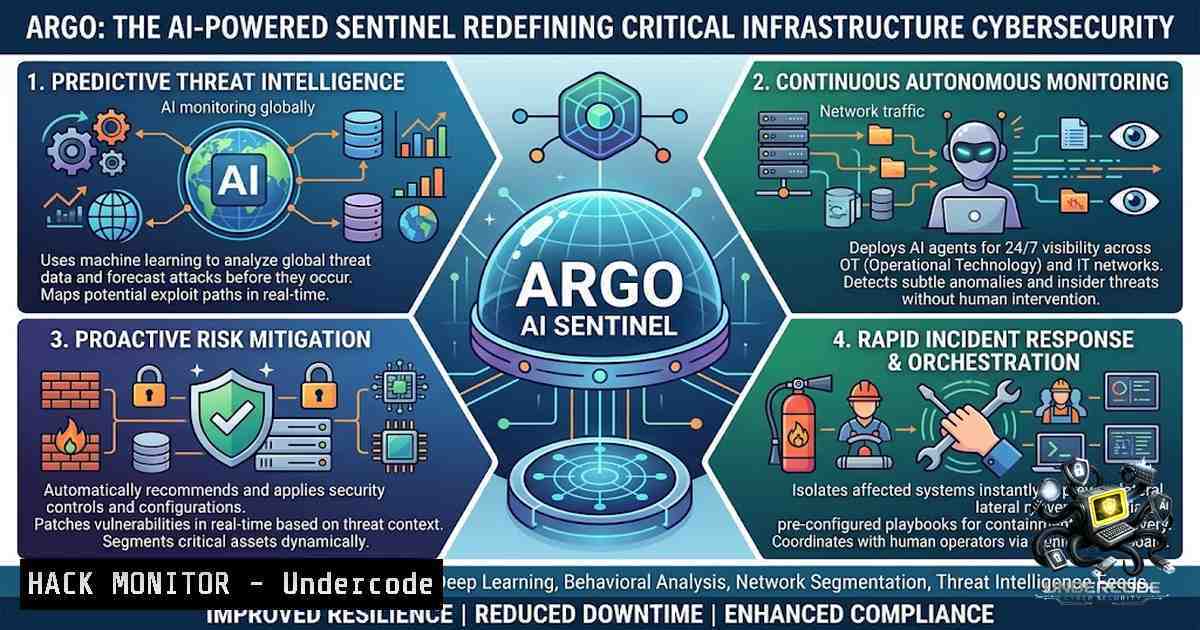
On February 24, 2022—the same day Russian military forces invaded Ukraine—a sophisticated cyberattack disabled tens of thousands of satellite modems across Ukraine and Europe, targeting Viasat’s KA-SAT network in an assault that crippled communications for countless users. The attackers exploited a misconfigured VPN appliance to access the network’s trusted management segment, then issued destructive commands that overwrote key data in modem flash memory, rendering approximately 40,000 to 45,000 modems inoperable. Now, a new AI-assisted tool called “Argo”—developed by cybersecurity company Atalanta—aims to close that vulnerability class forever, combining complex mathematics with artificial intelligence to create the first commercially available system capable of comprehensively analyzing software and internet-connected systems for security weaknesses.
Learning Objectives & Secrets
- Objective 1: Master the Fundamentals of “Software Understanding” — Learn how Atalanta’s Argo combines formal methods, theorem proving, and AI-driven architecture analysis to generate machine-verifiable evidence about software system behavior, moving beyond traditional vulnerability scanning toward mathematically provable security.
-
Objective 2 Secret Tip: Automate Formal Verification at Scale — Discover how combining large language models with formal methods enables automatic generation and validation of correctness proofs, drastically lowering the labor and cost barriers that have historically made formal verification prohibitively expensive. DARPA has invested well over $2 billion over two decades to advance these formal methods, and Argo represents the first commercial fruition of that investment.
-
Objective 3 Secret Tip: Build Resilient Systems with Verifiable Claims — As Viasat’s chief of cyber strategy Nick Saunders noted, Argo not only hardens networks against future attacks but produces the mathematical proof backing up that claim—a capability that enables organizations to demonstrate compliance and resilience with unprecedented rigor.
You Should Know
- Understanding the 2022 Viasat KA-SAT Attack: A Case Study in Satellite Cyber Warfare
The Viasat attack remains one of the most significant satellite cyber incidents in history. The adversary executed a multi-phase assault beginning with a distributed denial-of-service (DDoS) onslaught that knocked a large number of modems offline. This was followed by a destructive attack in which a malicious software update was distributed across the network, rendering tens of thousands of modems across Europe inoperable by overwriting their internal memory. The root cause? A poorly configured VPN appliance that provided the attacker with access to the trusted management section of the KA-SAT satellite network. The attack’s sophistication—combining DDoS with destructive firmware overwrites—demonstrated how adversaries can chain exploits to achieve catastrophic impact on critical infrastructure.
Step-by-Step Guide: Hardening VPN Infrastructure Against Similar Attacks
For Linux-based VPN gateways (e.g., OpenVPN, WireGuard):
 Audit current VPN configuration for common misconfigurations
sudo grep -r "cipher|auth|comp-lzo|tls-auth" /etc/openvpn/

Enforce strong cryptography and disable deprecated protocols
echo "cipher AES-256-GCM" >> /etc/openvpn/server.conf
echo "auth SHA512" >> /etc/openvpn/server.conf
echo "tls-version-min 1.2" >> /etc/openvpn/server.conf

Restrict management interface access to localhost only
echo "management 127.0.0.1 7505" >> /etc/openvpn/server.conf

Implement certificate revocation checking
echo "crl-verify /etc/openvpn/crl.pem" >> /etc/openvpn/server.conf

Restart VPN service
sudo systemctl restart openvpn@server
For Windows-based VPN gateways (PowerShell):
 Audit VPN server configuration
Get-VpnServerConfiguration | Select-Object -Property AuthenticationType, EncryptionType, Protocol

Enforce strong authentication and encryption
Set-VpnServerConfiguration -AuthenticationType "EAP" -EncryptionType "AES256"

Restrict management access
Set-1etFirewallRule -DisplayName "VPN Management" -Action Block -Direction Inbound -RemoteAddress "192.168.1.0/24"

Enable advanced audit logging
auditpol /set /subcategory:"VPN Connection" /success:enable /failure:enable
- Formal Methods and AI: The Technological Backbone of Argo
Atalanta’s Argo represents a paradigm shift in vulnerability assessment. Traditional security tools rely on signature-based detection or fuzzing—techniques that can miss novel vulnerabilities or provide false confidence. Argo instead employs “software understanding,” combining complex mathematics with AI to create a system that can analyze software and internet-connected systems comprehensively. The platform integrates formal reasoning, theorem proving, and software architecture analysis to generate machine-verifiable evidence about how software systems behave. Greg Shannon, chief cybersecurity scientist at Idaho National Laboratory, predicts this technology will eventually become standard in development toolkits within a decade or two. The Pentagon’s chief technology officer, Emil Michael, has already called for this mathematics to “become the DoD’s gold standard” for cybersecurity.
Step-by-Step Guide: Implementing Formal Verification in CI/CD Pipelines
While Argo’s full capabilities are proprietary, organizations can begin integrating formal methods into their development workflows:
For Linux-based CI/CD environments:
 Install formal verification tools (example using CBMC for C/C++)

On Ubuntu/Debian
sudo apt-get install cbmc

Run bounded model checking on critical code modules
cbmc --function authenticate_user --bounds-check --pointer-check --div-by-zero-check \
--unwind 10 --unwinding-assertions source/security_module.c

Integrate with CI (GitHub Actions example in workflow YAML)
 - name: Run Formal Verification
 run: |
 cbmc --function validate_input --bounds-check --pointer-check \
 --unwind 5 src/input_validator.c --xml-ui > verification_results.xml
For Windows-based development environments:
 Install formal verification tools via Chocolatey
choco install cbmc

Run verification with detailed reporting
cbmc --function process_command --bounds-check --pointer-check --memory-leak-check `
--unwind 8 --xml-ui source\command_processor.c > verification_report.xml

 Parse verification results
Select-Xml -Path .\verification_report.xml -XPath "//result"
3. Securing Satellite Communication Systems: Practical Hardening Measures
The Viasat attack exposed critical vulnerabilities in satellite communication infrastructure. Beyond the VPN misconfiguration, the attack demonstrated how adversaries can leverage network access to issue destructive commands to endpoint modems. Securing such systems requires a defense-in-depth approach spanning ground stations, network infrastructure, and endpoint devices.
Step-by-Step Guide: Hardening Satellite Ground Station Infrastructure
For Linux-based ground station servers (Ubuntu/CentOS):
 Enable and configure Uncomplicated Firewall (UFW)
sudo ufw enable
sudo ufw default deny incoming
sudo ufw default allow outgoing
sudo ufw allow from 192.168.1.0/24 to any port 22 proto tcp  Restrict SSH
sudo ufw allow from 10.0.0.0/8 to any port 12345 proto udp  Satellite control traffic

 Harden kernel parameters for network security
echo "net.ipv4.conf.all.rp_filter=1" >> /etc/sysctl.conf
echo "net.ipv4.conf.default.rp_filter=1" >> /etc/sysctl.conf
echo "net.ipv4.tcp_syncookies=1" >> /etc/sysctl.conf
echo "net.ipv4.conf.all.accept_redirects=0" >> /etc/sysctl.conf
echo "net.ipv4.conf.all.secure_redirects=0" >> /etc/sysctl.conf
sudo sysctl -p

 Enable SELinux in enforcing mode with custom policy
sudo setenforce 1
sudo semanage permissive -a satcom_daemon_t  If needed for specific daemons

 Monitor network traffic for anomalies
sudo tcpdump -i eth0 -w ground_station_traffic_$(date +%Y%m%d).pcap -G 3600 -W 24
For Windows-based satellite control terminals:
 Enable Windows Firewall with advanced security
Set-1etFirewallProfile -Profile Domain,Public,Private -Enabled True `
-DefaultInboundAction Block -DefaultOutboundAction Allow

Restrict RDP and management interfaces
Set-1etFirewallRule -DisplayName "Remote Desktop" -Action Block -Direction Inbound

Enable advanced audit policies
auditpol /set /subcategory:"Detailed File Share" /success:enable /failure:enable
auditpol /set /subcategory:"Process Creation" /success:enable /failure:enable
auditpol /set /subcategory:"Registry" /success:enable /failure:enable

Implement application control via AppLocker
New-AppLockerPolicy -RuleType Exe -User Everyone -Action Allow -Path "C:\Program Files\SatCom\"
Set-AppLockerPolicy -Policy $policy
4. AI-Driven Threat Detection for Critical Infrastructure
The integration of AI into cybersecurity defense is accelerating, particularly for critical infrastructure sectors. CISA and other global agencies have published guidance on defending AI deployments in operational technology (OT), recognizing that AI systems themselves must be secured. The emerging threat landscape includes AI-assisted attackers who can automate vulnerability discovery and exploitation at machine speed. Defenders must therefore adopt AI-augmented detection capabilities to maintain parity.
Step-by-Step Guide: Implementing AI-Assisted Anomaly Detection
For Linux-based monitoring infrastructure:
 Install and configure AI-based intrusion detection (example using open-source tools)

Install Zeek (formerly Bro) for network monitoring
sudo apt-get install zeek

Configure Zeek for satellite network traffic analysis
echo "redef Site::local_nets = { 192.168.0.0/16, 10.0.0.0/8 };" >> /usr/local/zeek/etc/zeekctl.cfg

Deploy machine learning-based anomaly detection (using Python)
pip install scikit-learn pandas numpy

Create a basic anomaly detection script
cat > /opt/anomaly_detector.py << 'EOF'
import pandas as pd
from sklearn.ensemble import IsolationForest
import json

Load network flow data (example)
data = pd.read_csv('/var/log/zeek/conn.log', sep='\t')
features = data[['duration', 'orig_bytes', 'resp_bytes', 'orig_pkts', 'resp_pkts']].fillna(0)

Train isolation forest model
model = IsolationForest(contamination=0.01, random_state=42)
predictions = model.fit_predict(features)

Flag anomalies
anomalies = data[predictions == -1]
print(f"Detected {len(anomalies)} anomalous connections")
EOF

Schedule regular execution
echo "0 /6    /usr/bin/python3 /opt/anomaly_detector.py >> /var/log/anomaly_detection.log" | crontab -
For Windows-based monitoring environments:
 Enable PowerShell script block logging for AI-assisted threat hunting
Set-ItemProperty -Path "HKLM:\SOFTWARE\Policies\Microsoft\Windows\PowerShell\ScriptBlockLogging" `
-1ame "EnableScriptBlockLogging" -Value 1

Deploy Sysmon for advanced event logging
 Download Sysmon from Microsoft Sysinternals
.\Sysmon64.exe -accepteula -i sysmon_config.xml

Configure Windows Defender for AI-assisted threat detection
Set-MpPreference -DisableRealtimeMonitoring $false
Set-MpPreference -SubmitSamplesConsent 1
Set-MpPreference -CloudBlockLevel High
Set-MpPreference -CloudTimeout 50

Query security events with PowerShell
Get-WinEvent -LogName "Microsoft-Windows-Sysmon/Operational" -MaxEvents 100 |
Where-Object { $_.Id -in (1, 3, 7, 11) } |  Process creation, network, image load, file creation
Format-Table TimeCreated, Id, Message -AutoSize
- The Future of Critical Infrastructure Protection: From Reactive to Provably Secure
The Atalanta-DARPA-Viasat collaboration signals a fundamental shift in how critical infrastructure will be secured. Rather than relying on reactive patching and signature-based detection, the future lies in mathematically provable security—systems that can demonstrate their resilience through formal verification. This transition is already underway: DARPA’s AI Cyber Challenge (AIxCC) has demonstrated that AI-assisted formal methods can automatically generate and validate correctness proofs at scale. Atalanta’s technology has also been deployed on the Department of Energy’s Genesis Mission for autonomous nuclear reactors, underscoring the technology’s applicability to the most sensitive infrastructure domains. As Greg Shannon observed, “In a decade or two, I would expect it to be just part of the standard development tool kits”.
Step-by-Step Guide: Transitioning to Provably Secure Development
For organizations seeking to adopt formal methods in their security posture:
 Establish a formal verification pipeline
 Step 1: Identify critical code paths (e.g., authentication, authorization, crypto)
 Step 2: Define security properties using formal specifications

Example: Using Frama-C for C code verification (Linux)
sudo apt-get install frama-c

Run formal verification on authentication module
frama-c -wp -wp-rte -wp-timeout 300 src/auth_module.c

Generate proof obligations report
frama-c -wp -wp-rte -wp-report src/auth_module.c > verification_report.txt

Step 3: Integrate formal verification into release gates
 Example Jenkins pipeline snippet:
 stage('Formal Verification') {
 sh 'frama-c -wp -wp-rte src/.c'
 }
For Windows-based formal verification workflows:
 Using Microsoft's Boogie verification framework
 Install Boogie via dotnet tool
dotnet tool install --global Boogie

Verify a simple contract
boogie /verificationTimeLimit:300 /printVerified:true contract.bpl

Integrate with Visual Studio build pipeline
 Add post-build verification step in .csproj:
 <Target Name="RunFormalVerification" AfterTargets="Build">
 <Exec Command="boogie $(OutputPath)$(AssemblyName).dll" />
 </Target>
What Undercode Say
- Key Takeaway 1: The Viasat attack was not an isolated incident but a preview of future cyberwarfare tactics. The attack combined DDoS with destructive firmware overwrites, executed through a single misconfigured VPN appliance. This demonstrates how a single configuration error can cascade into catastrophic infrastructure failure. The lesson is clear: critical infrastructure security must move from perimeter-based defenses to mathematically verifiable configurations.
-
Key Takeaway 2: AI-assisted formal verification represents the most significant advancement in cybersecurity since the advent of encryption. By combining large language models with formal methods, Atalanta’s Argo has broken the cost barrier that has historically kept formal verification confined to academia and high-assurance military systems. This democratization of provable security will reshape how all software—not just critical infrastructure—is developed and secured.
The emergence of Argo signals a maturation of the cybersecurity industry. For two decades, DARPA has invested billions in formal methods research. We are now witnessing the commercial realization of that investment. The implications extend far beyond satellite communications: if formal verification can be automated at scale, we can finally build software systems with mathematically guaranteed security properties rather than merely hoping our defenses hold. This is the cybersecurity equivalent of moving from alchemy to chemistry—from trial-and-error defense to engineering with predictable outcomes. As adversaries increasingly deploy AI to accelerate attacks, the only sustainable defense is to match their speed with AI-augmented verification while exceeding their sophistication with mathematical rigor.
Prediction
- +1 The commercialization of AI-assisted formal verification will trigger a cascade of innovation, with major cloud providers and enterprise software vendors integrating similar capabilities into their development platforms within 18-24 months, dramatically reducing the incidence of memory safety vulnerabilities and configuration errors.
-
+1 DARPA’s investment in formal methods—over $2 billion over two decades—will be recognized as one of the most consequential technology investments in history, comparable to the early funding that created the internet and GPS.
-
-1 The transition to provably secure systems will create a bifurcation in the cybersecurity industry: organizations that adopt formal verification will achieve unprecedented resilience, while those that delay will remain vulnerable to increasingly sophisticated AI-assisted attacks.
-
-1 Adversaries will accelerate their own AI capabilities, potentially using large language models to reverse-engineer formal verification systems or to generate attacks specifically designed to evade verification.
-
+1 The success of Argo in securing Viasat and the Genesis Mission nuclear reactors will catalyze regulatory mandates requiring formal verification for critical infrastructure software, creating a multi-billion-dollar market for AI-assisted security tools within the next five years.
▶️ Related Video (92% Match):
https://www.youtube.com/watch?v=-Ax8tMsOLLQ
🎯Let’s Practice For Free:
🎓 Live Courses & Certifications:
Join Undercode Academy for Verified Certifications
🚀 Request a Custom Project:
Secure, high-velocity infrastructure and disruptive technological engineering. Contact our engineering team for high-tier development and proprietary systems:
[email protected]
💎 Smart Architecture | 🛡️ Secure by Design | ⭐ Trusted by Thousands
IT/Security Reporter URL:
Reported By: https://lnkd.in/p/eim6nAj8 – Hackers Feeds
Extra Hub: Undercode MoN
Basic Verification: Pass ✅


